 DecodedCars
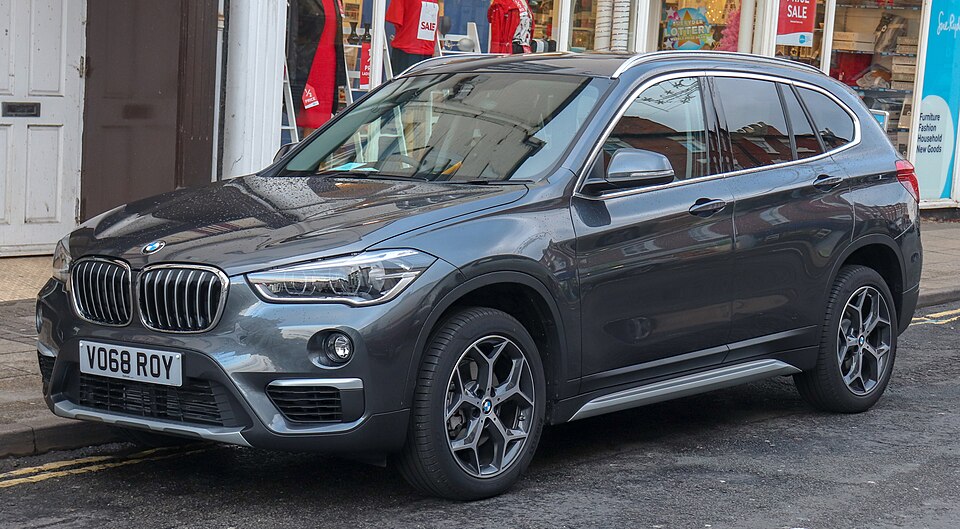
BMW X1 2017
Versiones, desempeño, equipamiento, consumo, seguridad y problemas conocidos, con sus ventajas y desventajas frente a modelos similares 2017.
- Clase
- Auto grande
- Carrocerías
- Xdrive28i 4dr SUV
- Motores
- 2.0L 4 cil. turbo
- Tracción
- Tracción delantera, Tracción total (AWD)
- Combustible
- Gasolina premium
- MPG (mejor)
- 26 combinadas · 23 ciudad / 32 carretera
- Largo
- 174.8 in
- Peso en vacío
- 3,660 lb
- Calificación NHTSA
- Sin calificar
- Retiros
- 4 campañas
Ventajas y desventajas
Lo bueno
- Excelente consumo de combustibleHasta 26 MPG combinadas: un 16 % mejor que el promedio de su clase (auto grande, 2017: 22.4 MPG).
- Tracción total / 4x4 disponible
A tener en cuenta
- Requiere gasolina premiumTodas las versiones de gasolina usan premium, lo que encarece el uso diario.
- Muchas quejas de propietarios164 quejas ante la NHTSA frente a unas 8 de modelos similares; sobre todo por problemas de tren motriz.
Calculado con datos de la EPA, la NHTSA y vPIC frente a 19 modelos similares 2017; no es una reseña. Cómo lo calculamos →
Resumen
El BMW X1 2017 es un auto grande con motor 2.0L 4 cil. turbo, con tracción delantera y tracción total (AWD).
Mide unas 175 pulgadas de largo y 72 de ancho, con una distancia entre ejes de 105 pulgadas, y pesa alrededor de 3,660 lb.
La EPA califica su versión más eficiente con 26 MPG combinadas (23 en ciudad / 32 en carretera), un 16 % mejor que el promedio de su clase (auto grande, 2017: 22.4 MPG), con un gasto estimado de $3,150 al año en combustible.
La NHTSA no ha publicado una calificación general de 5 estrellas para este año modelo.
Tiene 4 campañas de retiro registradas y los propietarios han presentado 164 quejas ante la NHTSA desde 2015, sobre todo por problemas de otro o desconocido.
Novedades del 2017
Sin cambios en motores, versiones, tracción, tamaño, consumo EPA ni calificación NHTSA respecto al X1 2016: un año sin cambios según los datos.
Comparado con 2016; no incluye cambios de versiones, equipamiento ni precio. Ver el X1 2016 →
Dimensiones y peso
| Carrocería | Largo | Ancho | Alto | Distancia entre ejes | Vía del. / tras. | Peso en vacío | Peso del./tras. |
|---|---|---|---|---|---|---|---|
| Xdrive28i 4dr SUV | 174.8 in | 71.7 in | 63.4 in | 105.1 in | 61.4 / 61.4 in | 3,660 lb | 57/43 |
Transport Canada CVS (Open Government Licence – Canada), medidas del mercado canadiense.
¿Cabe en tu garaje? Compruébalo con tus medidas →Motores, consumo y costo de uso
| Versión | Motor | Transmisión | Tracción | Ciudad / Carr. / Comb. | vs. su clase | Combustible / año | CO₂ g/mi |
|---|---|---|---|---|---|---|---|
| X1 sDrive28i | 2.0L 4 cil. turbo | Automática (S8) | Tracción delantera | 23 / 32 / 26 | +16% | $3,150 | 337 |
| X1 xDrive28i | 2.0L 4 cil. turbo | Automática (S8) | Tracción total (AWD) | 22 / 31 / 25 | +12% | $3,300 | 349 |
Estimaciones de la EPA; "vs. su clase" compara las MPG combinadas con el promedio 2017 de su clase EPA. Cómo lo calculamos →
Calificaciones de seguridad y tecnología
La NHTSA no ha publicado calificaciones de 5 estrellas para el BMW X1 2017.
Auto grande similares 2017
| Modelo | Mejor MPG / autonomía | General NHTSA | Retiros |
|---|---|---|---|
| BMW X1 2017 (este auto) | 26 MPG | Sin calificar | 4 |
| BMW 3 Series 2017 | 36 MPG | ★★★★★ | 0 |
| Lexus IS 2017 | 26 MPG | Sin calificar | 2 |
| Audi A3 2017 | 34 MPG | Sin calificar | 5 |
| Audi A5 2017 | 26 MPG | Sin calificar | 3 |
| Volvo S60 2017 | 29 MPG | ★★★★★ | 6 |
| BMW 2 Series 2017 | 28 MPG | Sin calificar | 0 |
Retiros (4)
Texto oficial de la NHTSA (en inglés).
Estructura › Carrocería › Roof And Pillars · 9 may 2019
Campaña NHTSA 19V349000 · 106,182 vehículos
- Problema
- BMW of North America, LLC (BMW) is recalling certain 2016-2019 X1 sDrive28i and X1 xDrive28i vehicles. In the event of a crash where the occupants head contacts the B-pillar, the pillar may not absorb an adequate amount of the impact. As such, these vehicles fail to comply with the requirements of Federal Motor Vehicle Safety Standard (FMVSS) number 201, "Occupant Protection in Interior Impact."
- Riesgo
- In the event of a crash, the insufficient impact absorption can increase the risk of injury.
- Solución
- BMW will notify owners, and dealers will replace the vertical trim pieces on the upper portion of the interior B-Pillars, free of charge. Interim letters notifying owners of the safety risk were mailed July 1, 2019. Second notices will be sent as parts become available, starting on September 27, 2019. Owners may contact BMW customer service at 1-800-525-7417.
Bolsas de aire › Frontal › Passenger Side › Inflator Module · 26 ene 2017
Campaña NHTSA 17V062000 · 16,771 vehículos
- Problema
- BMW of North America, LLC (BMW) is recalling certain 2016-2017 X1 xDrive28i and X1 sDrive28i vehicles. The affected vehicles have an instrument panel that may not allow the front passenger air bag to deploy properly in the event of a crash.
- Riesgo
- In the event of a crash, if the front passenger air bag does not deploy properly, it can increase the risk of injury.
- Solución
- BMW will notify owners, and dealers will replace the instrument panel, free of charge. The recall began May 2017. Owners may contact BMW customer service at 1-800-525-7417.
Bolsas de aire · 20 dic 2016
Campaña NHTSA 16V914000 · 3,506 vehículos
- Problema
- BMW of North America, LLC (BMW) is recalling certain model year 2017 BMW 640i, 640i xDrive, 650i, 650i xDrive, M6, 535i, 535i xDrive, 430i, 430i xDrive, 440i, 440i xDrive, M4, X1 sDrive28i, X1 xDrive28i, i3, i8, Rolls-Royce Dawn, Mini Clubman Cooper, Clubman Cooper S, Cooper All4, Cooper S All4, Mini 4-Door Cooper, Cooper S, Mini 2-Door Cooper, Cooper S, John Cooper Works and 2016 BMW 528i, 528i xDrive, 535i, 535i xDrive, 550i, 550i xDrive, M5 and 535d vehicles. The affected vehicles have seat- mounted side air bag inflator initiators that may fail to ignite during a crash.
- Riesgo
- If the air bag inflator initiator fails to ignite, the seat-mounted air bag will not deploy, increasing the risk of injury.
- Solución
- BMW will notify owners, and dealers will replace the air bag modules, free of charge. The recall began February 6, 2017. Owners may contact BMW customer service at 1-800-525-7417.
Cinturones de seguridad › Front › Retractor · 17 oct 2016
Campaña NHTSA 16V747000 · 15,455 vehículos
- Problema
- BMW of North America, LLC (BMW) is recalling certain model year 2016-2017 X1 sDrive28i, X1 xDrive28i, MINI Hardtop 4 Door Cooper, Mini Hardtop 4 Door Cooper S, MINI Cooper Clubman, and Cooper S Clubman, 2017 Rolls-Royce Ghost, and 2016 528i vehicles. The vehicle-sensitive locking mechanism of the seat belt Emergency Locking Retractor (ELR) for the driver's seat may not lock as designed. As such, these vehicles fail to comply with the requirements of the Federal Motor Vehicle Safety Standard (FMVSS) number 209, "Seat Belt Assemblies."
- Riesgo
- In the event of a crash where heavy braking is applied, the Emergency Locking Retractor (ELR) may activate when the occupant is more forward in the seat, possibly increasing the risk of injury.
- Solución
- BMW will notify owners, and dealers will replace the driver's seat belt assembly, free of charge. The recall began July 3, 2019. Owners may contact BMW customer service at 1-800-525-7417.
No todos los X1 2017 están afectados: solo el VIN lo confirma.
Problemas reportados por propietarios
Reportes sin verificar; los más vendidos acumulan más.
Lista para comprar un BMW X1 2017 usado
- Consulta el VIN en nhtsa.gov/recalls. 4 retiros en este año: pide comprobantes de reparación.
- Tren motriz — 50 reportes de propietarios. Prueba todas las marchas, incluida la reversa; nota patinazos o cambios bruscos o tardíos.
- Frenos — 27 reportes de propietarios. Frena con fuerza a velocidad; revisa si se jala hacia un lado, si el pedal vibra o si se enciende la luz del ABS.
- Sistema eléctrico — 25 reportes de propietarios. Prueba todas las ventanas, seguros, luces, pantallas y puertos USB; revisa la antigüedad de la batería.
- Millaje a vigilar. Los propietarios suelen reportar problemas alrededor de las 13,326 millas; pregunta qué se reparó cerca de ese punto.
- Antes de pagar: historial de servicio, reporte de antecedentes e inspección de un mecánico independiente.
Generado por DecodedCars a partir de retiros y quejas de propietarios ante la NHTSA para el BMW X1 2017. No sustituye una inspección profesional.
Otros años del X1
Comparar todos los años →| Año | MPG (mejor) | Largo | General | Retiros | Quejas |
|---|---|---|---|---|---|
| X1 2027 | 28 | – | Sin calificar | 0 | 0 |
| X1 2026 | 28 | 177.2 in | Sin calificar | 2 | 1 |
| X1 2025 | 28 | 177.2 in | Sin calificar | 3 | 17 |
| X1 2024 | 28 | 177.2 in | Sin calificar | 3 | 30 |
| X1 2023 | 28 | 177.2 in | Sin calificar | 6 | 70 |
| X1 2022 | 27 | 174.8 in | Sin calificar | 2 | 1 |
| X1 2021 | 27 | 174.8 in | Sin calificar | 1 | 10 |
| X1 2020 | 27 | 174.8 in | Sin calificar | 1 | 13 |
| X1 2019 | 26 | 174.8 in | Sin calificar | 3 | 13 |
| X1 2018 | 26 | 174.8 in | Sin calificar | 4 | 60 |
| X1 2016 | 25 | 174.8 in | Sin calificar | 4 | 163 |
| X1 2015 | 26 | 175.2 in | Sin calificar | 4 | 94 |
Fuentes: EPA, NHTSA, Transport Canada, Wikimedia Commons. Sin afiliación con la NHTSA, la EPA ni BMW. Cómo lo calculamos →