 DecodedCars
Ford Mustang 2026
Versiones, desempeño, equipamiento, consumo, seguridad y problemas conocidos, con sus ventajas y desventajas frente a modelos similares 2026.
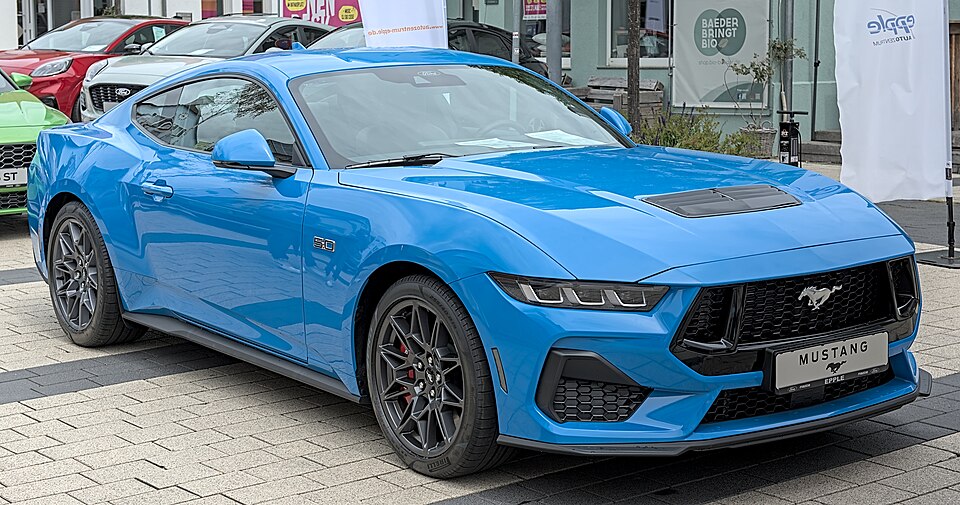
- Clase
- Auto subcompacto
- Carrocerías
- 2dr Coupe Darkhorse, Ecoboost 2dr Convertible, Ecoboost 2dr Coupe, GT 2dr Convertible
- Motores
- 2.3L 4 cil. turbo, 5.0L 8 cil., 5.2L 8 cil.
- Tracción
- Tracción trasera
- Combustible
- Gasolina regular, Gasolina premium
- MPG (mejor)
- 26 combinadas · 22 ciudad / 33 carretera
- Largo
- 189.4 in
- Peso en vacío
- 3,587–3,990 lb
- Calificación NHTSA
- Sin calificar
- Retiros
- 5 campañas
Ventajas y desventajas
Lo bueno
- Mucha tecnología de seguridad de serie4 de las 5 asistencias clave, de serie en las versiones revisadas.
A tener en cuenta
- 5 retirosMás que modelos similares (unos 0). Confirma las reparaciones con el VIN.
Calculado con datos de la EPA, la NHTSA y vPIC; no es una reseña. Cómo lo calculamos →
Resumen
El Ford Mustang 2026 es un auto subcompacto disponible con 3 motores (2.3L 4 cil. turbo, 5.0L 8 cil. y 5.2L 8 cil.), con tracción trasera.
Mide unas 189 pulgadas de largo y 76 de ancho, con una distancia entre ejes de 107 pulgadas, y pesa alrededor de 3,949 lb (2dr Coupe Darkhorse).
La EPA califica su versión más eficiente con 26 MPG combinadas (22 en ciudad / 33 en carretera), un 8 % mejor que el promedio de su clase (auto subcompacto, 2026: 24 MPG), con un gasto estimado de $2,600 al año en combustible.
Tiene 5 campañas de retiro registradas y los propietarios han presentado 8 quejas ante la NHTSA desde 2015, sobre todo por problemas de motor.
Novedades del 2026
Sin cambios en motores, versiones, tracción, tamaño, consumo EPA ni calificación NHTSA respecto al Mustang 2025: un año sin cambios según los datos.
Comparado con 2025; no incluye cambios de versiones, equipamiento ni precio. Ver el Mustang 2025 →
Versiones, desempeño y equipamiento
Versiones
Seguridad y asistencias al conductor
Fabricado en: Flatrock, Michigan
NHTSA vPIC, según el fabricante, para 3 configuraciones del Mustang 2026; puede no incluir todas las versiones. Cómo lo calculamos →
Dimensiones y peso
| Carrocería | Largo | Ancho | Alto | Distancia entre ejes | Vía del. / tras. | Peso en vacío | Peso del./tras. |
|---|---|---|---|---|---|---|---|
| 2dr Coupe Darkhorse | 189.4 in | 75.6 in | 55.1 in | 107.1 in | 62.2 / 63.8 in | 3,949 lb | 54/46 |
| Ecoboost 2dr Convertible | 189.4 in | 75.6 in | 55.1 in | 107.1 in | 61.8 / 64.6 in | 3,741 lb | 52/48 |
| Ecoboost 2dr Coupe | 189.4 in | 75.6 in | 55.1 in | 107.1 in | 61.8 / 64.6 in | 3,587 lb | 50/50 |
| GT 2dr Convertible | 189.4 in | 75.6 in | 55.1 in | 107.1 in | 61.8 / 64.6 in | 3,990 lb | 53/47 |
| GT 2dr Coupe | 189.4 in | 75.6 in | 55.1 in | 107.1 in | 61.8 / 64.6 in | 3,827 lb | 53/47 |
Transport Canada CVS (Open Government Licence – Canada), medidas del mercado canadiense.
¿Cabe en tu garaje? Compruébalo con tus medidas →Motores, consumo y costo de uso
| Versión | Motor | Transmisión | Tracción | Ciudad / Carr. / Comb. | vs. su clase | Combustible / año | CO₂ g/mi |
|---|---|---|---|---|---|---|---|
| Mustang | 2.3L 4 cil. turbo | Automática 10-spd | Tracción trasera | 22 / 33 / 26 | +8% | $2,600 | 341 |
| Mustang | 5.0L 8 cil. | Automática (S10) | Tracción trasera | 16 / 24 / 19 | -21% | $3,550 | 468 |
| Mustang | 5.0L 8 cil. | Manual 6-spd | Tracción trasera | 15 / 23 / 18 | -25% | $3,700 | 494 |
| Mustang Dark Horse | 5.0L 8 cil. | Automática (S10) | Tracción trasera | 14 / 22 / 17 | -29% | $3,950 | 525 |
| Mustang Dark Horse | 5.0L 8 cil. | Manual 6-spd | Tracción trasera | 14 / 22 / 17 | -29% | $3,950 | 533 |
| Mustang GTD | 5.2L 8 cil. | Automática (AM-S8) | Tracción trasera | 10 / 17 / 12 | -50% | $6,850 | 741 |
Estimaciones de la EPA; "vs. su clase" compara las MPG combinadas con el promedio 2026 de su clase EPA. Cómo lo calculamos →
Calificaciones de seguridad y tecnología
La NHTSA no ha publicado calificaciones de 5 estrellas para el Ford Mustang 2026.
Auto subcompacto similares 2026
| Modelo | Mejor MPG / autonomía | General NHTSA | Retiros |
|---|---|---|---|
| Ford Mustang 2026 (este auto) | 26 MPG | Sin calificar | 5 |
| Toyota Mirai 2026 | – | Sin calificar | 0 |
Retiros (5)
Texto oficial de la NHTSA (en inglés).
Sistema eléctrico › Wiring · 25 ago 2026
Campaña NHTSA 26V547000 · 148,663 vehículos
- Problema
- Ford Motor Company (Ford) is recalling certain 2024-2026 Mustang vehicles. The engine compartment wiring harness ground connections may fracture and result in a loss of drive power, or a loss of function in the windshield washing system, headlights, air conditioning, or engine cooling fan. As such, these vehicles fail to comply with the requirements of Federal Motor Vehicle Safety Standard (FMVSS) numbers 108, "Lamps, Reflective Devices, and Associated Equipment," and 104, "Windshield Wiping and Washing Systems."
- Riesgo
- A loss of driver power increases the risk of a crash. In addition, a loss of headlight function or windshield washing system function can reduce visibility, increasing the risk of a crash.
- Solución
- Dealers will replace the engine compartment wiring harness ground terminals, free of charge. Interim letters, notifying owners of the safety risk, were mailed September 5, 2026. Additional letters will be sent once the remedy is available, anticipated in March 2027. Owners may contact Ford customer service at 1-866-436-7332. Ford's number for this recall is 26C40. Vehicle Identification Numbers (VINs) involved in this recall became searchable on NHTSA.gov on August 28, 2026.
Motor y refrigeración › Motor › Hard Parts Internal/Mechanical · 25 ago 2026
Campaña NHTSA 26V548000 · 10,001 vehículos
- Problema
- Ford Motor Company (Ford) is recalling certain 2026 Explorer, Bronco, Bronco Sport, Mustang, and Ranger vehicles. The engine piston domes may have been manufactured incorrectly, which can result in piston dome failure and lead to a loss of drive power.
- Riesgo
- An unexpected loss of drive power increases the risk of a crash.
- Solución
- Dealers will inspect the engine pistons and replace the engine long block, if necessary, free of charge. Interim letters, notifying owners of the safety risk, were mailed September 3, 2026. Additional letters will be sent once the remedy is available, anticipated in December 2026. Owners may contact Ford customer service at 1-866-436-7332. Ford's number for this recall is 26S61. Vehicle Identification Numbers (VINs) involved in this recall became searchable on NHTSA.gov on August 28, 2026.
Visibilidad › Windshield Wiper/Washer › Motor · 30 jun 2026
Campaña NHTSA 26V418000 · 67,994 vehículos
- Problema
- Ford Motor Company (Ford) is recalling certain 2024-2026 Mustang and 2025-2026 Mustang GTD vehicles. During certain cold temperature conditions, the windshield wipers may function only at their high-speed setting and the washing system may fail to function properly.
- Riesgo
- Windshield wipers or a washing system that fails to function as intended can reduce visibility, increasing the risk of a crash.
- Solución
- Dealers will replace the wiper motor as necessary, free of charge. Owner notification letters were mailed August 11, 2026. Owners may contact Ford customer service at 1-866-436-7332. Ford's number for this recall is 26C32. Vehicle Identification Numbers (VINs) involved in this recall became searchable on NHTSA.gov on July 2, 2026.
Motor y refrigeración › Motor › Hard Parts Internal/Mechanical · 31 mar 2026
Campaña NHTSA 26V205000 · 278 vehículos
- Problema
- Ford Motor Company (Ford) is recalling certain 2026 Explorer and Mustang vehicles. The engine piston circlips may have been incorrectly installed during manufacturing, which can result in piston failure and engine damage, leading to a loss of drive power.
- Riesgo
- An unexpected loss of drive power increases the risk of a crash.
- Solución
- Dealers will inspect the engine for missing or mis-installed circlips and replace the engine as necessary, free of charge. Owner notification letters were mailed April 10, 2026. Owners may contact Ford customer service at 1-866-436-7332. Ford's number for this recall is 26S23. Vehicle Identification Numbers (VINs) involved in this recall became searchable on NHTSA.gov on April 2, 2026.
Motor · 1 dic 2025
Campaña NHTSA 25V828000 · 6 vehículos
- Problema
- Ford Motor Company (Ford) is recalling certain 2026 Explorer, Mustang, Lincoln Corsair, and 2025 Maverick vehicles. The cylinder head may have been improperly manufactured, which can cause the ball plugs to fail, resulting in an oil leak.
- Riesgo
- An oil leak in the presence of an ignition source such as hot engine or exhaust components increases the risk of a fire. In addition, the loss of oil can result in engine seizure and loss of motive power, increasing the risk of a crash.
- Solución
- Dealers will replace the cylinder head assembly, free of charge. All affected vehicles are still within dealership inventory and therefore no owner notification letters will be mailed. Owners may contact Ford customer service at 1-866-436-7332. Ford's number for this recall is 25SD3. Vehicle Identification Numbers (VINs) involved in this recall became searchable on NHTSA.gov on November 24, 2025.
No todos los Mustang 2026 están afectados: solo el VIN lo confirma.
Problemas reportados por propietarios
Reportes sin verificar; los más vendidos acumulan más.
Otros años del Mustang
Comparar todos los años →| Año | MPG (mejor) | Largo | General | Retiros | Quejas |
|---|---|---|---|---|---|
| Mustang 2025 | 26 | 189.4 in | ★★★★★ | 6 | 19 |
| Mustang 2024 | 26 | 189.4 in | ★★★★★ | 12 | 84 |
| Mustang 2023 | 25 | 188.2 in | Sin calificar | 6 | 15 |
| Mustang 2022 | 25 | 188.2 in | ★★★★★ | 9 | 50 |
| Mustang 2021 | 25 | 188.2 in | ★★★★★ | 6 | 55 |
| Mustang 2020 | 25 | 188.2 in | ★★★★★ | 8 | 121 |
| Mustang 2019 | 25 | 188.2 in | ★★★★★ | 6 | 151 |
| Mustang 2018 | 25 | 188.2 in | ★★★★★ | 3 | 196 |
| Mustang 2017 | 24 | 188.2 in | ★★★★★ | 6 | 268 |
| Mustang 2016 | 25 | 188.2 in | ★★★★★ | 5 | 380 |
| Mustang 2015 | 25 | 188.2 in | ★★★★★ | 11 | 438 |
| Mustang 2014 | 23 | 188.2 in | ★★★★★ | 3 | 335 |
Fuentes: EPA, NHTSA, Transport Canada, Wikimedia Commons. Sin afiliación con la NHTSA, la EPA ni Ford. Cómo lo calculamos →