 DecodedCars
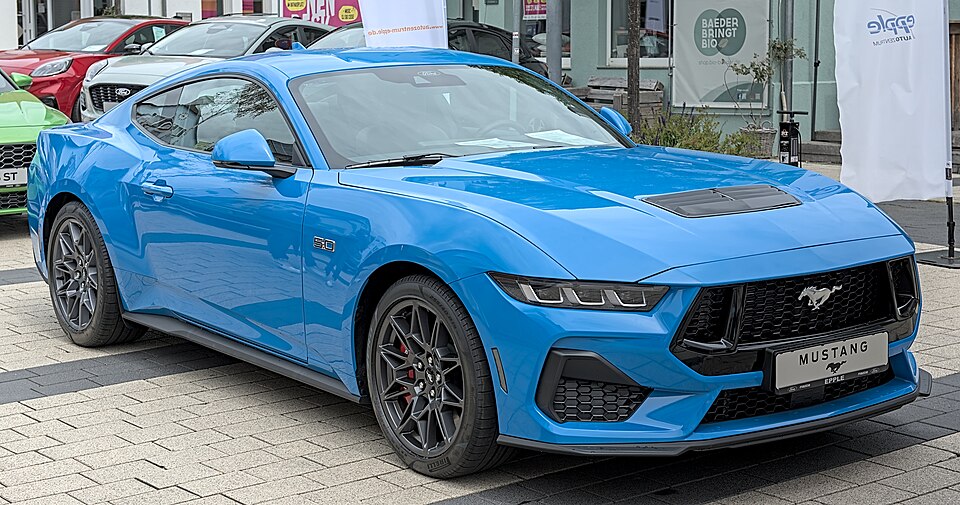
Ford Mustang 2017
Versiones, desempeño, equipamiento, consumo, seguridad y problemas conocidos, con sus ventajas y desventajas frente a modelos similares 2017.
- Clase
- Auto subcompacto
- Carrocerías
- GT 2dr Convertible RWD, GT 2dr Coupe RWD, Gt350 2dr Coupe RWD, V6/Ecoboost 2dr Convertible RWD
- Motores
- 2.3L 4 cil. turbo, 3.7L 6 cil., 5.0L 8 cil., 5.2L 8 cil.
- Potencia
- 300–435 hp
- Tracción
- Tracción trasera
- Asientos
- 4
- Combustible
- Gasolina regular, Gasolina premium
- MPG (mejor)
- 24 combinadas · 21 ciudad / 30 carretera
- Largo
- 188.2–189.8 in
- Peso en vacío
- 3,543–3,891 lb
- Calificación NHTSA
- ★★★★★
- Retiros
- 6 campañas
Ventajas y desventajas
Lo bueno
- Buen desempeñoHasta 435 hp, frente a unos 278 hp de modelos similares 2017.
- 5 estrellas en seguridad NHTSALa máxima calificación general en las pruebas de choque federales.
A tener en cuenta
- Muchas quejas de propietarios268 quejas ante la NHTSA frente a unas 49 de modelos similares; sobre todo por problemas de prevención de impacto en reversa.
- 6 retirosMás que modelos similares (unos 3). Confirma las reparaciones con el VIN.
Calculado con datos de la EPA, la NHTSA y vPIC frente a 16 modelos similares 2017; no es una reseña. Cómo lo calculamos →
Resumen
El Ford Mustang 2017 es un auto subcompacto disponible con 4 motores (2.3L 4 cil. turbo, 3.7L 6 cil., 5.0L 8 cil. y 5.2L 8 cil.), con tracción trasera.
Mide unas 188 pulgadas de largo y 76 de ancho, con una distancia entre ejes de 107 pulgadas, y pesa alrededor de 3,891 lb (GT 2dr Convertible RWD).
La EPA califica su versión más eficiente con 24 MPG combinadas (21 en ciudad / 30 en carretera), un 4 % mejor que el promedio de su clase (auto subcompacto, 2017: 23 MPG), con un gasto estimado de $2,800 al año en combustible.
En las pruebas de choque de la NHTSA obtuvo la máxima calificación general de 5 estrellas.
Tiene 6 campañas de retiro registradas y los propietarios han presentado 268 quejas ante la NHTSA desde 2015, sobre todo por problemas de prevención de impacto en reversa.
Novedades del 2017
- Ya probado por la NHTSA: 5 estrellas en general
Comparado con 2016; no incluye cambios de versiones, equipamiento ni precio. Ver el Mustang 2016 →
Versiones, desempeño y equipamiento
Versiones
Seguridad y asistencias al conductor
Fabricado en: Flat Rock, Michigan
NHTSA vPIC, según el fabricante, para 5 configuraciones del Mustang 2017; puede no incluir todas las versiones. Cómo lo calculamos →
Dimensiones y peso
| Carrocería | Largo | Ancho | Alto | Distancia entre ejes | Vía del. / tras. | Peso en vacío | Peso del./tras. |
|---|---|---|---|---|---|---|---|
| GT 2dr Convertible RWD | 188.2 in | 75.6 in | 54.7 in | 107.1 in | 62.6 / 65 in | 3,891 lb | 54/46 |
| GT 2dr Coupe RWD | 188.2 in | 75.6 in | 54.3 in | 107.1 in | 62.2 / 65 in | 3,706 lb | 54/46 |
| Gt350 2dr Coupe RWD | 189.8 in | 76 in | 54.3 in | 107.1 in | 63.4 / 63.8 in | 3,805 lb | 54/46 |
| V6/Ecoboost 2dr Convertible RWD | 188.2 in | 75.6 in | 54.7 in | 107.1 in | 62.6 / 65 in | 3,706 lb | 52/48 |
| V6/Ecoboost 2dr Coupe RWD | 188.2 in | 75.6 in | 54.3 in | 107.1 in | 62.2 / 65 in | 3,543 lb | 52/48 |
Transport Canada CVS (Open Government Licence – Canada), medidas del mercado canadiense.
¿Cabe en tu garaje? Compruébalo con tus medidas →Motores, consumo y costo de uso
| Versión | Motor | Transmisión | Tracción | Ciudad / Carr. / Comb. | vs. su clase | Combustible / año | CO₂ g/mi |
|---|---|---|---|---|---|---|---|
| Mustang | 2.3L 4 cil. turbo | Manual 6-spd | Tracción trasera | 21 / 30 / 24 | +4% | $2,800 | 370 |
| Mustang | 2.3L 4 cil. turbo | Automática (S6) | Tracción trasera | 21 / 30 / 24 | +4% | $2,800 | 370 |
| Mustang Performance Package | 2.3L 4 cil. turbo | Manual 6-spd | Tracción trasera | 21 / 28 / 24 | +4% | $2,800 | 370 |
| Mustang Convertible | 2.3L 4 cil. turbo | Automática (S6) | Tracción trasera | 20 / 28 / 23 | 0% | $2,900 | 386 |
| Mustang Performance Package | 2.3L 4 cil. turbo | Automática (S6) | Tracción trasera | 20 / 28 / 23 | 0% | $2,900 | 386 |
| Mustang Convertible | 2.3L 4 cil. turbo | Manual 6-spd | Tracción trasera | 21 / 27 / 23 | 0% | $2,900 | 386 |
| Mustang | 3.7L 6 cil. | Automática (S6) | Tracción trasera | 18 / 27 / 21 | -9% | $3,200 | 423 |
| Mustang | 3.7L 6 cil. | Manual 6-spd | Tracción trasera | 18 / 27 / 21 | -9% | $3,200 | 428 |
| Mustang | 5.0L 8 cil. | Manual 6-spd | Tracción trasera | 15 / 25 / 18 | -22% | $3,700 | 494 |
| Mustang Convertible | 5.0L 8 cil. | Automática (S6) | Tracción trasera | 15 / 23 / 18 | -22% | $3,700 | 492 |
| Mustang | 5.0L 8 cil. | Automática (S6) | Tracción trasera | 15 / 24 / 18 | -22% | $3,700 | 493 |
| Mustang Performance Package | 5.0L 8 cil. | Manual 6-spd | Tracción trasera | 14 / 23 / 17 | -26% | $3,950 | 523 |
| Mustang Convertible | 5.0L 8 cil. | Manual 6-spd | Tracción trasera | 14 / 23 / 17 | -26% | $3,950 | 523 |
| Shelby GT350 Mustang | 5.2L 8 cil. | Manual 6-spd | Tracción trasera | 14 / 21 / 16 | -30% | $5,150 | 549 |
Estimaciones de la EPA; "vs. su clase" compara las MPG combinadas con el promedio 2017 de su clase EPA. Cómo lo calculamos →
Calificaciones de seguridad y tecnología
| Versión | General | Frontal | Conductor / pasajero | Lateral | Poste lateral | Volcadura | Riesgo de volcadura |
|---|---|---|---|---|---|---|---|
| 2017 Ford Mustang C RWD | Sin calificar | Sin calificar | –★ / –★ | Sin calificar | Sin calificar | ★★★★★ | 8.1% |
| 2017 Ford Mustang 2 DR RWD | ★★★★★ | ★★★★★ | 5★ / 5★ | ★★★★★ | ★★★★★ | ★★★★★ | 8.1% |


Auto subcompacto similares 2017
| Modelo | Mejor MPG / autonomía | General NHTSA | Retiros |
|---|---|---|---|
| Ford Mustang 2017 (este auto) | 24 MPG | ★★★★★ | 6 |
| Honda Accord 2017 | 48 MPG | Sin calificar | 3 |
| Toyota Camry 2017 | 40 MPG | ★★★★★ | 3 |
| Chevrolet Camaro 2017 | 25 MPG | Sin calificar | 3 |
| Nissan GT-R 2017 | 18 MPG | Sin calificar | 0 |
| Dodge Challenger 2017 | 23 MPG | Sin calificar | 3 |
| Volkswagen Passat 2017 | 27 MPG | ★★★★★ | 7 |
Retiros (6)
Texto oficial de la NHTSA (en inglés).
Cinturones de seguridad › Pretensioner · 12 sept 2025
Campaña NHTSA 25V614000 · 332,778 vehículos
- Problema
- Ford Motor Company (Ford) is recalling certain 2015-2017 Mustang vehicles. Water and road salt may corrode the front seat belt anchor pretensioner cables.
- Riesgo
- A corroded cable can break, preventing the seat belt from properly restraining an occupant, and increasing the risk of injury during a crash.
- Solución
- Dealers will inspect and replace both front seat belt anchor pretensioner assemblies, as necessary. In addition, dealers will remove sections of the carpet and underlayment that contact the cables. Dealers will also inspect the A-pillar sealing patches, and as necessary, install A-pillar body plugs, and/or inspect and replace the front outboard seat bolts. Repairs will be performed free of charge. Interim letters, notifying owners of the safety risk, were mailed October 20, 2025. Additional letters will be sent once the final remedy is available, anticipated December 2026. Owners may contact Ford customer service at 1-866-436-7332. Ford's number for this recall is 25S92. Vehicle Identification Numbers (VINs) involved in this recall became searchable on NHTSA.gov September 17, 2025.
Prevención de impacto en reversa › Sensing System › Camera · 3 sept 2025
Campaña NHTSA 25V572000 · 1,456,417 vehículos
- Problema
- Ford Motor Company (Ford) is recalling certain 2015-2019 Lincoln MKC, Mustang, F-350 SD, F-250 SD, F-450 SD, 2015-2017 Lincoln Navigator, Expedition, 2015-2018 Edge, Transit Connect, 2016-2019 F-550 SD, Transit, 2017-2019 Econoline, and 2019 Ranger vehicles. The rearview camera may display a distorted, inverted, or blank image when the vehicle is in reverse.
- Riesgo
- A rearview camera that displays an inverted, distorted, or blank image can reduce the driverâs view behind the vehicle, increasing the risk of a crash.
- Solución
- Dealers will inspect and replace the rearview camera as necessary, free of charge. Owner notification letters were mailed January 13, 2026. Ford owners will receive letters in phases, beginning January 2026 and June 2026. Owners may contact Ford customer service at 1-866-436-7332. Ford's number for this recall is 25S89. This recall expands previous NHTSA recall number 25V270. Vehicle Identification Numbers (VINs) involved in this recall will be searchable on NHTSA.gov beginning September 8, 2025.
Prevención de impacto en reversa › Sensing System › Camera · 16 feb 2022
Campaña NHTSA 22V082000 · 330,784 vehículos
- Problema
- Ford Motor Company (Ford) is recalling certain 2015-2017 Mustang vehicles. The rearview camera wiring may be loose or damaged, which can result in a blank or distorted image.
- Riesgo
- A rearview camera that displays a blank or distorted image can reduce the driver's rear view, increasing the risk of a crash.
- Solución
- Dealers will inspect and repair the decklid wiring harness and/or replace the rearview camera, as necessary, free of charge. Owner notification letters were mailed December 23, 2022 and June 26, 2023. Remedy parts are expected to become available in the 4th Quarter of 2022. Owners may contact Ford customer service at 1-866-436-7332. Ford's number for this recall is 22S06.
Bolsas de aire › Frontal › Passenger Side › Inflator Module · 28 ago 2017
Campaña NHTSA 17V529000 · 650 vehículos
- Problema
- Ford Motor Company (Ford) is recalling certain 2017 F-150 and Mustang vehicles. The air bag inflator within the passenger frontal air bag module may rupture in the event of a crash.
- Riesgo
- An inflator rupture may result in metal fragments striking the vehicle occupants resulting in serious injury or death.
- Solución
- Ford will notify owners, and dealers will replace the passenger frontal air bag module, free of charge. The recall began October 11, 2017. Owners may contact Ford customer service at 1-866-436-7332. Ford's number for this recall is 17S26.
Cerraduras y seguros › Doors › Latch · 13 mar 2017
Campaña NHTSA 17V168000 · 5,470 vehículos
- Problema
- Ford Motor Company (Ford) is recalling certain 2017 Ford Mustang vehicles. The return spring for the driver side interior door handle may come loose, allowing the driver's door to unlatch in a side impact crash. As such, these vehicles fail to comply with the requirements of Federal Motor Vehicle Safety Standard (FMVSS) number 206, "Door Locks and Door Retention Components."
- Riesgo
- If the door unlatches in a crash it can increase the risk of injury.
- Solución
- Ford will notify owners, and dealers will inspect the driver-side interior door handle and repair the return spring, as necessary, free of charge. The recall began April 14, 2017. Owners may contact Ford at 1-866-436-7332. Ford's number for the recall is 17C04.
Motor y refrigeración › Cooling System › Hoses/Lines/Piping/Fittings · 26 oct 2016
Campaña NHTSA 16V779000 · 6,582 vehículos
- Problema
- Ford Motor Company (Ford) is recalling certain model year 2015-2017 Mustang vehicles manufactured February 24, 2015, to August 30, 2016. A hose may separate from the engine oil cooler tube assembly causing an oil leak.
- Riesgo
- A sudden loss of engine oil may cause engine failure, increasing the risk of a crash. Additionally, an oil leak, in the presence of an ignition source, increases the risk of a fire.
- Solución
- Ford will notify owners, and dealers will replace the engine oil cooler tube assembly, free of charge. The recall began on March 23, 2017. Owners may contact Ford customer service at 1-866-436-7332. Ford's number for this recall is 16S40.
No todos los Mustang 2017 están afectados: solo el VIN lo confirma.
Problemas reportados por propietarios
Reportes sin verificar; los más vendidos acumulan más.
Lista para comprar un Ford Mustang 2017 usado
- Consulta el VIN en nhtsa.gov/recalls. 6 retiros en este año: pide comprobantes de reparación.
- Prevención de impacto en reversa — 47 reportes de propietarios. Asegúrate de que los asistentes de manejo y la cámara de reversa funcionen sin mensajes de error.
- Estructura › Carrocería — 39 reportes de propietarios. Abre y cierra todas las puertas, el cofre y la cajuela; busca óxido o paneles desalineados.
- Sistema eléctrico — 33 reportes de propietarios. Prueba todas las ventanas, seguros, luces, pantallas y puertos USB; revisa la antigüedad de la batería.
- Millaje a vigilar. Los propietarios suelen reportar problemas alrededor de las 40,000 millas; pregunta qué se reparó cerca de ese punto.
- Antes de pagar: historial de servicio, reporte de antecedentes e inspección de un mecánico independiente.
Generado por DecodedCars a partir de retiros y quejas de propietarios ante la NHTSA para el Ford Mustang 2017. No sustituye una inspección profesional.
Otros años del Mustang
Comparar todos los años →| Año | MPG (mejor) | Largo | General | Retiros | Quejas |
|---|---|---|---|---|---|
| Mustang 2026 | 26 | 189.4 in | Sin calificar | 5 | 8 |
| Mustang 2025 | 26 | 189.4 in | ★★★★★ | 6 | 19 |
| Mustang 2024 | 26 | 189.4 in | ★★★★★ | 12 | 84 |
| Mustang 2023 | 25 | 188.2 in | Sin calificar | 6 | 15 |
| Mustang 2022 | 25 | 188.2 in | ★★★★★ | 9 | 50 |
| Mustang 2021 | 25 | 188.2 in | ★★★★★ | 6 | 55 |
| Mustang 2020 | 25 | 188.2 in | ★★★★★ | 8 | 121 |
| Mustang 2019 | 25 | 188.2 in | ★★★★★ | 6 | 151 |
| Mustang 2018 | 25 | 188.2 in | ★★★★★ | 3 | 196 |
| Mustang 2016 | 25 | 188.2 in | Sin calificar | 5 | 380 |
| Mustang 2015 | 25 | 188.2 in | Sin calificar | 11 | 437 |
| Mustang 2014 | 23 | 188.2 in | Sin calificar | 3 | 335 |
Fuentes: EPA, NHTSA, Transport Canada, Wikimedia Commons. Sin afiliación con la NHTSA, la EPA ni Ford. Cómo lo calculamos →