 DecodedCars
Toyota Camry 2019
Versiones, desempeño, equipamiento, consumo, seguridad y problemas conocidos, con sus ventajas y desventajas frente a modelos similares 2019.
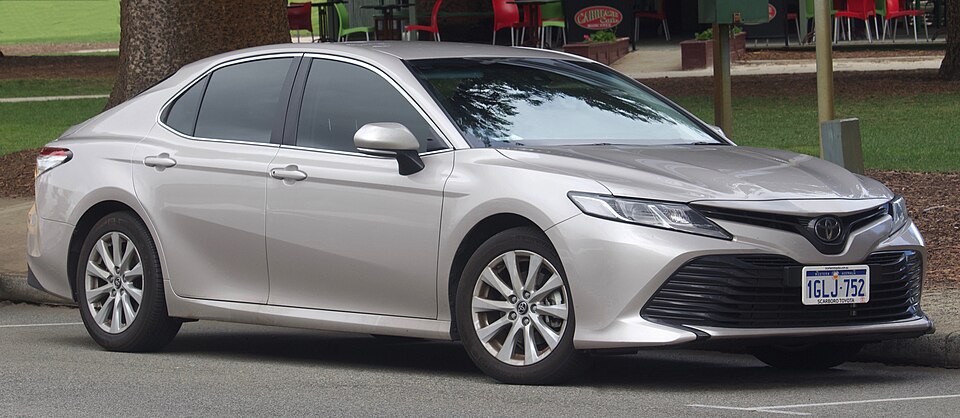
- Clase
- Auto mediano
- Carrocerías
- 4dr Sedan Le, 4dr Sedan Se/Xse/Xle, 4dr Sedan Xse V6/Xle V6, Hybrid 4dr Sedan Le
- Motores
- 2.5L 4 cil., 3.5L 6 cil.
- Potencia
- 176–302 hp
- Transmisión
- 8-speed Automática, CVT
- Tracción
- Tracción delantera
- Asientos
- 5
- Combustible
- Híbrido, Gasolina regular
- MPG (mejor)
- 52 combinadas · 51 ciudad / 53 carretera
- Largo
- 192.5 in
- Peso en vacío
- 3,296–3,549 lb
- Calificación NHTSA
- ★★★★★
- Retiros
- 7 campañas
Ventajas y desventajas
Lo bueno
- Excelente consumo de combustibleHasta 52 MPG combinadas: un 85 % mejor que el promedio de su clase (auto mediano, 2019: 28.1 MPG).
- Disponible en versión híbridaSe ofrece en versión híbrida además de gasolina.
- 5 estrellas en seguridad NHTSALa máxima calificación general en las pruebas de choque federales.
A tener en cuenta
- Muchas quejas de propietarios411 quejas ante la NHTSA frente a unas 61 de modelos similares; sobre todo por problemas de tren motriz.
- 7 retirosMás que modelos similares (unos 2). Confirma las reparaciones con el VIN.
Calculado con datos de la EPA, la NHTSA y vPIC frente a 29 modelos similares 2019; no es una reseña. Cómo lo calculamos →
Resumen
El Toyota Camry 2019 es un auto mediano disponible con 2 motores (2.5L 4 cil. y 3.5L 6 cil.), incluida una versión híbrida, con tracción delantera.
Mide unas 193 pulgadas de largo y 72 de ancho, con una distancia entre ejes de 111 pulgadas, y pesa alrededor de 3,296 lb (4dr Sedan Le).
La EPA califica su versión más eficiente con 52 MPG combinadas (51 en ciudad / 53 en carretera), un 85 % mejor que el promedio de su clase (auto mediano, 2019: 28.1 MPG), con un gasto estimado de $1,300 al año en combustible.
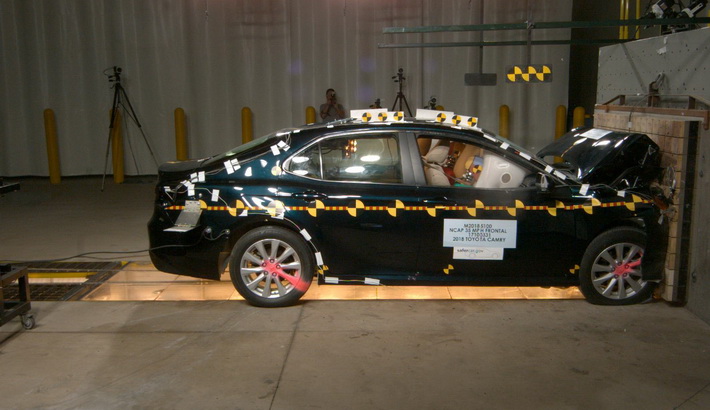
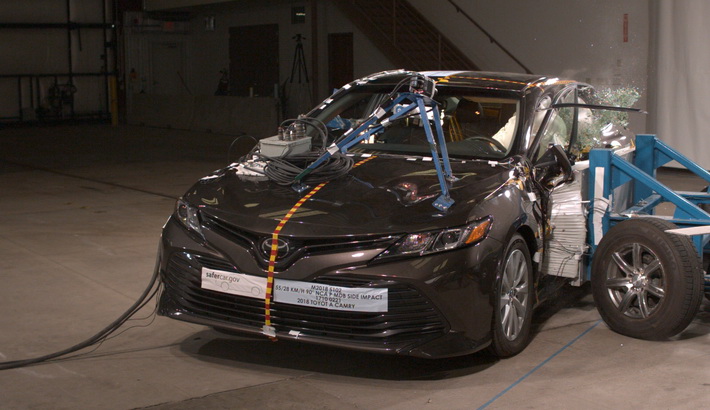
En las pruebas de choque de la NHTSA obtuvo la máxima calificación general de 5 estrellas.
Tiene 7 campañas de retiro registradas y los propietarios han presentado 411 quejas ante la NHTSA desde 2015, sobre todo por problemas de tren motriz.
Novedades del 2019
Sin cambios en motores, versiones, tracción, tamaño, consumo EPA ni calificación NHTSA respecto al Camry 2018: un año sin cambios según los datos.
Comparado con 2018; no incluye cambios de versiones, equipamiento ni precio. Ver el Camry 2018 →
Versiones, desempeño y equipamiento
Versiones
Seguridad y asistencias al conductor
Fabricado en: Georgetown, Kentucky
NHTSA vPIC, según el fabricante, para 5 configuraciones del Camry 2019; puede no incluir todas las versiones. Cómo lo calculamos →
Dimensiones y peso
| Carrocería | Largo | Ancho | Alto | Distancia entre ejes | Vía del. / tras. | Peso en vacío | Peso del./tras. |
|---|---|---|---|---|---|---|---|
| 4dr Sedan Le | 192.5 in | 72 in | 58.3 in | 111.4 in | 61.8 / 62.2 in | 3,296 lb | 60/40 |
| 4dr Sedan Se/Xse/Xle | 192.5 in | 72 in | 58.3 in | 111.4 in | 61.8 / 62.2 in | 3,351 lb | 60/40 |
| 4dr Sedan Xse V6/Xle V6 | 192.5 in | 72 in | 58.3 in | 111.4 in | 61.8 / 62.2 in | 3,549 lb | 60/40 |
| Hybrid 4dr Sedan Le | 192.5 in | 72 in | 58.3 in | 111.4 in | 61.8 / 62.2 in | 3,472 lb | 59/41 |
| Hybrid 4dr Sedan Se/Xle | 192.5 in | 72 in | 58.3 in | 111.4 in | 61.8 / 62.2 in | 3,549 lb | 59/41 |
Transport Canada CVS (Open Government Licence – Canada), medidas del mercado canadiense.
¿Cabe en tu garaje? Compruébalo con tus medidas →Motores, consumo y costo de uso
| Versión | Motor | Transmisión | Tracción | Ciudad / Carr. / Comb. | vs. su clase | Combustible / año | CO₂ g/mi |
|---|---|---|---|---|---|---|---|
| Camry Hybrid LE Híbrido | 2.5L 4 cil. | Automática (AV-S6) | Tracción delantera | 51 / 53 / 52 | +85% | $1,300 | 170 |
| Camry Hybrid XLE/SE Híbrido | 2.5L 4 cil. | Automática (AV-S6) | Tracción delantera | 44 / 47 / 46 | +64% | $1,450 | 195 |
| Camry | 2.5L 4 cil. | Automática (S8) | Tracción delantera | 29 / 41 / 34 | +21% | $1,950 | 264 |
| Camry LE/SE | 2.5L 4 cil. | Automática (S8) | Tracción delantera | 28 / 39 / 32 | +14% | $2,100 | 278 |
| Camry XLE/XSE | 2.5L 4 cil. | Automática (S8) | Tracción delantera | 28 / 39 / 32 | +14% | $2,100 | 274 |
| Camry | 3.5L 6 cil. | Automática (S8) | Tracción delantera | 22 / 33 / 26 | -7% | $2,600 | 338 |
| Camry XSE | 3.5L 6 cil. | Automática (S8) | Tracción delantera | 22 / 32 / 26 | -7% | $2,600 | 345 |
Estimaciones de la EPA; "vs. su clase" compara las MPG combinadas con el promedio 2019 de su clase EPA. Cómo lo calculamos →
Calificaciones de seguridad y tecnología
| Versión | General | Frontal | Conductor / pasajero | Lateral | Poste lateral | Volcadura | Riesgo de volcadura |
|---|---|---|---|---|---|---|---|
| 2019 Toyota Camry 4 DR FWD | ★★★★★ | ★★★★★ | 5★ / 5★ | ★★★★★ | ★★★★★ | ★★★★★ | 9.9% |
Auto mediano similares 2019
| Modelo | Mejor MPG / autonomía | General NHTSA | Retiros |
|---|---|---|---|
| Toyota Camry 2019 (este auto) | 52 MPG | ★★★★★ | 7 |
| Toyota Corolla 2019 | 36 MPG | ★★★★★ | 6 |
| Ford Mustang 2019 | 25 MPG | ★★★★★ | 6 |
| Honda Accord 2019 | 48 MPG | Sin calificar | 6 |
| Chevrolet Impala 2019 | 25 MPG | ★★★★★ | 1 |
| Chevrolet Camaro 2019 | 25 MPG | ★★★★★ | 1 |
| Nissan GT-R 2019 | 18 MPG | Sin calificar | 1 |
Retiros (7)
Texto oficial de la NHTSA (en inglés).
Frenos hidráulicos › Power Assist › Vacuum · 17 nov 2021
Campaña NHTSA 21V890000 · 227,490 vehículos
- Problema
- Toyota Motor Engineering & Manufacturing (Toyota) is recalling certain 2018-2019 Camry vehicles. The vane cap inside the vacuum pump may break, causing the pump to fail, which could result in a sudden loss of braking assist.
- Riesgo
- A sudden loss of braking assist can increase the risk of a crash.
- Solución
- Dealers will repair or replace the vacuum pump, as necessary, free of charge. Owner notification letters were mailed May 16, 2022. Owners may contact Toyota customer service at 1-800-331-4331.
Combustible (gasolina) › Delivery › Fuel Pump · 4 nov 2020
Campaña NHTSA 20V682000 · 1,525,742 vehículos
- Problema
- Toyota Motor Engineering & Manufacturing (Toyota) is recalling certain 2018-2019 4Runner, 2019-2020 Avalon, 2019 Corolla Hatchback, 2017-2019 Highlander, 2018-2020 Camry, 2020 Corolla, 2018-2019 Land Cruiser, 2017-2020 Tacoma, 2019-2020 RAV4, 2019-2020 Sequoia, 2017-2020 Sienna, 2019-2020 Tundra, 2018-2020 Lexus ES350, 2017 Lexus GS200t, 2017-2019 Lexus GS350, 2019 Lexus GS300, 2018-2020 Lexus LC500h, 2019-2020 Lexus LS500, 2018-2019 Lexus GX460, 2017 Lexus IS200t, 2019 Lexus IS300, 2019 Lexus IS350, 2018-2020 Lexus LC500, 2018 Lexus LS500, 2019 Lexus LS500h, 2018-2019 Lexus LX570, 2017 Lexus RC200t, 2019 Lexus RC300, RC350, 2017 and 2019-2020 Lexus RX350, 2018-2020 RX350L, 2019 Lexus UX200, 2018-2019 Lexus NX300 vehicles. The low-pressure fuel pump inside the fuel tank may fail.
- Riesgo
- If the fuel pump fails, the engine can stall while driving, increasing the risk of a crash.
- Solución
- Toyota will notify owners, and dealers will replace the fuel pump assembly with an improved one, free of charge. Owners of specific models were notified that remedy parts were available starting January 21, 2021. Owners of other models will be notified as remedy parts become available. Remedy parts should be available for all affected vehicles by late March 2021. Owners may contact Toyota customer service at 1-888-270-9371 or Lexus customer service at 1-800-255-3987. Note: This recall is an expansion of recall 20V-012. Toyota's number for this recall is 20TA02. Lexus' number for this recall is 20LA01.
Combustible (gasolina) › Delivery › Fuel Pump · 13 ene 2020
Campaña NHTSA 20V012000 · 1,830,752 vehículos
- Problema
- Toyota Motor Engineering & Manufacturing (Toyota) recalled certain 2018-2019 4Runner, Highlander, Camry, Land Cruiser, Sequoia, Sienna, Tacoma and Tundra, and Lexus RC 300, RC 350, GS 350, GX 460, IS 300, LC 500, LS 500, LX 570, RX 350L, and 2019 Toyota Avalon and Corolla, and certain Lexus NX 300, and ES 350 vehicles on January 13, 2020. On March 4, 2020, Toyota expanded the recall to include certain 2014-2015 Toyota 4Runner and Land Cruiser, 2018 Avalon, Corolla, 2014 FJ Cruiser, 2017 Sienna and Lexus 2018 ES 350, 2018-2019 GS 300, 2013-2014 GS350, 2014-2015 GX 460, IS 350 and LX 570, 2014 IS F, 2018-2019 IS 350, LC 500H and LS 500H, 2013-2015 LS 460, 2015 NX 200T and RC350, 2017 RC 200T and RX 350. Toyota also removed the 2018-2019 Toyota 4Runner and Land Cruiser and 2018-2019 Lexus GX 460 and LX 570 and 2019 NX300 from inclusion in this recall. On March 19, 2020, Toyota expanded the recall to include 2015 Lexus GS350 vehicles. The low-pressure fuel pump inside the fuel tank may fail.
- Riesgo
- If the fuel pump fails, the engine can stall while driving, increasing the risk of a crash.
- Solución
- Toyota will notify owners, and dealers will replace the fuel pump, free of charge. The recall began May 4, 2020. Owners may contact Toyota customer service at 1-888-270-9371 or Lexus customer service at 1-800-255-3987. Toyota's numbers for this recall are 20TB02 and 20TA02 for Toyota vehicles and 20LB01 and 20LA01 for Lexus vehicles.
Bolsas de aire › Sensor › Occupant Classification · 1 ago 2019
Campaña NHTSA 19V567000 · 680 vehículos
- Problema
- Toyota Motor Engineering & Manufacturing (Toyota) is recalling certain 2019 Camry vehicles. The Occupant Classification System (OCS) may have been improperly calibrated, which may prevent the proper deployment of the front passenger air bag and knee air bag, in the event of a crash. As such, these vehicles fail to comply with the requirements of Federal Motor Vehicle Safety Standard (FMVSS) number 208, "Occupant Crash Protection."
- Riesgo
- In the event of a crash, if the air bags do not deploy as designed, the front seat passenger has an increased risk of an injury.
- Solución
- Toyota will notify owners, and dealers will recalibrate the OCS, free of charge. The recall began August 27, 2019. Owners may contact Toyota customer service at 1-888-270-9371. Toyota's number for this recall is K0M.
Equipamiento › Other › Labels · 28 jun 2019
Campaña NHTSA 19V503000 · 1,325 vehículos
- Problema
- Southeast Toyota Distributors, LLC (SET) is recalling certain 2017-2019 Toyota Camry, Corolla, Rav4, Sienna, and Yaris iA vehicles equipped with factory-installed floor mats. The load carrying capacity modification label may be incorrect. As such, these vehicles fail to comply with the requirements of Federal Motor Vehicle Safety Standard (FMVSS) number 110, "Tire Selection and Rims."
- Riesgo
- An incorrect label may lead to unintentionally overloading the vehicle, increasing the risk of a crash.
- Solución
- SET will notify owners and provide a corrected label for placement over the inaccurate label, free of charge. The recall began August 23, 2019. Owners may contact Toyota customer service at 1-888-270-9371. SET's number for this recall is SET19A.
Equipamiento › Other › Labels · 27 mar 2019
Campaña NHTSA 19V244000 · 3,634 vehículos
- Problema
- Gulf States Toyota (GST) is recalling certain 2019 C-HR, 4Runner, Avalon, Avalon Hybrid, Camry, Camry Hybrid, Highlander, Land Cruiser, Prius, RAV4, Sequoia, Tacoma, Sienna, Tundra and Yaris vehicles. The text on the load capacity label may become illegible. As such, these vehicles fail to comply with the requirements of Federal Motor Vehicle Safety Standard (FMVSS) number 110, "Tire Selection and Rims."
- Riesgo
- If the driver cannot read the label, they may unknowingly overload the vehicle, increasing the risk of a crash.
- Solución
- GST will notify owners, and dealers will provide corrected load carrying capacity modification labels, free of charge. The recall began May 24, 2019. Owners may contact GST customer service at 1-800-444-1074. GST's number for this recall is 19R1.
Combustible (gasolina) › Storage › Tank Assembly › Filler Pipe And Cap · 14 feb 2019
Campaña NHTSA 19V097000 · 205 vehículos
- Problema
- Toyota Motor Engineering & Manufacturing (Toyota) is recalling certain 2019 Camry Hybrid and Avalon Hybrid vehicles. The fuel filler pipe may not have been properly reconnected to the fuel tank during an inspection after vehicle assembly. As such, these vehicles fail to comply with the requirements of Federal Motor Vehicle Safety Standard (FMVSS) number 301, "Fuel System Integrity."
- Riesgo
- The improperly connected filler pipe may leak fuel, which, in the presence of an ignition source can increase the risk of a fire.
- Solución
- Toyota will notify owners, and dealers will inspect the fuel filler pipe, replacing it if necessary, free of charge. The recall began March 19, 2019. Owners may contact Toyota customer service at 1-888-270-9371. Toyota's number for this recall is K0I.
No todos los Camry 2019 están afectados: solo el VIN lo confirma.
Problemas reportados por propietarios
Reportes sin verificar; los más vendidos acumulan más.
Lista para comprar un Toyota Camry 2019 usado
- Consulta el VIN en nhtsa.gov/recalls. 7 retiros en este año: pide comprobantes de reparación.
- Tren motriz — 115 reportes de propietarios. Prueba todas las marchas, incluida la reversa; nota patinazos o cambios bruscos o tardíos.
- Motor — 82 reportes de propietarios. Arranca el motor en frío, escucha si golpetea y fíjate en luces de advertencia o titubeos al acelerar.
- Combustible / propulsión — 66 reportes de propietarios. Busca olor a combustible alrededor del auto y en la cabina, comprueba que arranque bien en caliente y revisa la varilla del aceite por olor a gasolina o nivel en aumento.
- Millaje a vigilar. Los propietarios suelen reportar problemas alrededor de las 11,000 millas; pregunta qué se reparó cerca de ese punto.
- Sistema híbrido. Busca luces de advertencia del sistema híbrido y pregunta si la batería de alto voltaje se reemplazó o sigue en garantía.
- Antes de pagar: historial de servicio, reporte de antecedentes e inspección de un mecánico independiente.
Generado por DecodedCars a partir de retiros y quejas de propietarios ante la NHTSA para el Toyota Camry 2019. No sustituye una inspección profesional.
Otros años del Camry
Comparar todos los años →| Año | MPG (mejor) | Largo | General | Retiros | Quejas |
|---|---|---|---|---|---|
| Camry 2026 | 51 | 193.7 in | Sin calificar | 3 | 145 |
| Camry 2025 | 51 | 193.7 in | Sin calificar | 6 | 173 |
| Camry 2024 | 52 | 192.5 in | ★★★★★ | 1 | 52 |
| Camry 2023 | 52 | 192.5 in | ★★★★★ | 2 | 66 |
| Camry 2022 | 52 | 192.5 in | ★★★★★ | 1 | 65 |
| Camry 2021 | 52 | 192.5 in | ★★★★★ | 1 | 166 |
| Camry 2020 | 52 | 192.5 in | ★★★★★ | 3 | 284 |
| Camry 2018 | 52 | 192.5 in | ★★★★★ | 8 | 782 |
| Camry 2017 | 40 | 190.9 in | ★★★★★ | 3 | 153 |
| Camry 2016 | 40 | 190.9 in | ★★★★★ | 3 | 189 |
| Camry 2015 | 40 | 190.9 in | ★★★★★ | 1 | 285 |
| Camry 2014 | 40 | 189.4 in | ★★★★★ | 3 | 432 |
Fuentes: EPA, NHTSA, Transport Canada, Wikimedia Commons. Sin afiliación con la NHTSA, la EPA ni Toyota. Cómo lo calculamos →