 DecodedCars
Toyota Camry 2006
Versiones, desempeño, equipamiento, consumo, seguridad y problemas conocidos, con sus ventajas y desventajas frente a modelos similares 2006.
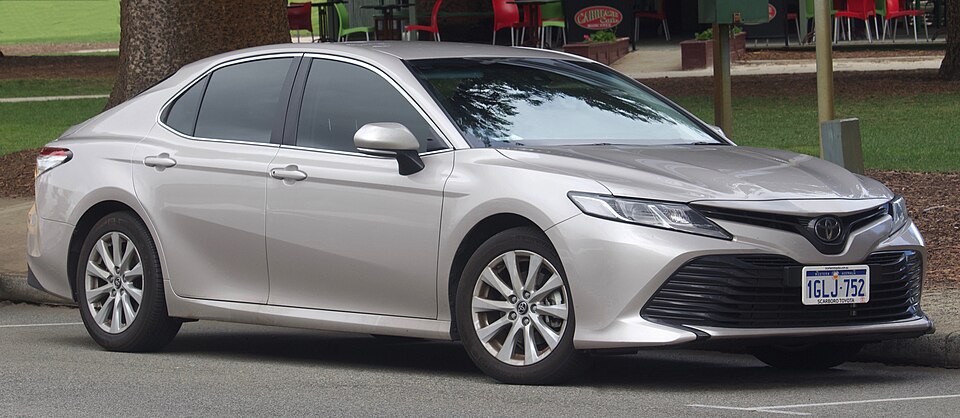
- Clase
- Auto mediano
- Carrocerías
- 4dr Sedan /Se, 4dr Sedan Le /Xle, 4dr Sedan Le V6/ Xle V6/Se V6
- Motores
- 2.4L 4 cil., 3.3L 6 cil., 3.0L 6 cil.
- Potencia
- 149–184 hp
- Tracción
- Tracción delantera
- Combustible
- Gasolina regular
- MPG (mejor)
- 25 combinadas · 21 ciudad / 31 carretera
- Largo
- 189.4 in
- Peso en vacío
- 3,164–3,395 lb
- Calificación NHTSA
- Sin calificar
- Retiros
- 4 campañas
Ventajas y desventajas
Lo bueno
- Excelente consumo de combustibleHasta 25 MPG combinadas: un 22 % mejor que el promedio de su clase (auto mediano, 2006: 20.5 MPG).
A tener en cuenta
- Potencia modestaHasta 184 hp, frente a unos 300 hp de modelos similares 2006.
Calculado con datos de la EPA, la NHTSA y vPIC frente a 31 modelos similares 2006; no es una reseña. Cómo lo calculamos →
Resumen
El Toyota Camry 2006 es un auto mediano disponible con 3 motores (2.4L 4 cil., 3.3L 6 cil. y 3.0L 6 cil.), con tracción delantera.
Mide unas 189 pulgadas de largo y 71 de ancho, con una distancia entre ejes de 107 pulgadas, y pesa alrededor de 3,164 lb (4dr Sedan /Se).
La EPA califica su versión más eficiente con 25 MPG combinadas (21 en ciudad / 31 en carretera), un 22 % mejor que el promedio de su clase (auto mediano, 2006: 20.5 MPG), con un gasto estimado de $2,700 al año en combustible.
Tiene 4 campañas de retiro registradas y los propietarios han presentado 100 quejas ante la NHTSA desde 2015, sobre todo por problemas de bolsas de aire.
Novedades del 2006
Sin cambios en motores, versiones, tracción, tamaño, consumo EPA ni calificación NHTSA respecto al Camry 2005: un año sin cambios según los datos.
Comparado con 2005; no incluye cambios de versiones, equipamiento ni precio. Ver el Camry 2005 →
Versiones, desempeño y equipamiento
Versiones
Fabricado en: Georgetown, Kentucky
NHTSA vPIC, según el fabricante, para 5 configuraciones del Camry 2006; puede no incluir todas las versiones. Cómo lo calculamos →
Dimensiones y peso
| Carrocería | Largo | Ancho | Alto | Distancia entre ejes | Vía del. / tras. | Peso en vacío | Peso del./tras. |
|---|---|---|---|---|---|---|---|
| 4dr Sedan /Se | 189.4 in | 70.9 in | 58.7 in | 107.1 in | 61.8 / 60.6 in | 3,164 lb | 59/41 |
| 4dr Sedan Le /Xle | 189.4 in | 70.9 in | 58.7 in | 107.1 in | 61.8 / 60.6 in | 3,208 lb | 59/41 |
| 4dr Sedan Le V6/ Xle V6/Se V6 | 189.4 in | 70.5 in | 58.7 in | 107.1 in | 61.8 / 60.6 in | 3,395 lb | 59/41 |
Transport Canada CVS (Open Government Licence – Canada), medidas del mercado canadiense.
¿Cabe en tu garaje? Compruébalo con tus medidas →Motores, consumo y costo de uso
| Versión | Motor | Transmisión | Tracción | Ciudad / Carr. / Comb. | vs. su clase | Combustible / año | CO₂ g/mi |
|---|---|---|---|---|---|---|---|
| Camry | 2.4L 4 cil. | Automática 5-spd | Tracción delantera | 21 / 31 / 25 | +22% | $2,700 | 355 |
| Camry Solara | 2.4L 4 cil. | Manual 5-spd | Tracción delantera | 21 / 30 / 24 | +8% | $2,800 | 370 |
| Camry Solara | 2.4L 4 cil. | Automática (S5) | Tracción delantera | 20 / 30 / 24 | +8% | $2,800 | 370 |
| Camry | 2.4L 4 cil. | Manual 5-spd | Tracción delantera | 21 / 30 / 24 | +17% | $2,800 | 370 |
| Camry Solara | 3.3L 6 cil. | Automática (S5) | Tracción delantera | 18 / 27 / 21 | -5% | $3,200 | 423 |
| Camry Solara Convertible | 3.3L 6 cil. | Automática (S5) | Tracción delantera | 18 / 26 / 21 | -5% | $3,200 | 423 |
| Camry | 3.0L 6 cil. | Automática 5-spd | Tracción delantera | 18 / 26 / 21 | +2% | $3,200 | 423 |
| Camry | 3.3L 6 cil. | Automática 5-spd | Tracción delantera | 18 / 27 / 21 | +2% | $3,200 | 423 |
Estimaciones de la EPA; "vs. su clase" compara las MPG combinadas con el promedio 2006 de su clase EPA. Cómo lo calculamos →
Calificaciones de seguridad y tecnología
La NHTSA no ha publicado calificaciones de 5 estrellas para el Toyota Camry 2006 con el programa de pruebas actual (2011+).
Auto mediano similares 2006
| Modelo | Mejor MPG / autonomía | General NHTSA | Retiros |
|---|---|---|---|
| Toyota Camry 2006 (este auto) | 25 MPG | Sin calificar | 4 |
| Ford Mustang 2006 | 20 MPG | Sin calificar | 4 |
| Honda Accord 2006 | 26 MPG | Sin calificar | 9 |
| Chevrolet Malibu 2006 | 24 MPG | Sin calificar | 4 |
| Volkswagen Passat 2006 | 24 MPG | Sin calificar | 4 |
| Mitsubishi Lancer 2006 | 26 MPG | Sin calificar | 4 |
| Chrysler 300 2006 | 21 MPG | Sin calificar | 2 |
Retiros (4)
Texto oficial de la NHTSA (en inglés).
Asientos › Front Assembly › Seat Heater/Cooler · 2 jun 2016
Campaña NHTSA 16V396000 · 7,749 vehículos
- Problema
- Southeast Toyota Distributors, LLC (SET) is recalling certain 2005-2011 4Runner, Highlander, Sequoia, and Sienna, 2005-2010 Avalon and Tundra, 2006-2008 Camry Solara, 2006-2010 Highlander hybrid, 2006-2011 Rav4 and Tacoma, 2007-2010 FJ Cruiser, 2007-2011 Camry hybrid, 2009-2010 Venza, 2010-2012 Prius, 1988-1990 and 2005-2010 Camry, and 1989 and 2009-2010 Corolla vehicles equipped with aftermarket accessory seat heaters with a copper strand heating element. The electrical wiring in the seat heaters may be damaged when the seat cushion is compressed.
- Riesgo
- If damaged, the copper strand heating element may short circuit, increasing the risk of a fire.
- Solución
- SET will notify owners, and dealers will disconnect the seat heaters, free of charge, and refund the purchase price of the seat heater accessory. The recall began on July 14, 2016. Owners may contact SET customer service at 1-866-405-4226. SET number for this recall is SET16B.
Asientos › Front Assembly › Seat Heater/Cooler · 19 nov 2014
Campaña NHTSA 14V743000 · 3,233 vehículos
- Problema
- Southeast Toyota Distributors, LLC (SET) is recalling certain model year 2010-2011 Prius and Corolla, 2009-2011 Venza, 2006-2010 Avalon, 2007-2010 FJ Cruiser, 2005-2011 Sienna and Sequoia, 2006-2011 Tacoma 4x2 and 4x4, Camry, Highlander, Tundra 4x2 and 4x4, and 2007-2011 Rav4 and 4Runner. The affected vehicles may experience compression of the seat cushion which may damage the seat heater wiring.
- Riesgo
- Damage to the seat heater wiring could cause the wires to short, increasing the risk of the seat burning and causing personal injury to the occupant.
- Solución
- SET will notify owners, and dealers will disconnect the heaters with copper strand heating elements and refund the purchase price of the seat heater accessory, free of charge. The recall is expected to began in January 2015. Owners may contact SET customer service at 1-866-405-4226.
Equipamiento › Other › Labels · 3 feb 2010
Campaña NHTSA 10V035000 · 271,417 vehículos
- Problema
- GULF STATES TOYOTA IS RECALLING CERTAIN MODEL YEAR 2005-2010 VEHICLES FOR FAILING TO COMPLY WITH THE REQUIREMENTS OF FEDERAL MOTOR VEHICLE SAFETY STANDARD NO. 110, "TIRE SELECTION AND RIMS." THESE VEHICLES WERE SOLD BETWEEN SEPTEMBER 1, 2005 AND JUNE 2, 2008 WITHOUT THE REQUISITE LOAD CARRYING CAPACITY MODIFICATION LABELS.
- Riesgo
- THIS DOES NOT MEET THE STANDARD REQUIREMENTS.
- Solución
- DEALERS WILL MAIL TO CONSUMERS THE CORRECTED LABEL OR THE CUSTOMER WILL HAVE THE OPTION FOR DEALERS TO INSTALL THE LABEL FREE OF CHARGE. DEALERS WILL ALSO CORRECT THE OWNER'S MANUAL. THE SAFETY RECALL BEGAN ON MAY 27, 2010. OWNERS MAY CONTACT GULF STATES TOYOTA AT 713-580-3300.
Equipamiento › Other › Labels · 3 feb 2010
Campaña NHTSA 10V036000 · 153,418 vehículos
- Problema
- SOUTHEAST TOYOTA IS RECALLING CERTAIN MODEL YEAR 2005-2011 PASSENGER VEHICLES FOR FAILING TO COMPLY WITH THE REQUIREMENTS OF FEDERAL MOTOR VEHICLE SAFETY STANDARD NO. 110, "TIRE SELECTION AND RIMS." THESE VEHICLES WERE SOLD WITHOUT THE REQUISITE LOAD CARRYING CAPACITY MODIFICATION LABELS.
- Riesgo
- A DRIVER MAY OVERLOAD A VEHICLE WHICH MAY INCREASE THE RISK OF A CRASH.
- Solución
- DEALERS WILL MAIL TO CONSUMERS THE CORRECTED LABEL OR THE CUSTOMER WILL HAVE THE OPTION FOR DEALERS TO INSTALL THE LABEL FREE OF CHARGE. THE SAFETY RECALL BEGAN ON MAY 27, 2010. OWNERS MAY CONTACT SOUTHEAST TOYOTA AT 1-800-301-6859.
No todos los Camry 2006 están afectados: solo el VIN lo confirma.
Problemas reportados por propietarios
Reportes sin verificar; los más vendidos acumulan más.
Lista para comprar un Toyota Camry 2006 usado
- Consulta el VIN en nhtsa.gov/recalls. 4 retiros en este año: pide comprobantes de reparación.
- Bolsas de aire — 27 reportes de propietarios. Confirma que la luz de advertencia de las bolsas de aire se apague al arrancar y que cualquier retiro de bolsas de aire esté reparado.
- Control de velocidad — 20 reportes de propietarios. Pregunta al vendedor y al mecánico específicamente por este sistema.
- Sistema eléctrico — 14 reportes de propietarios. Prueba todas las ventanas, seguros, luces, pantallas y puertos USB; revisa la antigüedad de la batería.
- Millaje a vigilar. Los propietarios suelen reportar problemas alrededor de las 92,000 millas; pregunta qué se reparó cerca de ese punto.
- Antes de pagar: historial de servicio, reporte de antecedentes e inspección de un mecánico independiente.
Generado por DecodedCars a partir de retiros y quejas de propietarios ante la NHTSA para el Toyota Camry 2006. No sustituye una inspección profesional.
Otros años del Camry
Comparar todos los años →| Año | MPG (mejor) | Largo | General | Retiros | Quejas |
|---|---|---|---|---|---|
| Camry 2026 | 51 | 193.7 in | Sin calificar | 3 | 144 |
| Camry 2025 | 51 | 193.7 in | Sin calificar | 6 | 173 |
| Camry 2024 | 52 | 192.5 in | ★★★★★ | 1 | 52 |
| Camry 2023 | 52 | 192.5 in | ★★★★★ | 2 | 66 |
| Camry 2022 | 52 | 192.5 in | ★★★★★ | 1 | 65 |
| Camry 2021 | 52 | 192.5 in | ★★★★★ | 1 | 165 |
| Camry 2020 | 52 | 192.5 in | ★★★★★ | 3 | 284 |
| Camry 2019 | 52 | 192.5 in | ★★★★★ | 7 | 411 |
| Camry 2018 | 52 | 192.5 in | ★★★★★ | 8 | 779 |
| Camry 2017 | 40 | 190.9 in | ★★★★★ | 3 | 153 |
| Camry 2016 | 40 | 190.9 in | Sin calificar | 3 | 189 |
| Camry 2015 | 40 | 190.9 in | Sin calificar | 1 | 285 |
Fuentes: EPA, NHTSA, Transport Canada, Wikimedia Commons. Sin afiliación con la NHTSA, la EPA ni Toyota. Cómo lo calculamos →