 DecodedCars
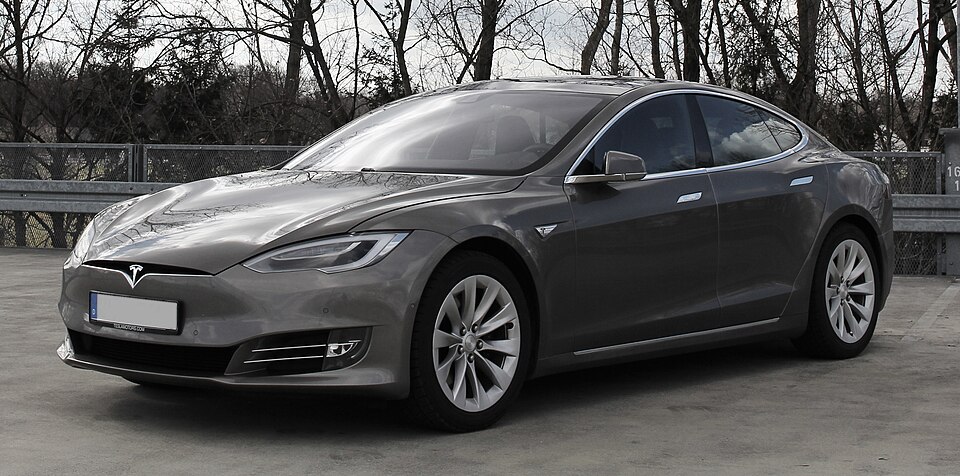
Tesla Model S 2017
Versiones, desempeño, equipamiento, consumo, seguridad y problemas conocidos, con sus ventajas y desventajas frente a modelos similares 2017.
- Clase
- Auto grande
- Carrocerías
- 4dr Sedan AWD, 4dr Sedan RWD
- Motores
- Motor eléctrico
- Tracción
- Tracción total (AWD), Tracción trasera
- Asientos
- 5
- Combustible
- Eléctrico
- Autonomía eléctrica
- 335 mi · 10 h a 240 V
- Largo
- 195.7 in
- Peso en vacío
- 4,656–4,969 lb
- Calificación NHTSA
- Sin calificar
- Retiros
- 9 campañas
Ventajas y desventajas
Lo bueno
- Gran autonomía eléctricaHasta 335 millas por carga (EPA).
- Tracción total / 4x4 disponible
A tener en cuenta
- Muchas quejas de propietarios429 quejas ante la NHTSA frente a unas 5 de modelos similares; sobre todo por problemas de suspensión.
- 9 retirosMás que modelos similares (unos 2). Confirma las reparaciones con el VIN.
Calculado con datos de la EPA, la NHTSA y vPIC frente a 35 modelos similares 2017; no es una reseña. Cómo lo calculamos →
Resumen
El Tesla Model S 2017 es un auto grande 100 % eléctrico, con tracción total (AWD) y tracción trasera.
Mide unas 196 pulgadas de largo y 77 de ancho, con una distancia entre ejes de 117 pulgadas, y pesa alrededor de 4,969 lb (4dr Sedan AWD).
La versión eléctrica tiene una autonomía EPA de hasta 335 millas y tarda unas 10 horas en cargarse con un cargador de nivel 2 (240 V).
La NHTSA no ha publicado una calificación general de 5 estrellas para este año modelo.
Tiene 9 campañas de retiro registradas y los propietarios han presentado 429 quejas ante la NHTSA desde 2015, sobre todo por problemas de suspensión.
Novedades del 2017
- Autonomía eléctrica máxima sube de 315 a 335 millas
- La versión más ligera pesa 236 lb más
Comparado con 2016; no incluye cambios de versiones, equipamiento ni precio. Ver el Model S 2016 →
Versiones, desempeño y equipamiento
Seguridad y asistencias al conductor
Fabricado en: Fremont, California
NHTSA vPIC, según el fabricante, para 5 configuraciones del Model S 2017; puede no incluir todas las versiones. Cómo lo calculamos →
Dimensiones y peso
| Carrocería | Largo | Ancho | Alto | Distancia entre ejes | Vía del. / tras. | Peso en vacío | Peso del./tras. |
|---|---|---|---|---|---|---|---|
| 4dr Sedan AWD | 195.7 in | 77.2 in | 56.7 in | 116.5 in | 65.4 / 66.9 in | 4,969 lb | 51/49 |
| 4dr Sedan RWD | 195.7 in | 77.2 in | 56.7 in | 116.5 in | 65.4 / 66.9 in | 4,656 lb | 47/53 |
Transport Canada CVS (Open Government Licence – Canada), medidas del mercado canadiense.
¿Cabe en tu garaje? Compruébalo con tus medidas →Motores, consumo y costo de uso
| Versión | Motor | Transmisión | Tracción | Ciudad / Carr. / Comb. | vs. su clase | Combustible / año | CO₂ g/mi |
|---|---|---|---|---|---|---|---|
| Model S AWD - 60D Eléctrico | 193 (front) 193 (rear) (60 kW-hr battery pack) | Automática (A1) | Tracción total (AWD) | 218 mi · 32 kWh/100mi | – | $700 | – |
| Model S AWD - 90D Eléctrico | 193 (front) 193 (rear) (90 kW-hr battery pack) | Automática (A1) | Tracción total (AWD) | 294 mi · 32 kWh/100mi | – | $700 | – |
| Model S AWD - 75D Eléctrico | 193 (front) 193 (rear) (75 kW-hr battery pack) | Automática (A1) | Tracción total (AWD) | 259 mi · 33 kWh/100mi | – | $750 | – |
| Model S AWD - 100D Eléctrico | 193 (front) 193 (rear) (100 kW-hr battery pack) | Automática (A1) | Tracción total (AWD) | 335 mi · 33 kWh/100mi | – | $750 | – |
| Model S (60 kW-hr battery pack) Eléctrico | 285 kW AC Induction (60 kW-hr battery pack) | Automática (A1) | Tracción trasera | 210 mi · 34 kWh/100mi | – | $750 | – |
| Model S AWD - P100D Eléctrico | 193 (front) 375 (rear) (100 kW-hr battery pack) | Automática (A1) | Tracción total (AWD) | 315 mi · 35 kWh/100mi | – | $800 | – |
| Model S (75 kW-hr battery pack) Eléctrico | 285 kW AC Induction (75 kW-hr battery pack) | Automática (A1) | Tracción trasera | 249 mi · 34 kWh/100mi | – | $750 | – |
| Model S AWD - P90D Eléctrico | 193 (front) 375 (rear) (90 kW-hr battery pack) | Automática (A1) | Tracción total (AWD) | 270 mi · 35 kWh/100mi | – | $800 | – |
Estimaciones de la EPA; "vs. su clase" compara las MPG combinadas con el promedio 2017 de su clase EPA. Cómo lo calculamos →
Calificaciones de seguridad y tecnología
La NHTSA no ha publicado calificaciones de 5 estrellas para el Tesla Model S 2017.
Auto grande similares 2017
| Modelo | Mejor MPG / autonomía | General NHTSA | Retiros |
|---|---|---|---|
| Tesla Model S 2017 (este auto) | 335 mi | Sin calificar | 9 |
| BMW 5 Series 2017 | 27 MPG | Sin calificar | 0 |
| Mercedes-Benz E-Class 2017 | 25 MPG | ★★★★★ | 0 |
| Audi A4 2017 | 31 MPG | Sin calificar | 6 |
| Mercedes-Benz C-Class 2017 | 30 MPG | Sin calificar | 0 |
| Mercedes-Benz S-Class 2017 | 26 MPG | Sin calificar | 0 |
| Audi A6 2017 | 28 MPG | Sin calificar | 3 |
Retiros (9)
Texto oficial de la NHTSA (en inglés).
Cinturones de seguridad › Front › Warning Light/Devices · 28 may 2024
Campaña NHTSA 24V376000 · 125,233 vehículos
- Problema
- Tesla, Inc. (Tesla) is recalling certain 2012-2024 Model S, 2015-2024 Model X, 2017-2023 Model 3, and 2020-2023 Model Y vehicles. In the event of an unbelted driver, the seat belt warning light and audible chime may not activate as intended. As such, these vehicles fail to comply with the requirements of Federal Motor Vehicle Safety Standard number 208, "Occupant Crash Protection."
- Riesgo
- A seat belt warning system that fails to alert occupants of an unbelted seat belt can increase the risk of injury during a crash.
- Solución
- Tesla will release an over-the-air (OTA) software update. Owner notification letters were mailed July 26, 2024. Owners may contact Tesla customer service at 1-877-798-3752. Tesla's number for this recall is SB-24-00-008.
Sistema eléctrico › Instrument Cluster/Panel · 30 ene 2024
Campaña NHTSA 24V051000 · 2,193,869 vehículos
- Problema
- Tesla, Inc. (Tesla) is recalling certain 2012-2023 Model S, 2016-2024 Model X, 2017-2023 Model 3, 2019-2024 Model Y, and 2024 Cybertruck vehicles. An incorrect font size is displayed on the instrument panel for the Brake, Park, and Antilock Brake System (ABS) warning lights. As such, these vehicles fail to comply with the requirements of Federal Motor Vehicle Safety Standard number 105, "Hydraulic and Electric Brake Systems" and 135, "Light Vehicle Brake Systems."
- Riesgo
- Warning lights with a smaller font size can make critical safety information on the instrument panel difficult to read, increasing the risk of a crash.
- Solución
- Tesla began releasing an over-the-air (OTA) software update, free of charge. Owners may contact Tesla customer service at 1-877-798-3752. Tesla's number for this recall is SB-24-00-003.
Sistema eléctrico › Adas › Driver Monitoring › Software · 12 dic 2023
Campaña NHTSA 23V838000 · 2,031,220 vehículos
- Problema
- Tesla, Inc. (Tesla) is recalling 2012-2023 Model S, 2016-2023 Model X, 2017-2023 Model 3, and 2020-2023 Model Y vehicles equipped with all versions of Autosteer leading up to the version(s) that contains the recall remedy. In certain circumstances when Autosteer is engaged, the prominence and scope of the feature's controls may not be sufficient to prevent driver misuse of the SAE Level 2 advanced driver-assistance feature.
- Riesgo
- In certain circumstances when Autosteer is engaged, and the driver does not maintain responsibility for vehicle operation and is unprepared to intervene as necessary or fails to recognize when Autosteer is canceled or not engaged, there may be an increased risk of a crash.
- Solución
- Tesla will release an over-the-air (OTA) software update, free of charge. Owner notification letters were mailed February 10, 2024. Owners may contact Tesla customer service at 1-877-798-3752. Tesla's number for this recall is SB-23-00-008.
Dirección › Automated/Adaptive Steering · 15 feb 2023
Campaña NHTSA 23V085000 · 362,758 vehículos
- Problema
- Tesla, Inc. (Tesla) is recalling certain 2016-2023 Model S, Model X, 2017-2023 Model 3, and 2020-2023 Model Y vehicles equipped with Full Self-Driving Beta (FSD Beta) software or pending installation. The FSD Beta system may allow the vehicle to act unsafe around intersections, such as traveling straight through an intersection while in a turn-only lane, entering a stop sign-controlled intersection without coming to a complete stop, or proceeding into an intersection during a steady yellow traffic signal without due caution. In addition, the system may respond insufficiently to changes in posted speed limits or not adequately account for the driver's adjustment of the vehicle's speed to exceed posted speed limits.
- Riesgo
- FSD Beta software that allows a vehicle to exceed speed limits or travel through intersections in an unlawful or unpredictable manner increases the risk of a crash.
- Solución
- Tesla will release an over-the-air (OTA) software update, free of charge. Owner notification letters were mailed April 15, 2023. Owners may contact Tesla customer service at 1-877-798-3752. Tesla's number for this recall is SB-23-00-001.
Dirección › Electric Power Assist System · 1 nov 2022
Campaña NHTSA 22V818000 · 40,168 vehículos
- Problema
- Tesla, Inc. (Tesla) is recalling certain 2017-2021 Model S and Model X vehicles. The electronic power assist steering (EPAS) system may experience a loss of power steering assist when driving on rough roads or after hitting a pothole.
- Riesgo
- A loss of power steering assist can require greater steering effort, especially at low speeds, increasing the risk of a crash.
- Solución
- Tesla has released an over-the-air (OTA) software update to recalibrate the EPAS system, free of charge. Owner notification letters were mailed December 31, 2022. Owners may contact Tesla customer service at 1-877-798-3752. Tesla's number for this recall is SB-22-00-014.
Dirección › Automated/Adaptive Steering · 27 ene 2022
Campaña NHTSA 22V037000 · 53,822 vehículos
- Problema
- Tesla, Inc. (Tesla) is recalling certain 2016-2022 Model S and Model X, 2017-2022 Model 3, and 2020-2022 Model Y vehicles. The "rolling stop" functionality available as part of the Full Self-Driving (Beta) software may allow the vehicle to travel through an all-way stop intersection without first coming to a stop.
- Riesgo
- Failing to stop at a stop sign can increase the risk of a crash.
- Solución
- Tesla will perform an over-the-air (OTA) software update that disables the "rolling stop" functionality, free of charge. Owner notification letters were mailed March 28, 2022. Owners may contact Tesla customer service at 1-877-798-3752. Tesla's number for this recall is SB-22-00-001.
Cerraduras y seguros › Hood › Latch · 21 dic 2021
Campaña NHTSA 21V00B000 · 130,441 vehículos
- Problema
- Tesla, Inc. (Tesla) is recalling certain 2014-2021 Model S vehicles. The front trunk latch assembly may be misaligned, preventing the secondary hood latch from engaging. As such, these vehicles fail to comply with the requirements of Federal Motor Vehicle Safety Standard number 113, "Hood Latch System."
- Riesgo
- If the primary latch is inadvertently released and the secondary latch is not engaged, the hood could open unexpectedly, obstructing the driver's view and increasing the risk of a crash.
- Solución
- Tesla Service will inspect and reposition the latch assembly as necessary, free of charge. Owner notification letters were mailed February 18, 2022. Owners may contact Tesla customer service at 1-877-798-3752. Tesla's number for this recall is SB-21-11-003.
Prevención de colisión frontal › Software · 29 oct 2021
Campaña NHTSA 21V846000 · 11,728 vehículos
- Problema
- Tesla, Inc. (Tesla) is recalling certain 2017-2021 Model S, Model 3, Model X, and 2020-2021 Model Y vehicles operating software version 2021.36.5.2. A communication error may cause false forward-collision warning (FCW) or unexpected activation of the automatic emergency brake (AEB) system.
- Riesgo
- Unexpected activation of the AEB system may cause the car to stop suddenly, increasing the risk of a crash.
- Solución
- Tesla Service has released an over-the-air (OTA) software update, free of charge. The recall began October 25, 2021. Owners may contact Tesla customer service at 1-877-798-3752. Tesla's number for this recall is SB-21-00-004.
Visibilidad › Defroster/Defogger/Hvac System · 29 ene 2021
Campaña NHTSA 21V035000 · 134,951 vehículos
- Problema
- Tesla, Inc. (Tesla) is recalling certain 2012-2018 Tesla Model S and 2016-2018 Model X vehicles with a center display equipped with a NVIDIA Tegra 3 processor and an 8GB eMMC NAND flash memory device. When the 8GB eMMC NAND flash memory device for the center display reaches lifetime wear, the eMMC controller will no longer be able to maintain the integrity of the filesystem, causing a failure in some of the center display functions.
- Riesgo
- The eMMC controller wear-out condition can cause the loss of the rearview camera display, defrost/defog control settings, and exterior turn signal lighting, reducing visibility and increasing the risk of a crash.
- Solución
- Owners should ensure their vehicles are operating firmware release 2020.48.48.12 or newer, which will alert owners if the eMMC is approaching lifetime wear. Tesla will notify owners, and will replace the VCM daughterboard with one containing an enhanced eMMC controller, free of charge. The recall began March 29, 2021. Owners may contact Tesla customer service at 1-877-798-3752. Tesla's number for this recall is SB-21-21-001.
No todos los Model S 2017 están afectados: solo el VIN lo confirma.
Problemas reportados por propietarios
Reportes sin verificar; los más vendidos acumulan más.
Lista para comprar un Tesla Model S 2017 usado
- Consulta el VIN en nhtsa.gov/recalls. 9 retiros en este año: pide comprobantes de reparación.
- Suspensión — 107 reportes de propietarios. Pasa por baches y escucha golpes; busca desgaste irregular en los neumáticos.
- Sistema eléctrico — 107 reportes de propietarios. Prueba todas las ventanas, seguros, luces, pantallas y puertos USB; revisa la antigüedad de la batería.
- Prevención de colisión frontal › Control de crucero adaptativo — 49 reportes de propietarios. Asegúrate de que los asistentes de manejo y la cámara de reversa funcionen sin mensajes de error.
- Millaje a vigilar. Los propietarios suelen reportar problemas alrededor de las 24,473 millas; pregunta qué se reparó cerca de ese punto.
- Salud de la batería. Pide un reporte del estado de la batería, revisa la garantía restante y compara la autonomía al 100 % con las 335 millas de la EPA.
- Antes de pagar: historial de servicio, reporte de antecedentes e inspección de un mecánico independiente.
Generado por DecodedCars a partir de retiros y quejas de propietarios ante la NHTSA para el Tesla Model S 2017. No sustituye una inspección profesional.
Otros años del Model S
Comparar todos los años →| Año | MPG (mejor) | Largo | General | Retiros | Quejas |
|---|---|---|---|---|---|
| Model S 2026 | 410 mi | 195.7 in | Sin calificar | 0 | 7 |
| Model S 2025 | 410 mi | 195.7 in | Sin calificar | 2 | 6 |
| Model S 2024 | 402 mi | 195.7 in | Sin calificar | 6 | 38 |
| Model S 2023 | 405 mi | 195.7 in | Sin calificar | 13 | 115 |
| Model S 2022 | 405 mi | 195.7 in | Sin calificar | 20 | 139 |
| Model S 2021 | 405 mi | 195.7 in | Sin calificar | 23 | 179 |
| Model S 2020 | 402 mi | 195.7 in | Sin calificar | 11 | 80 |
| Model S 2019 | 370 mi | 195.7 in | Sin calificar | 10 | 44 |
| Model S 2018 | 335 mi | 195.7 in | Sin calificar | 11 | 170 |
| Model S 2016 | 315 mi | 195.7 in | Sin calificar | 10 | 649 |
| Model S 2015 | 270 mi | 195.7 in | Sin calificar | 9 | 668 |
| Model S 2014 | 265 mi | 195.7 in | Sin calificar | 9 | 365 |
Fuentes: EPA, NHTSA, Transport Canada, Wikimedia Commons. Sin afiliación con la NHTSA, la EPA ni Tesla. Cómo lo calculamos →