 DecodedCars
Mazda CX-9 2014
Versiones, desempeño, equipamiento, consumo, seguridad y problemas conocidos, con sus ventajas y desventajas frente a modelos similares 2014.
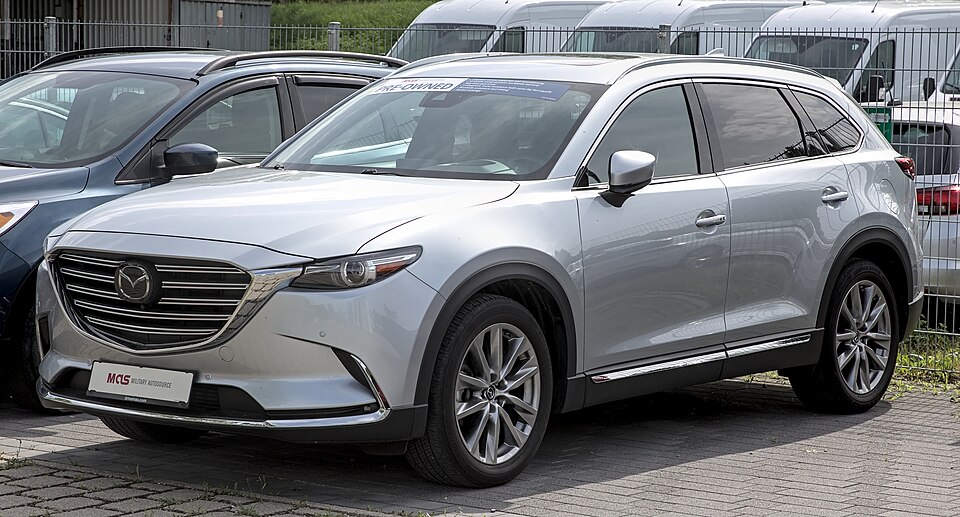
- Clase
- SUV pequeño (2WD)
- Carrocerías
- 4dr SUV AWD GT, 4dr SUV FWD Gs
- Motores
- 3.7L 6 cil.
- Tracción
- Tracción delantera, Tracción 4x4
- Combustible
- Gasolina regular
- MPG (mejor)
- 19 combinadas · 17 ciudad / 24 carretera
- Largo
- 201.2 in
- Peso en vacío
- 4,248–4,546 lb
- Calificación NHTSA
- Sin calificar
- Retiros
- 3 campañas
Ventajas y desventajas
Lo bueno
- Tracción total / 4x4 disponible
A tener en cuenta
- Consumo por debajo del promedioSu versión más eficiente logra 19 MPG combinadas, un 18 % menos que el promedio de su clase (SUV pequeño, 2014: 23.1 MPG).
- Retiro con aviso de "no conducir"Verifica que la reparación del retiro esté hecha antes de comprarlo o manejarlo.
Calculado con datos de la EPA, la NHTSA y vPIC frente a 18 modelos similares 2014; no es una reseña. Cómo lo calculamos →
Resumen
El Mazda CX-9 2014 es un SUV pequeño con motor 3.7L 6 cil., con tracción delantera y tracción 4x4.
Mide unas 201 pulgadas de largo y 76 de ancho, con una distancia entre ejes de 113 pulgadas, y pesa alrededor de 4,546 lb (4dr SUV AWD GT).
La EPA califica su versión más eficiente con 19 MPG combinadas (17 en ciudad / 24 en carretera), un 18 % peor que el promedio de su clase (SUV pequeño, 2014: 23.1 MPG), con un gasto estimado de $3,550 al año en combustible.
La NHTSA no ha publicado una calificación general de 5 estrellas para este año modelo.
Tiene 3 campañas de retiro registradas y los propietarios han presentado 53 quejas ante la NHTSA desde 2015, sobre todo por problemas de motor.
Novedades del 2014
Sin cambios en motores, versiones, tracción, tamaño, consumo EPA ni calificación NHTSA respecto al CX-9 2013: un año sin cambios según los datos.
Comparado con 2013; no incluye cambios de versiones, equipamiento ni precio. Ver el CX-9 2013 →
Dimensiones y peso
| Carrocería | Largo | Ancho | Alto | Distancia entre ejes | Vía del. / tras. | Peso en vacío | Peso del./tras. |
|---|---|---|---|---|---|---|---|
| 4dr SUV AWD GT | 201.2 in | 76.4 in | 68.1 in | 113.4 in | 65.4 / 65 in | 4,546 lb | 55/45 |
| 4dr SUV FWD Gs | 201.2 in | 76.4 in | 68.1 in | 113.4 in | 65.4 / 65 in | 4,248 lb | 55/45 |
Transport Canada CVS (Open Government Licence – Canada), medidas del mercado canadiense.
¿Cabe en tu garaje? Compruébalo con tus medidas →Motores, consumo y costo de uso
| Versión | Motor | Transmisión | Tracción | Ciudad / Carr. / Comb. | vs. su clase | Combustible / año | CO₂ g/mi |
|---|---|---|---|---|---|---|---|
| CX-9 2WD | 3.7L 6 cil. | Automática (S6) | Tracción delantera | 17 / 24 / 19 | -18% | $3,550 | 456 |
| CX-9 4WD | 3.7L 6 cil. | Automática (S6) | Tracción 4x4 | 16 / 22 / 19 | -13% | $3,550 | 480 |
Estimaciones de la EPA; "vs. su clase" compara las MPG combinadas con el promedio 2014 de su clase EPA. Cómo lo calculamos →
Calificaciones de seguridad y tecnología
La NHTSA no ha publicado calificaciones de 5 estrellas para el Mazda CX-9 2014.
SUV pequeño similares 2014
| Modelo | Mejor MPG / autonomía | General NHTSA | Retiros |
|---|---|---|---|
| Mazda CX-9 2014 (este auto) | 19 MPG | Sin calificar | 3 |
| Ford Explorer 2014 | 23 MPG | Sin calificar | 6 |
| Toyota Highlander 2014 | 28 MPG | Sin calificar | 4 |
| Chevrolet Tahoe 2014 | 17 MPG | Sin calificar | 4 |
| GMC Yukon 2014 | 17 MPG | Sin calificar | 3 |
| Ford Expedition 2014 | 16 MPG | Sin calificar | 0 |
| Nissan Pathfinder 2014 | 26 MPG | Sin calificar | 12 |
Retiros (3)
Texto oficial de la NHTSA (en inglés).
Bolsas de aire › Frontal › Passenger Side › Inflator Module · 12 oct 2018 No conducir
Campaña NHTSA 18V717000 · 155,436 vehículos
- Problema
- Mazda North American Operations (Mazda) is recalling certain 2014-2015 Mazda CX-9 vehicles sold, or ever registered in the states of Alabama, California, Florida, Georgia, Hawaii, Louisiana, Mississippi, South Carolina, Texas, Puerto Rico, American Samoa, Guam, the Northern Mariana Islands (Saipan), and the U.S. Virgin Islands or "Zone A." Additionally, unless covered in "Zone A," Mazda is recalling certain 2011-2013 Mazda6, 2011-2012 CX-7, and 2011-2015 CX-9 sold, or ever registered in the states of Arizona, Arkansas, Delaware, Illinois, Indiana, Kansas, Kentucky, Maryland, Missouri, Nebraska, Nevada, New Jersey, New Mexico, North Carolina, Ohio, Oklahoma, Pennsylvania, Tennessee, Virginia, West Virginia and the District of Columbia, or "Zone B." Additionally, unless covered in Zone A or Zone B, Mazda is recalling certain 2010-2013 Mazda6, 2010-2012 CX-7, and 2010-2015 CX-9 vehicles ever registered in the states of Alaska, Colorado, Connecticut, Idaho, Iowa, Maine, Massachusetts, Michigan, Minnesota, Montana, New Hampshire, New York, North Dakota, Oregon, Rhode Island, South Dakota, Utah, Vermont, Washington, Wisconsin, and Wyoming or "Zone C." These vehicles are equipped with certain air bag inflators assembled as part of the passenger frontal air bag modules used as original equipment or replacement equipment. In the event of a crash necessitating deployment of the passenger frontal air bag, these inflators may explode due to propellant degradation occurring after long-term exposure to absolute humidity and temperature cycling.
- Riesgo
- An inflator explosion may result in sharp metal fragments striking the driver or other occupants resulting in serious injury or death.
- Solución
- Mazda will notify owners, and dealers will replace the front passenger air bag inflator with an alternate inflator, free of charge. The recall began November 9, 2018. Owners may contact Mazda customer service at 1-800-222-5500, Option 4. Mazda's number for this recall is 1317F.
Dirección · 11 abr 2016
Campaña NHTSA 16V203000 · 578 vehículos
- Problema
- Mazda North American Operations (Mazda) is recalling certain model year 2016 CX-3 vehicles manufactured June 1, 2015, to December 2, 2015, 2013-2014 Mazda2 vehicles manufactured July 3, 2013, to August 8, 2014, 2014-2016 CX-5 vehicles manufactured January 19, 2013, to December 2, 2015, and 2013-2015 CX-9 vehicles manufactured December 6, 2012, to July 31, 2015. The lower mounting nuts and bolts that attach the front strut assembly to the steering knuckle may loosen, allowing the steering knuckle to separate.
- Riesgo
- If the steering knuckle separates from the strut assembly, it can cause a loss of steering control, increasing the risk of a crash.
- Solución
- Mazda will notify owners, and dealers will inspect the lower mounting nuts and bolts that secure the front strut assembly to the steering knuckle. If the bolts are loose, they will be replaced and then correctly tightened, free of charge. The recall is expected to begin May 20, 2016. Owners may contact Mazda customer service at 1-800-222-5500. Mazda's number for this recall is 9316D.
Suspensión › Front › Control Arm › Lower Ball Joint · 20 jul 2015
Campaña NHTSA 15V451000 · 193,484 vehículos
- Problema
- Mazda North American Operations (Mazda) is recalling certain model year 2007-2014 CX-9 vehicles manufactured October 24, 2006, to December 28, 2013. The affected vehicles have front suspension ball joints that may corrode from water leaking into the fitting.
- Riesgo
- Over time, the ball joint corrosion may result in the front lower control arm separating from the ball joint, causing a loss of steering control and increasing the risk of a crash.
- Solución
- Mazda will notify owners, and dealers will replace both the left and right lower control arms, free of charge. The recall began on September 14, 2015. The recall will begin with model year 2007-2009 vehicles registered in Connecticut, Delaware, Illinois, Indiana, Iowa, Kentucky, Maine, Maryland, Massachusetts, Michigan, Minnesota, Missouri, New Hampshire, New Jersey, New York, Ohio, Pennsylvania, Rhode Island, Vermont, Virginia, Washington D.C., West Virginia, and Wisconsin. The second phase will be for model year 2010-2014 vehicles in the same states. Finally, all remaining vehicles will be remedied. Owners may contact Mazda customer service at 1-800-222-5500. Mazda's number for this recall is 8515G.
No todos los CX-9 2014 están afectados: solo el VIN lo confirma.
Problemas reportados por propietarios
Reportes sin verificar; los más vendidos acumulan más.
Lista para comprar un Mazda CX-9 2014 usado
- Consulta el VIN en nhtsa.gov/recalls. 3 retiros en este año: pide comprobantes de reparación.
- Retiro crítico de seguridad. Al menos un retiro tiene aviso de "no conducir" o "estacionar afuera". No lo compres hasta que el VIN muestre que se reparó.
- Motor — 19 reportes de propietarios. Arranca el motor en frío, escucha si golpetea y fíjate en luces de advertencia o titubeos al acelerar.
- Frenos — 9 reportes de propietarios. Frena con fuerza a velocidad; revisa si se jala hacia un lado, si el pedal vibra o si se enciende la luz del ABS.
- Tren motriz — 7 reportes de propietarios. Prueba todas las marchas, incluida la reversa; nota patinazos o cambios bruscos o tardíos.
- Millaje a vigilar. Los propietarios suelen reportar problemas alrededor de las 59,800 millas; pregunta qué se reparó cerca de ese punto.
- Antes de pagar: historial de servicio, reporte de antecedentes e inspección de un mecánico independiente.
Generado por DecodedCars a partir de retiros y quejas de propietarios ante la NHTSA para el Mazda CX-9 2014. No sustituye una inspección profesional.
Otros años del CX-9
Comparar todos los años →| Año | MPG (mejor) | Largo | General | Retiros | Quejas |
|---|---|---|---|---|---|
| CX-9 2023 | 23 | 199.6 in | ★★★★★ | 0 | 13 |
| CX-9 2022 | 23 | 199.6 in | ★★★★★ | 0 | 11 |
| CX-9 2021 | 24 | 199.6 in | ★★★★★ | 1 | 40 |
| CX-9 2020 | 24 | 199.6 in | ★★★★★ | 1 | 19 |
| CX-9 2019 | 24 | 199.6 in | ★★★★★ | 2 | 53 |
| CX-9 2018 | 24 | 199.6 in | ★★★★★ | 2 | 128 |
| CX-9 2017 | 24 | 199.6 in | Sin calificar | 0 | 61 |
| CX-9 2016 | 24 | 199.6 in | Sin calificar | 0 | 107 |
| CX-9 2015 | 19 | 201.2 in | Sin calificar | 2 | 35 |
| CX-9 2013 | 19 | 201.2 in | Sin calificar | 4 | 58 |
| CX-9 2012 | 19 | 200.4 in | Sin calificar | 4 | 188 |
| CX-9 2011 | 19 | 200.4 in | Sin calificar | 4 | 138 |
Fuentes: EPA, NHTSA, Transport Canada, Wikimedia Commons. Sin afiliación con la NHTSA, la EPA ni Mazda. Cómo lo calculamos →