 DecodedCars
2017 Ford Explorer
Trims, performance, features, fuel economy, safety and known problems — with the pros and cons against similar 2017 models.
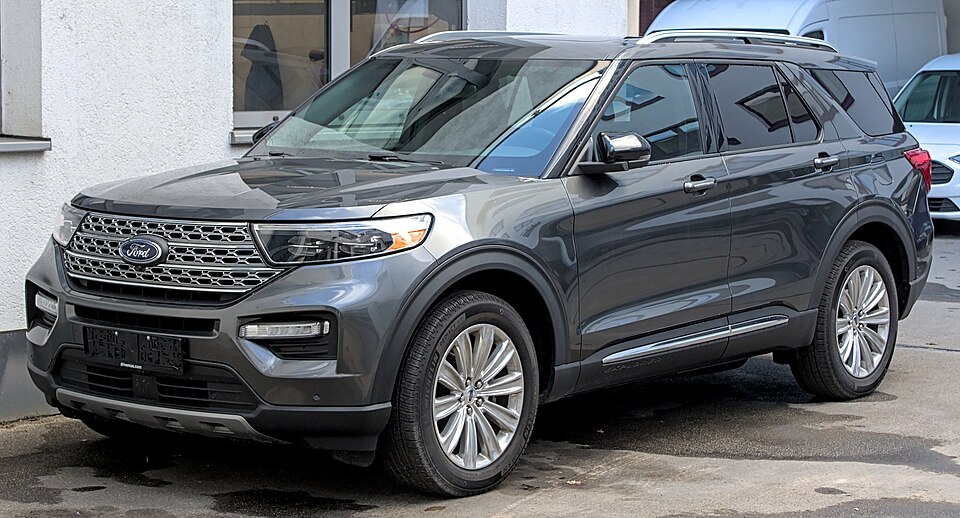
- Class
- Standard Sport Utility Vehicle 2WD
- Body styles
- 4dr SUV AWD, 4dr SUV FWD
- Engines
- 2.3L 4-cyl turbo, 3.5L 6-cyl, 3.5L 6-cyl turbo
- Horsepower
- 290–365 hp
- Drivetrain
- Front-Wheel Drive, All-Wheel Drive
- Seats
- 7
- Fuel
- Regular Gasoline, FFV
- MPG (best)
- 22 combined · 19 city / 27 hwy
- Length
- 198.4 in
- Curb weight
- 4,557–4,731 lb
- NHTSA rating
- ★★★★★
- Recalls
- 14 campaigns
Pros & cons
What's good
- Excellent fuel economyUp to 22 MPG combined — 15% better than the average 2017 standard SUV (19.1 MPG).
- AWD / 4WD available
- Seats up to 73 rows of seating.
- 5-star NHTSA safety ratingTop overall score in federal crash tests.
Watch out for
- Many owner complaints1,713 complaints filed with NHTSA versus about 202 for similar models — most often about the structure.
- 14 recallsMore than similar models (about 3). Confirm repairs with the VIN.
Calculated from EPA, NHTSA and vPIC data against 18 similar 2017 models — not a review. How we calculate this →
Overview
The 2017 Ford Explorer is a standard SUV offered with 3 engines (2.3L 4-cyl turbo, 3.5L 6-cyl and 3.5L 6-cyl turbo) and front-wheel drive and all-wheel drive.
It measures about 198 inches long and 79 inches wide on a 113-inch wheelbase, with a curb weight of roughly 4,731 lb (4dr SUV AWD).
EPA rates its most efficient version at 22 MPG combined (19 city / 27 highway), 15% better than the 2017 standard SUV average of 19.1 MPG, for an estimated $3,050 a year in fuel.
In NHTSA crash testing it earned the top 5-star overall rating.
It has 14 recall campaigns on file and owners have filed 1713 complaints with NHTSA since 2015, most often about the unknown or other.
What changed for 2017
- Now crash-tested by NHTSA: 5 stars overall
Compared with 2016; trim, feature and price changes aren't covered. See the 2016 Explorer →
Trims, performance & features
Trims
Safety & driver-assist features
Built in: Chicago, Illinois
NHTSA vPIC, as reported by the manufacturer for 5 2017 Explorer configurations; may not list every trim. How we calculate this →
Dimensions & weight
| Body | Length | Width | Height | Wheelbase | Track F / R | Curb weight | Weight F/R |
|---|---|---|---|---|---|---|---|
| 4dr SUV AWD | 198.4 in | 78.7 in | 69.7 in | 113 in | 66.9 / 66.9 in | 4,731 lb | 54/46 |
| 4dr SUV FWD | 198.4 in | 78.7 in | 69.7 in | 113 in | 66.9 / 66.9 in | 4,557 lb | 54/46 |
Transport Canada CVS (Open Government Licence – Canada), Canadian-market figures.
Will it fit your garage? Check with your measurements →Engines, MPG & running costs
| Version | Engine | Transmission | Drive | City / Hwy / Comb | vs. class | Fuel / yr | CO₂ g/mi |
|---|---|---|---|---|---|---|---|
| Explorer FWD | 2.3L 4-cyl turbo | Automatic (S6) | Front-Wheel Drive | 19 / 27 / 22 | +15% | $3,050 | 408 |
| Explorer AWD | 2.3L 4-cyl turbo | Automatic (S6) | All-Wheel Drive | 18 / 25 / 21 | +14% | $3,200 | 430 |
| Explorer FWD | 3.5L 6-cyl | Automatic (S6) | Front-Wheel Drive | 17 / 24 / 20 | +5% | $3,350 | 452 |
| Explorer 2WD FFV FFV | 3.5L 6-cyl | Automatic (S6) | Front-Wheel Drive | 17 / 24 / 20 | +5% | $3,350 | 452 |
| Explorer AWD | 3.5L 6-cyl | Automatic (S6) | All-Wheel Drive | 16 / 23 / 19 | +3% | $3,550 | 475 |
| Explorer AWD FFV FFV | 3.5L 6-cyl | Automatic (S6) | All-Wheel Drive | 16 / 23 / 19 | +3% | $3,550 | 475 |
| Explorer AWD | 3.5L 6-cyl turbo | Automatic (S6) | All-Wheel Drive | 16 / 22 / 18 | -3% | $3,700 | 494 |
EPA estimates; "vs. class" is combined MPG against the 2017 EPA class average. How we calculate this →
Safety ratings & technology
| Version | Overall | Frontal | Driver / passenger | Side | Side pole | Rollover | Rollover risk |
|---|---|---|---|---|---|---|---|
| 2017 Ford Explorer 4 DR SUV AWD | ★★★★★ | ★★★★★ | 4★ / 5★ | ★★★★★ | ★★★★★ | ★★★★★ | 17.4% |
| 2017 Ford Explorer 4 DR SUV FWD | ★★★★★ | ★★★★★ | 4★ / 5★ | ★★★★★ | ★★★★★ | ★★★★★ | 16.4% |
Similar 2017 standard SUVs
| Model | Best MPG / range | NHTSA overall | Recalls |
|---|---|---|---|
| 2017 Ford Explorer (this car) | 22 MPG | ★★★★★ | 14 |
| 2017 Toyota Land Cruiser | 15 MPG | Not rated | 1 |
| 2017 Toyota 4Runner | 18 MPG | Not rated | 5 |
| 2017 Toyota Highlander | 29 MPG | Not rated | 3 |
| 2017 Jeep Grand Cherokee | 21 MPG | ★★★★★ | 5 |
| 2017 GMC Yukon | 19 MPG | ★★★★★ | 3 |
| 2017 Chevrolet Tahoe | 19 MPG | ★★★★★ | 4 |
Recalls (14)
Structure › Body · Jul 14, 2026
NHTSA campaign 26V448000 · 288,314 vehicles
- Problem
- Ford Motor Company (Ford) is recalling certain 2016-2019 Explorer vehicles. The roof rail covers may come loose and detach from the vehicle.
- Risk
- A detached roof rail cover can create a road hazard, increasing the risk of a crash.
- Fix
- Dealers will inspect the roof rail covers and as necessary, repair or replace the push-pins, rail clips, or roof rail covers, free of charge. Interim letters, notifying owners of the safety risk, were mailed August 28, 2026. Additional letters will be sent once the remedy is available, anticipated in January 2027. Owners may contact Ford customer service at 1-866-436-7332. Ford's number for this recall is 26S54. This recall expands previous NHTSA recall number 21V316. Vehicle Identification Numbers (VINs) involved in this recall became searchable on NHTSA.gov on July 16, 2026.
Suspension › Rear · Feb 20, 2026
NHTSA campaign 26V101000 · 412,774 vehicles
- Problem
- Ford Motor Company (Ford) is recalling certain 2017-2019 Explorer vehicles. The rear suspension toe links may fracture.
- Risk
- A rear toe link fracture can result in a loss of steering control, increasing the risk of a crash.
- Fix
- Dealers will replace the toe links, free of charge. Owner notification letters were mailed on March 16, 2026. Owners may contact Ford Customer Service at 1-866-436-7332. Ford's number for this recall is 26S08. This recall is an expansion of previous NHTSA recall number 21V537. Vehicle Identification Numbers (VINs) involved in this recall will be searchable on NHTSA.gov beginning February 25, 2026.
Equipment › Electrical › Engine Block Heater · Oct 10, 2025
NHTSA campaign 25V685000 · 59,006 vehicles
- Problem
- Ford Motor Company (Ford) is recalling certain 2016-2019 Lincoln MKC, 2016-2023 Explorer, 2019-2020 Fusion, 2019-2024 Ranger, 2020-2022 Lincoln Corsair, Escape, 2021-2024 Bronco, Bronco Sport, and 2022-2024 Maverick vehicles. The engine block heater may crack and develop a coolant leak, causing it to short circuit when the block heater is plugged in.
- Risk
- An electrical short circuit can increase the risk of a fire.
- Fix
- Owners are advised not to plug in their block heater until the vehicle is remedied. Dealers will replace the block heater, free of charge. Owners will also have a alternative option to replace engine block heater element with a threaded blanking plug, and remove the block heater electrical cord. Interim letters, notifying owners of the safety risk, were mailed December 3, 2025. Additional letters will be sent once the final remedy is available, anticipated December 2026. Owners may contact Ford customer service at 1-866-436-7332. Ford's number for this recall is 25SA4. Vehicle Identification Numbers (VINs) involved in this recall became searchable on NHTSA.gov on October 15, 2025.
Structure › Body · May 23, 2025
NHTSA campaign 25V347000 · 492,145 vehicles
- Problem
- Ford Motor Company (Ford) is recalling certain 2016-2017 Explorer vehicles. The driver and front passenger B-Pillar door trim may detach while driving.
- Risk
- Door trim that detaches while driving can create a road hazard, increasing the risk of a crash.
- Fix
- Dealers will repair the B-pillar trim, free of charge. Interim letters, notifying owners of the safety risk, were mailed June 5, 2025. A second notice will be sent once the final remedy is available, anticipated November 2026. Owners may contact Ford customer service at 1-866-436-7332. Ford's number for this recall is 25S53.
Structure › Body › Roof And Pillars · Jan 19, 2024
NHTSA campaign 24V031000 · 1,889,110 vehicles
- Problem
- Ford Motor Company (Ford) is recalling certain 2011-2019 Explorer vehicles. The A-pillar trim retention clips may not be properly engaged, allowing the trim to detach.
- Risk
- A detached trim piece can fall off the vehicle, becoming a road hazard and increasing the risk of a crash.
- Fix
- Dealers will inspect and replace the A-pillar trim as necessary, free of charge. This will be a phased campaign, with the remedy becoming available in different phases based on model years. Owner notification letters were mailed between July 18, 2024 and December 16, 2025. Owners may contact Ford customer service at 1-866-436-7332. Ford's number for this recall is 24S02.
Suspension › Rear · Jul 15, 2021
NHTSA campaign 21V537000 · 631,176 vehicles
- Problem
- Ford Motor Company (Ford) is recalling certain 2013-2017 Explorer vehicles originally sold, or ever registered, in Connecticut, Delaware, Illinois, Indiana, Iowa, Kentucky, Maine, Maryland, Massachusetts, Michigan, Minnesota, Missouri, New Hampshire, New Jersey, New York, Ohio, Pennsylvania, Rhode Island, Vermont, Virginia, West Virginia, Wisconsin, and the District of Columbia. Exposure to road salt can cause the cross-axis ball joint to corrode and seize, resulting in a fracture of the outboard section of the rear suspension toe link.
- Risk
- A rear toe-link fracture can result in a loss of steering control, increasing the risk of a crash.
- Fix
- Dealers will inspect and replace as necessary, the cross-axis ball joint (CABJ) knuckle, and replace the rear suspension toe links, free of charge. This recall is an expansion of previous NHTSA recall numbers 16V-245, 19V-435, and 20V-675. Certain vehicles previously repaired will need to return for the new remedy. An interim notification letter notifying owners of the safety risk were mailed on September 10, 2021. Owner notification letters were mailed on March 16, 2022. Owners may contact Ford's customer service at 1-866-436-7332. Ford's number for this recall is 21S32.
Structure › Body · May 5, 2021
NHTSA campaign 21V316000 · 616,967 vehicles
- Problem
- Ford Motor Company (Ford) is recalling certain 2016-2019 Explorer vehicles. The retention pins could loosen and allow the roof rail covers to detach from the vehicle.
- Risk
- A detached roof rail cover can create a road hazard, increasing the risk of a crash.
- Fix
- Dealers will install push-pins and replace any damaged rail clips and roof rail covers, as necessary, free of charge. The interim owner notification letter was mailed on June 22, 2021. Owner notification letters (remedy available) were mailed on October 1, 2021. Owners may contact Ford customer service at 1-866-436-7332. Ford's number for this recall is 21S22.
Suspension › Rear · Mar 12, 2021
NHTSA campaign 20V675000 · 454,941 vehicles
- Problem
- Ford Motor Company (Ford) is recalling certain 2013-2017 Explorer vehicles originally sold, or currently registered in Connecticut, Delaware, the District of Columbia, Illinois, Indiana, Iowa, Kentucky, Maine, Maryland, Massachusetts, Michigan, Minnesota, Missouri, New Hampshire, New Jersey, New York, Ohio, Pennsylvania, Rhode Island, Vermont, Virginia, West Virginia, and Wisconsin that were previously repaired under a prior recall numbers 16V-245 or 19V-435. The outboard section of a rear suspension toe link may fracture.
- Risk
- A rear toe link fracture can result in a loss of steering control, increasing the risk of a crash.
- Fix
- Ford will notify owners, and dealers will inspect the cross-axis ball joint (CABJ) knuckle attached to the rear suspension toe link and replace it as necessary, free of charge. The recall began November 27, 2020. Owners may contact Ford customer service at 1-866-436-7332. Ford's number for this recall is 20S62.
Seats · Sep 11, 2019
NHTSA campaign 19V651000 · 311,907 vehicles
- Problem
- Ford Motor Company (Ford) is recalling certain 2017 Ford Explorer vehicles equipped with power front seats. The seat frames may have sharp edges.
- Risk
- Occupants my contact the sharp edges when reaching between the power front seat and center console, increasing their risk of injury.
- Fix
- Ford will notify owners, and dealers will install protective tape on the exposed inside edge and tab of the power seat frames, free of charge. The recall began November 8, 2019. Owners may contact Ford customer service at 1-866-436-7332. Ford's number for this recall is 19S29.
Suspension › Rear · Jun 10, 2019
NHTSA campaign 19V435000 · 1,194,173 vehicles
- Problem
- Ford Motor Company (Ford) is recalling certain 2011-2017 Explorer vehicles. The rear suspension toe links may fracture due to stress on the rear suspension.
- Risk
- A fractured rear toe link will cause a sudden change in vehicle handling and increase the risk of a crash.
- Fix
- Ford will notify owners, and dealers will replace the rear suspension toe links, and inspect both rear toe link ball joints, replacing the rear wheel knuckle(s), if necessary, free of charge. The recall began June 26, 2019. Owners may contact Ford customer service at 1-866-436-7332. Ford's number for this recall is 19S17.
Steering · Aug 28, 2017
NHTSA campaign 17V530000 · 253 vehicles
- Problem
- Ford Motor Company (Ford) is recalling certain 2017 Explorer, Taurus and Police Interceptor Utility and Sedan vehicles. The steering gear heat shield fasteners may corrode, allowing the heat shield to detach.
- Risk
- If the heat shield detaches, the steering gear may overheat, increasing the steering effort required by the driver, especially at lower speeds, and increasing the risk of a crash.
- Fix
- Ford will notify owners, and dealers to inspect and replace the heat shield fasteners as needed, free of charge. The recall began on September 13, 2017. Owners may contact Ford customer service at 1-866-436-7332. Ford's number for this recall is 17S23.
Seats › Mid/Rear Assembly · Jun 26, 2017
NHTSA campaign 17V401000 · 4 vehicles
- Problem
- Ford Motor Company (Ford) is recalling certain 2017 Ford Explorer Police Interceptor vehicles. The affected vehicles may be missing the two front inboard attachments for the second row seats. As such, these vehicles fail to comply with the requirements of Federal Motor Vehicle Safety Standard (FMVSS) number 207, "Seating systems", and (FMVSS) number 210, "Seat belt assembly anchorages."
- Risk
- Seats with missing inboard attachments may not adequately restrain an occupant in a crash, increasing the risk of injury.
- Fix
- Ford will notify owners, and dealers will inspect the vehicles to verify that they have the second row seat attachment studs, installing them if not, free of charge. The recall began on August 14, 2017. Owners may contact Ford customer service at 1-866-436-7332. Ford's number for this recall is 17C10.
Seats › Front Assembly › Recliner · May 22, 2017
NHTSA campaign 17V332000 · 2,204 vehicles
- Problem
- Ford Motor Company (Ford) is recalling certain 2017 Ford Explorer, F-150, F-250, F-350, F-450 and F-550 vehicles equipped with a manual driver's seat back recliner mechanism. In the event of a crash, the seat back frame may not restrain the occupant due to having inadequate welds. As such, these vehicles may not meet the requirements of Federal Motor Vehicle Safety Standard (FMVSS) numbers 202a, "Head Restraints" and 207, "Seating Systems."
- Risk
- If the occupant is not adequately restrained in the event of a crash, they have an increased risk of injury.
- Fix
- Ford will notify owners, and dealers will inspect and, if necessary, replace the seat back frame, free of charge. The recall began on June 7, 2017. Owners may contact Ford at 1-866-436-7332. Ford's number for this recall is 17C08.
Engine And Engine Cooling › Engine › Gasoline › Turbo/Supercharger · Dec 22, 2016
NHTSA campaign 16V925000 · 1,163 vehicles
- Problem
- Ford Motor Company (Ford) is recalling certain model year 2016 Ford Taurus, 2016-2017 Ford Flex, Lincoln MKT, 2017 Ford Explorer and Ford Explorer Police Interceptor Utility vehicles equipped with 3.5L GTDI engines. Improperly brazed turbocharger oil supply tubes may leak oil on engine components.
- Risk
- An oil leak, in the presence of an ignition source, increases the risk of a fire.
- Fix
- Ford will notify owners, and dealers will inspect, and if necessary, replace the turbocharger oil supply tubes, free of charge. The recall began on January 31, 2017. Owners may contact Ford customer service at 1-866-436-7332. Ford's number for this recall is 16S46.
Not every 2017 Ford Explorer is affected — only a VIN check confirms your car.
Owner-reported problems
Unverified owner reports; best-sellers collect more.
Used 2017 Ford Explorer buyer's checklist
- Run the VIN at nhtsa.gov/recalls. 14 recalls this year — ask for proof of repairs.
- Structure — 376 owner reports. Open and close every door, the hood and tailgate; look for rust or misaligned panels.
- Structure › Body — 266 owner reports. Open and close every door, the hood and tailgate; look for rust or misaligned panels.
- Engine — 241 owner reports. Cold-start the engine, listen for knocking, and watch for warning lights or hesitation on acceleration.
- Mileage to watch. Owners typically reported problems around 15,000 miles; ask what was repaired near that point.
- Before you pay: service records, a history report and an independent inspection.
Generated by DecodedCars from NHTSA recalls and owner complaints for the 2017 Ford Explorer. Not a substitute for a professional inspection.
Other Explorer years
Compare all years →| Year | MPG (best) | Length | Overall | Recalls | Complaints |
|---|---|---|---|---|---|
| 2027 Explorer | 23 | – | Not rated | 2 | 0 |
| 2026 Explorer | 24 | 198.8 in | Not rated | 15 | 42 |
| 2025 Explorer | 24 | 198.8 in | ★★★★★ | 22 | 109 |
| 2024 Explorer | 24 | 198.8 in | ★★★★★ | 10 | 21 |
| 2023 Explorer | 27 | 198.8 in | ★★★★★ | 15 | 113 |
| 2022 Explorer | 27 | 198.8 in | Not rated | 25 | 273 |
| 2021 Explorer | 27 | 198.8 in | ★★★★★ | 27 | 456 |
| 2020 Explorer | 28 | 198.8 in | ★★★★★ | 35 | 1,249 |
| 2019 Explorer | 22 | 198.4 in | ★★★★★ | 6 | 300 |
| 2018 Explorer | 22 | 198.4 in | ★★★★★ | 7 | 737 |
| 2016 Explorer | 22 | 198.4 in | Not rated | 14 | 2,484 |
| 2015 Explorer | 23 | 197.2 in | Not rated | 8 | 1,815 |
Sources: EPA, NHTSA, Transport Canada, Wikimedia Commons. Not affiliated with NHTSA, the EPA or Ford. How we calculate this →