 DecodedCars
Honda Pilot 2020
Versiones, desempeño, equipamiento, consumo, seguridad y problemas conocidos, con sus ventajas y desventajas frente a modelos similares 2020.
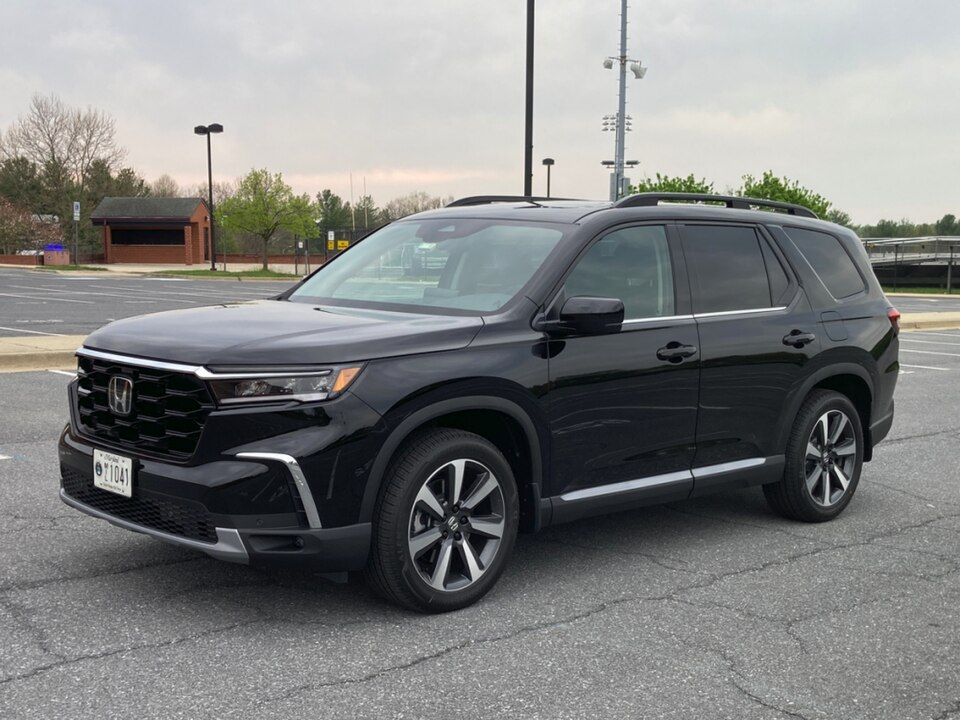
- Clase
- SUV pequeño (2WD)
- Carrocerías
- 4dr SUV
- Motores
- 3.5L 6 cil.
- Potencia
- 280 hp
- Transmisión
- 6-speed Automática, 9-speed Automática
- Tracción
- Tracción delantera, Tracción total (AWD)
- Asientos
- 7–8
- Combustible
- Gasolina regular
- MPG (mejor)
- 23 combinadas · 20 ciudad / 27 carretera
- Largo
- 196.5 in
- Peso en vacío
- 4,259 lb
- Calificación NHTSA
- ★★★★★
- Retiros
- 11 campañas
Ventajas y desventajas
Lo bueno
- Tracción total / 4x4 disponible
- Hasta 8 asientos3 filas de asientos.
- 5 estrellas en seguridad NHTSALa máxima calificación general en las pruebas de choque federales.
- Mucha tecnología de seguridad de serie5 de las 5 asistencias clave, de serie en las versiones revisadas.
A tener en cuenta
- Muchas quejas de propietarios492 quejas ante la NHTSA frente a unas 135 de modelos similares; sobre todo por problemas de sistema eléctrico.
- 11 retirosMás que modelos similares (unos 4). Confirma las reparaciones con el VIN.
Calculado con datos de la EPA, la NHTSA y vPIC frente a 26 modelos similares 2020; no es una reseña. Cómo lo calculamos →
Resumen
El Honda Pilot 2020 es un SUV pequeño con motor 3.5L 6 cil., con tracción delantera y tracción total (AWD).
Mide unas 197 pulgadas de largo y 80 de ancho, con una distancia entre ejes de 111 pulgadas, y pesa alrededor de 4,259 lb.
La EPA califica su versión más eficiente con 23 MPG combinadas (20 en ciudad / 27 en carretera), un 10 % peor que el promedio de su clase (SUV pequeño, 2020: 25.6 MPG), con un gasto estimado de $2,900 al año en combustible.
En las pruebas de choque de la NHTSA obtuvo la máxima calificación general de 5 estrellas.
Tiene 11 campañas de retiro registradas y los propietarios han presentado 492 quejas ante la NHTSA desde 2015, sobre todo por problemas de sistema eléctrico.
Novedades del 2020
Sin cambios en motores, versiones, tracción, tamaño, consumo EPA ni calificación NHTSA respecto al Pilot 2019: un año sin cambios según los datos.
Comparado con 2019; no incluye cambios de versiones, equipamiento ni precio. Ver el Pilot 2019 →
Versiones, desempeño y equipamiento
Versiones
Seguridad y asistencias al conductor
Fabricado en: Lincoln, Alabama
NHTSA vPIC, según el fabricante, para 5 configuraciones del Pilot 2020; puede no incluir todas las versiones. Cómo lo calculamos →
Dimensiones y peso
| Carrocería | Largo | Ancho | Alto | Distancia entre ejes | Vía del. / tras. | Peso en vacío | Peso del./tras. |
|---|---|---|---|---|---|---|---|
| 4dr SUV | 196.5 in | 79.9 in | 70.5 in | 111 in | 66.1 / 66.1 in | 4,259 lb | 57/43 |
Transport Canada CVS (Open Government Licence – Canada), medidas del mercado canadiense.
¿Cabe en tu garaje? Compruébalo con tus medidas →Motores, consumo y costo de uso
| Versión | Motor | Transmisión | Tracción | Ciudad / Carr. / Comb. | vs. su clase | Combustible / año | CO₂ g/mi |
|---|---|---|---|---|---|---|---|
| Pilot FWD | 3.5L 6 cil. | Automática (S9) | Tracción delantera | 20 / 27 / 23 | -10% | $2,900 | 388 |
| Pilot FWD | 3.5L 6 cil. | Automática 6-spd | Tracción delantera | 19 / 27 / 22 | -14% | $3,050 | 405 |
| Pilot AWD | 3.5L 6 cil. | Automática (S9) | Tracción total (AWD) | 19 / 26 / 22 | -6% | $3,050 | 407 |
| Pilot AWD | 3.5L 6 cil. | Automática 6-spd | Tracción total (AWD) | 18 / 26 / 21 | -11% | $3,200 | 421 |
Estimaciones de la EPA; "vs. su clase" compara las MPG combinadas con el promedio 2020 de su clase EPA. Cómo lo calculamos →
Calificaciones de seguridad y tecnología
| Versión | General | Frontal | Conductor / pasajero | Lateral | Poste lateral | Volcadura | Riesgo de volcadura |
|---|---|---|---|---|---|---|---|
| 2020 Honda PILOT SUV AWD | ★★★★★ | ★★★★★ | 5★ / 4★ | ★★★★★ | ★★★★★ | ★★★★★ | 16.4% |
| 2020 Honda PILOT SUV FWD | ★★★★★ | ★★★★★ | 5★ / 4★ | ★★★★★ | ★★★★★ | ★★★★★ | 17.5% |


SUV pequeño similares 2020
| Modelo | Mejor MPG / autonomía | General NHTSA | Retiros |
|---|---|---|---|
| Honda Pilot 2020 (este auto) | 23 MPG | ★★★★★ | 11 |
| Toyota 4Runner 2020 | 17 MPG | ★★★★★ | 1 |
| Ford Explorer 2020 | 28 MPG | ★★★★★ | 35 |
| Toyota Highlander 2020 | 36 MPG | ★★★★★ | 5 |
| Jeep Grand Cherokee 2020 | 21 MPG | ★★★★★ | 3 |
| Kia Telluride 2020 | 23 MPG | ★★★★★ | 7 |
| GMC Yukon 2020 | 18 MPG | ★★★★★ | 4 |
Retiros (11)
Texto oficial de la NHTSA (en inglés).
Estructura › Frame And Members · 4 jun 2026
Campaña NHTSA 26V365000 · 965,561 vehículos
- Problema
- American Honda Motor Company (Honda) is recalling certain 2016-2022 Honda Pilot, 2017-2023 Ridgeline, 2019-2023 Passport, and 2014-2020 Acura MDX vehicles that were sold in Connecticut, Delaware, District of Columbia, Illinois, Indiana, Iowa, Kentucky, Maine, Maryland, Massachusetts, Michigan, Minnesota, Missouri, New Hampshire, New Jersey, New York, Ohio, Pennsylvania, Rhode Island, Vermont, Virginia, West Virginia, or Wisconsin. The rear subframe may corrode at the suspension mounting points, which can result in rear suspension component failure.
- Riesgo
- Failure of rear suspension components, such as the rear control arm, can cause a loss of vehicle handling and control, increasing the risk of a crash or injury.
- Solución
- Dealers will inspect the rear subframe and install a rear subframe reinforcement kit and, as necessary, repair or replace the rear subframe components, free of charge. Interim letters notifying owners of the safety risk were mailed July 27, 2026. Additional letters will be sent once the final remedy is available, anticipated in the fall of 2026. Owners may contact Honda's customer service at 1-888-234-2138. Honda's numbers for this recall are AOU and AOT. Vehicle Identification Numbers (VINs) involved in this recall will become searchable on NHTSA.gov beginning June 10, 2026.
Bolsas de aire › Sensor › Occupant Classification › Front Passenger · 21 may 2026
Campaña NHTSA 26V332000 · 98,892 vehículos
- Problema
- Honda (American Honda Motor Co.) is recalling certain 2018-2021, 2023 Acura TLX, 2019-2024 RDX, 2017-2020, 2022-2026 MDX, 2017-2021, 2023, 2025 Honda Ridgeline, 2017-2022 Pilot, 2019-2021 Passport, 2018-2026 Odyssey, 2019-2022 Insight, 2019-2021 HR-V, 2018-2020 Fit, 2020-2022 CR-V Hybrid, 2017-2022 CR-V, 2017-2018, 2021 Civic Type R, 2017-2021 Civic hatchback, 2016-2020 Civic coupe, 2016-2022 Civic, 2017-2022 Accord Hybrid, and 2016-2022 Accord vehicles. The front passenger seat weight sensor may crack and short circuit, which can cause the air bags to deploy unintentionally during a crash.
- Riesgo
- Air bags that deploy unintentionally during a crash increase the risk of injury.
- Solución
- Dealers will replace the seat weight sensors, free of charge. Owner notification letters were mailed July 7, 2026. Owners may contact Honda's customer service at 1-888-234-2138. Honda's numbers for this recall are BOL, WO9, OOA, WOM, XOH, NOC, POD, BOE, UOF, POB, EOG, AOI, QO8, TOJ, DO7, and SOK. This recall expands previous NHTSA recall number 24V064. Vehicle Identification Numbers (VINs) involved in this recall will be searchable on NHTSA.gov beginning May 29, 2026.
Bolsas de aire › Sensor › Occupant Classification › Front Passenger · 1 feb 2024
Campaña NHTSA 24V064000 · 750,114 vehículos
- Problema
- Honda (American Honda Motor Co.) is recalling certain 2020-2022 Pilot, Accord, Civic sedan, HR-V, Odyssey, 2020 Civic coupe, Fit, 2021-2022 Civic hatchback, 2021 Civic Type R, Insight, 2020-2021 CR-V, CR-V Hybrid, Passport, Ridgeline, Accord Hybrid, 2020 Acura MDX, 2022 Acura MDX, 2020-2022 Acura RDX, and 2020-2021 Acura TLX vehicles. The front passenger seat weight sensor may crack and short circuit, failing to suppress the air bag as intended.
- Riesgo
- An air bag that deploys unintentionally during a crash can increase the risk of injury.
- Solución
- Dealers will replace the seat weight sensors, free of charge. Owner notification letters were mailed March 28, 2024. This is a phased recall. Owners may contact Honda customer service at 1-888-234-2138. Honda's numbers for these recalls are XHP and VHQ.
Combustible (gasolina) › Delivery › Fuel Pump · 18 dic 2023
Campaña NHTSA 23V858000 · 2,490,460 vehículos
- Problema
- Honda (American Honda Motor Co.) is recalling certain 2013-2023 Honda Accord, Civic Coupe, Civic Sedan, Civic Hatchback, Civic Type R, CR-V, HR-V, Ridgeline, Odyssey, Acura ILX, MDX, MDX Hybrid, RDX, RLX, TLX, 2019-2022 Honda Insight, Passport, 2020 Honda CR-V Hybrid, 2018-2019 Honda Clarity PHEV, Fit, and 2015-2020 Honda Accord Hybrid, Pilot, Acura NSX vehicles. The fuel pump inside the fuel tank may fail.
- Riesgo
- Fuel pump failure can cause an engine stall while driving, increasing the risk of a crash.
- Solución
- Dealers will replace the fuel pump module, free of charge. Owner letters were mailed September 6, 2024. Owners may contact Honda customer service at 1-888-234-2138. Honda's numbers for this recall are KGC and KGD. This recall is an expansion of NHTSA recall numbers 21V-215 and 20V-314.
Prevención de impacto en reversa › Display Function · 15 jun 2023
Campaña NHTSA 23V431000 · 1,209,673 vehículos
- Problema
- Honda (American Honda Motor Co.) is recalling certain 2018-2023 Odyssey, 2019-2022 Pilot, and 2019-2023 Passport vehicles. Due to a faulty Media Oriented Systems Transport (MOST) communication coaxial cable connector, the rearview camera image may not appear on the display. As such, these vehicles fail to comply with the requirements of Federal Motor Vehicle Safety Standard number 111, "Rear Visibility."
- Riesgo
- A rearview camera that does not display an image can reduce the driver's rear view, increasing the risk of a crash or injury.
- Solución
- Dealers will replace the MOST cable harness and install a straightening cover over the vehicle cable connector, free of charge. Owner notification letters were mailed July 24, 2023. Owners may contact Honda customer service at 1-888-234-2138. Honda's numbers for this recall are EEL, ZEM, and SFC.
Visibilidad › Rearview Mirrors/Devices › Exterior · 16 mar 2023
Campaña NHTSA 23V174000 · 339,404 vehículos
- Problema
- Honda (American Honda Motor Co) is recalling certain 2020-2021 Pilot and Ridgeline, and 2020-2022 Passport and Odyssey vehicles. The heating pads behind both side-view mirrors may not be bonded properly, allowing the mirror glass to detach. As such, these vehicles fail to comply with the requirements of Federal Motor Vehicle Safety Standard number 111, "Rear Visibility."
- Riesgo
- Detached mirror glass can reduce driver visibility, increasing the risk of a crash.
- Solución
- Dealers will replace both left and right side-view mirrors, free of charge. Owner letters were mailed January 17, 2024. Owners may contact Honda customer service at 1-888-234-2138. Honda's number for this recall is FE5.
Neumáticos · 11 mar 2021
Campaña NHTSA 21V165000 · 1,093 vehículos
- Problema
- Honda (American Honda Motor Co.) is recalling certain 2019-2020 Passport and Pilot vehicles equipped with Continental tires. On the affected vehicles, it is possible that one or more tires were cured for too long during tire production.
- Riesgo
- Overcured tires may develop a break in the sidewall, resulting in sudden air loss or belt edge separation, which could lead to tread/belt loss. Either condition can cause a loss of vehicle control, increasing the risk of a crash or injury.
- Solución
- Honda will notify owners, and dealers will inspect all four tires and replace them as necessary, free of charge. The recall began April 22, 2021. Owners may contact American Honda Motor Co. customer service at 1-888-234-2138. Honda's number for this recall is UA2.
Prevención de impacto en reversa › Sensing System › Camera · 28 jul 2020
Campaña NHTSA 20V440000 · 499,344 vehículos
- Problema
- Honda (American Honda Motor Co.) is recalling certain 2019-2021 Pilot, 2019-2020 Odyssey and 2019-2020 Passport vehicles. Incorrect central network software programming may cause several errors to occur that can delay or prevent the rearview camera image from displaying. As such, these vehicles fail to comply with the requirements of Federal Motor Vehicle Safety Standard (FMVSS) number 111, "Rearview Mirrors."
- Riesgo
- A delayed or inoperative rearview camera display can reduce the driver's view of what is behind the vehicle, increasing the risk of a crash.
- Solución
- Honda will notify owners that updated software is available. Owners have the option to either follow the mailed instructions to download and update the software for free, or visit a dealer to have the software update performed, free of charge. The recall began September 23, 2020. Owners may contact Honda customer service at 1-888-234-2138. Honda's number for this recall is Y7Y.
Prevención de impacto en reversa › Sensing System › Camera · 28 jul 2020
Campaña NHTSA 20V439000 · 607,786 vehículos
- Problema
- Honda (American Honda Motor Co.) is recalling certain 2018-2020 Odyssey, 2019-2020 Passport, and 2019-2021 Pilot vehicles. Incorrect instrument panel control module software can cause the instrument panel to not display critical information, such as engine oil pressure, speedometer, and gear selector position until the next ignition cycle. Additionally, it can prevent the rearview camera image from displaying. As such, these vehicles fail to comply with the requirements of Federal Motor Vehicle Safety Standard (FMVSS) numbers 101, "Control and Displays" and 111, "Rearview Mirrors."
- Riesgo
- Operating a vehicle without a functioning instrument panel or rearview camera display increases the risk of a crash.
- Solución
- Honda will notify owners, and dealers will reprogram the instrument panel control module software, free of charge. The recall began September 23, 2020. Owners may contact Honda customer service at 1-888-234-2138. Honda's number for this recall is T89.
Equipamiento › Other › Labels · 6 feb 2020
Campaña NHTSA 20V067000 · 10,050 vehículos
- Problema
- Honda (American Honda Motor Co.) is recalling certain 2020 Passport and Pilot vehicles. The certification label may have been printed with ink that can be wiped away with a solvent, removing the Gross Axle Weight Rating (GAWR) and Gross Vehicle Weight Rating (GVWR) information.
- Riesgo
- If the operator is unable to refer to the label information, the vehicle may be overloaded, increasing the risk of a crash.
- Solución
- Honda will notify owners, and dealers will replace the certification label, free of charge. The recall began March 24, 2020. Owners may contact Honda customer service at 1-888-234-2138. Honda's number for this recall is B6T.
Estructura › Carrocería · 31 oct 2019
Campaña NHTSA 19V784000 · 10 vehículos
- Problema
- Honda (American Honda Motor Co.) is recalling certain 2019-2020 Pilot and 2019 Passport vehicles. The front frame left and right side upper members may not have been welded completely to the unibody. As such, these vehicles may fail to comply with the requirements of Federal Motor Vehicle Safety Standard (FMVSS) numbers 208, "Occupant Crash Protection" and 219, "Windshield Zone Intrusion."
- Riesgo
- In the event of a crash, incomplete body welding may provide inadequate protection to occupants, increasing the risk of an injury.
- Solución
- Honda will notify owners, and dealers will inspect the vehicle for missing welds, free of charge. If the vehicle is identified as missing welds, the dealer will offer to repurchase the vehicle or provide a similar replacement vehicle. Owner notification began November 6 2019. Owners may contact Honda customer service at 1-888-234-2138. Honda's number for this recall is X6J.
No todos los Pilot 2020 están afectados: solo el VIN lo confirma.
Problemas reportados por propietarios
Reportes sin verificar; los más vendidos acumulan más.
Lista para comprar un Honda Pilot 2020 usado
- Consulta el VIN en nhtsa.gov/recalls. 11 retiros en este año: pide comprobantes de reparación.
- Sistema eléctrico — 212 reportes de propietarios. Prueba todas las ventanas, seguros, luces, pantallas y puertos USB; revisa la antigüedad de la batería.
- Motor — 101 reportes de propietarios. Arranca el motor en frío, escucha si golpetea y fíjate en luces de advertencia o titubeos al acelerar.
- Prevención de colisión frontal › Automatic Emergency Braking — 48 reportes de propietarios. Asegúrate de que los asistentes de manejo y la cámara de reversa funcionen sin mensajes de error.
- Millaje a vigilar. Los propietarios suelen reportar problemas alrededor de las 4,000 millas; pregunta qué se reparó cerca de ese punto.
- Antes de pagar: historial de servicio, reporte de antecedentes e inspección de un mecánico independiente.
Generado por DecodedCars a partir de retiros y quejas de propietarios ante la NHTSA para el Honda Pilot 2020. No sustituye una inspección profesional.
Otros años del Pilot
Comparar todos los años →| Año | MPG (mejor) | Largo | General | Retiros | Quejas |
|---|---|---|---|---|---|
| Pilot 2026 | 22 | 200 in | Sin calificar | 1 | 27 |
| Pilot 2025 | 22 | 200 in | ★★★★★ | 4 | 216 |
| Pilot 2024 | 22 | 200 in | ★★★★★ | 6 | 116 |
| Pilot 2023 | 22 | 200 in | ★★★★★ | 5 | 146 |
| Pilot 2022 | 23 | 196.5 in | ★★★★★ | 5 | 169 |
| Pilot 2021 | 23 | 196.5 in | ★★★★★ | 10 | 450 |
| Pilot 2019 | 23 | 196.5 in | ★★★★★ | 13 | 920 |
| Pilot 2018 | 23 | 194.9 in | ★★★★★ | 7 | 440 |
| Pilot 2017 | 23 | 194.9 in | Sin calificar | 4 | 936 |
| Pilot 2016 | 23 | 194.9 in | Sin calificar | 8 | 1,720 |
| Pilot 2015 | 20 | 191.3 in | Sin calificar | 4 | 108 |
| Pilot 2014 | 20 | 190.9 in | Sin calificar | 3 | 105 |
Fuentes: EPA, NHTSA, Transport Canada, Wikimedia Commons. Sin afiliación con la NHTSA, la EPA ni Honda. Cómo lo calculamos →