 DecodedCars
Jeep Grand Cherokee 2020
Versiones, desempeño, equipamiento, consumo, seguridad y problemas conocidos, con sus ventajas y desventajas frente a modelos similares 2020.
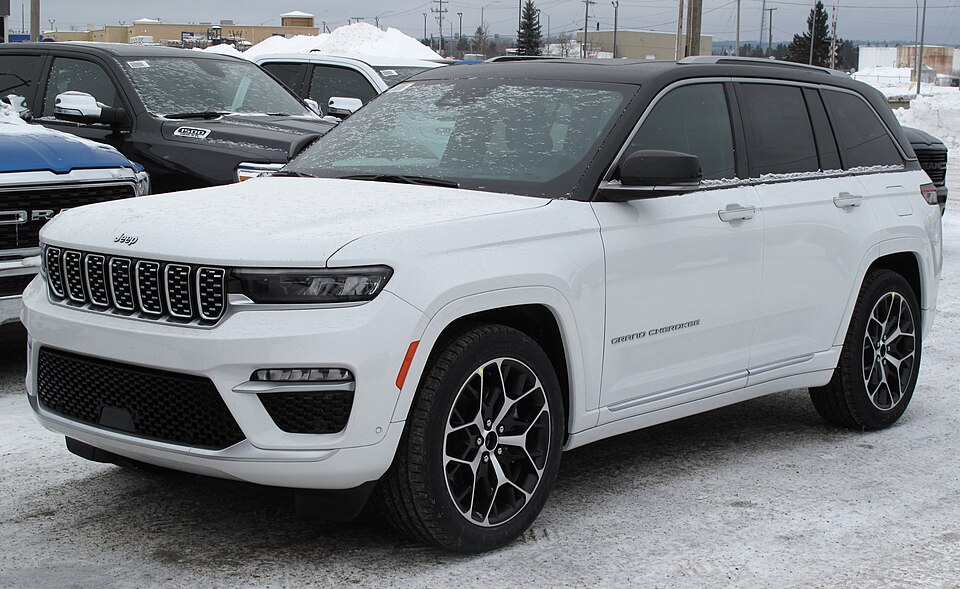
- Clase
- SUV grande (4WD)
- Carrocerías
- 4dr SUV Laredo 4X4, 4dr SUV Limited 4X4, 4dr SUV Overland/Summit 4X4, Srt 4dr SUV
- Motores
- 3.6L 6 cil., 5.7L 8 cil., 6.4L 8 cil., 6.2L 8 cil.
- Potencia
- 295 hp
- Transmisión
- 8-speed Automática
- Tracción
- Tracción trasera, Tracción total (AWD)
- Asientos
- 5
- Combustible
- Gasolina regular, Gasolina intermedia, Gasolina premium
- MPG (mejor)
- 21 combinadas · 19 ciudad / 26 carretera
- Largo
- 189.8–191.3 in
- Peso en vacío
- 4,676–5,150 lb
- Calificación NHTSA
- ★★★★★
- Retiros
- 3 campañas
Ventajas y desventajas
Lo bueno
- Tracción total / 4x4 disponible
- 5 estrellas en seguridad NHTSALa máxima calificación general en las pruebas de choque federales.
A tener en cuenta
- Mayor riesgo de volcaduraLa NHTSA estima un 20.4 % de probabilidad de volcadura en un choque de un solo vehículo.
Calculado con datos de la EPA, la NHTSA y vPIC frente a 17 modelos similares 2020; no es una reseña. Cómo lo calculamos →
Resumen
El Jeep Grand Cherokee 2020 es un SUV grande disponible con 4 motores (3.6L 6 cil., 5.7L 8 cil., 6.4L 8 cil. y 6.2L 8 cil.), con tracción trasera y tracción total (AWD).
Mide unas 190 pulgadas de largo y 76 de ancho, con una distancia entre ejes de 115 pulgadas, y pesa alrededor de 4,676 lb (4dr SUV Laredo 4X4).
La EPA califica su versión más eficiente con 21 MPG combinadas (19 en ciudad / 26 en carretera), un 12 % mejor que el promedio de su clase (SUV grande, 2020: 18.8 MPG), con un gasto estimado de $3,200 al año en combustible.
En las pruebas de choque de la NHTSA obtuvo la máxima calificación general de 5 estrellas.
Tiene 3 campañas de retiro registradas y los propietarios han presentado 241 quejas ante la NHTSA desde 2015, sobre todo por problemas de sistema eléctrico.
Novedades del 2020
- Ya no hay versión diésel
- Motor retirado: 3.0L 6 cil. turbo
- Mejor consumo combinado baja de 24 a 21 MPG
Comparado con 2019; no incluye cambios de versiones, equipamiento ni precio. Ver el Grand Cherokee 2019 →
Versiones, desempeño y equipamiento
Versiones
Seguridad y asistencias al conductor
Fabricado en: Detroit, Michigan
NHTSA vPIC, según el fabricante, para 5 configuraciones del Grand Cherokee 2020; puede no incluir todas las versiones. Cómo lo calculamos →
Dimensiones y peso
| Carrocería | Largo | Ancho | Alto | Distancia entre ejes | Vía del. / tras. | Peso en vacío | Peso del./tras. |
|---|---|---|---|---|---|---|---|
| 4dr SUV Laredo 4X4 | 189.8 in | 76.4 in | 69.3 in | 115 in | 63.8 / 64.2 in | 4,676 lb | 51/49 |
| 4dr SUV Limited 4X4 | 189.8 in | 76.4 in | 69.3 in | 115 in | 63.8 / 64.2 in | 4,874 lb | 53/47 |
| 4dr SUV Overland/Summit 4X4 | 189.8 in | 76.4 in | 69.3 in | 115 in | 63.8 / 64.2 in | 4,985 lb | 53/47 |
| Srt 4dr SUV | 191.3 in | 77.2 in | 69.3 in | 115 in | 63.8 / 64.2 in | 5,150 lb | 53/47 |
Transport Canada CVS (Open Government Licence – Canada), medidas del mercado canadiense.
¿Cabe en tu garaje? Compruébalo con tus medidas →Motores, consumo y costo de uso
| Versión | Motor | Transmisión | Tracción | Ciudad / Carr. / Comb. | vs. su clase | Combustible / año | CO₂ g/mi |
|---|---|---|---|---|---|---|---|
| Grand Cherokee 2WD | 3.6L 6 cil. | Automática 8-spd | Tracción trasera | 19 / 26 / 21 | +12% | $3,200 | 414 |
| Grand Cherokee 4WD | 3.6L 6 cil. | Automática 8-spd | Tracción total (AWD) | 18 / 25 / 21 | +12% | $3,200 | 427 |
| Grand Cherokee 4WD | 5.7L 8 cil. | Automática 8-spd | Tracción total (AWD) | 14 / 22 / 17 | -10% | $4,450 | 533 |
| Grand Cherokee SRT 4WD | 6.4L 8 cil. | Automática 8-spd | Tracción total (AWD) | 13 / 19 / 15 | -20% | $5,500 | 592 |
| Grand Cherokee Trackhawk 4WD | 6.2L 8 cil. | Automática 8-spd | Tracción total (AWD) | 11 / 17 / 13 | -31% | $6,300 | 664 |
Estimaciones de la EPA; "vs. su clase" compara las MPG combinadas con el promedio 2020 de su clase EPA. Cómo lo calculamos →
Calificaciones de seguridad y tecnología
| Versión | General | Frontal | Conductor / pasajero | Lateral | Poste lateral | Volcadura | Riesgo de volcadura |
|---|---|---|---|---|---|---|---|
| 2020 Jeep Grand Cherokee SUV 4WD | ★★★★★ | ★★★★★ | 4★ / 5★ | ★★★★★ | ★★★★★ | ★★★★★ | 16.9% |
| 2020 Jeep Grand Cherokee SUV 2WD | ★★★★★ | ★★★★★ | 4★ / 5★ | ★★★★★ | ★★★★★ | ★★★★★ | 20.4% |


SUV grande similares 2020
| Modelo | Mejor MPG / autonomía | General NHTSA | Retiros |
|---|---|---|---|
| Jeep Grand Cherokee 2020 (este auto) | 21 MPG | ★★★★★ | 3 |
| Toyota Land Cruiser 2020 | 14 MPG | Sin calificar | 0 |
| Toyota 4Runner 2020 | 17 MPG | ★★★★★ | 1 |
| Ford Explorer 2020 | 28 MPG | ★★★★★ | 35 |
| Toyota Highlander 2020 | 36 MPG | ★★★★★ | 5 |
| Kia Telluride 2020 | 23 MPG | ★★★★★ | 7 |
| Kia Sorento 2020 | 25 MPG | ★★★★★ | 1 |
Retiros (3)
Texto oficial de la NHTSA (en inglés).
Motor y refrigeración · 8 jun 2023
Campaña NHTSA 23V411000 · 80,629 vehículos
- Problema
- Chrysler (FCA US, LLC) is recalling certain 2014-2019 Ram 1500 and 2014-2020 Jeep Grand Cherokee vehicles equipped with 3.0L Diesel engines. The crankshaft position sensor tone wheel may delaminate, causing the engine to lose its ability to synchronize the fuel injector pulses and cam shaft timing, possibly resulting in an engine stall.
- Riesgo
- An engine stall can increase the risk of a crash.
- Solución
- Dealers will update the powertrain control module software to maintain vehicle propulsion, free of charge. Interim notification letters, notifying owners of the safety risk, were mailed August 3, 2023. Some owner notification letters were mailed October 31, 2023. The remaining owner notification letters will be mailed at a future date, anticipated July 2024. Owners may contact FCA US, LLC customer service at 1-800-853-1403. FCA US, LLC's number for this recall is 66A. This recall is an expansion of recall 20V-475.
Combustible (diésel) › Delivery › Fuel Pump · 9 jun 2022
Campaña NHTSA 22V406000 · 138,645 vehículos
- Problema
- Chrysler (FCA US, LLC) is recalling certain 2014-2020 Jeep Grand Cherokee, and 2014-2019 Ram 1500 vehicles equipped with 3.0L diesel engines. A high pressure fuel pump (HPFP) failure may introduce internal debris into the fuel system, potentially resulting in fuel starvation.
- Riesgo
- Fuel starvation may result in an unexpected loss of drive power, increasing the risk of a crash.
- Solución
- Dealers will replace the HPFP, and inspect and replace, if necessary, additional fuel system components, free of charge. Interim notification letters informing owners of the safety risk were mailed July 21, 2022. Owner notification letters for were mailed for Jeep Grand Cherokee owners starting January 11, 2024. Owner notification letters for Ram 1500 owners were mailed March 7, 2024. Owners may contact FCA US, LLC customer service at 1-800-853-1403. FCA US, LLS's number for this recall is Z46.
Prevención de impacto en reversa › Sensing System › Camera · 10 sept 2020
Campaña NHTSA 20V191000 · 319,610 vehículos
- Problema
- Chrysler (FCA US LLC) is recalling certain 2020 Jeep Gladiator and Jeep Cherokee, 2019-2020 Ram 1500 Pickup, Ram 2500 Pickup, Ram 3500 Pickup, Chrysler Pacifica, Dodge Durango, Jeep Grand Cherokee, Jeep Wrangler, and Jeep Renegade and 2019 Dodge Challenger vehicles equipped with 8.4" or 12" radio displays. A software error can cause the rearview camera image to remain displayed after the vehicle has been shifted out of reverse. As such, these vehicles fail to comply with the requirements of Federal Motor Vehicle Safety Standard (FMVSS) number 111, "Rearview Mirrors."
- Riesgo
- The lingering rearview image can distract the driver, increasing the risk of a crash.
- Solución
- Chrysler has notified owners, and dealers will update the radio display software, free of charge. Optionally, owners can choose to remotely update their software via an Over-The-Air (OTA) update available as of May 1, 2020. The recall began April 27, 2020. Owners may contact Chrysler customer service at 1-800-853-1403. Chrysler's number for this recall is W30-W37.
No todos los Grand Cherokee 2020 están afectados: solo el VIN lo confirma.
Problemas reportados por propietarios
Reportes sin verificar; los más vendidos acumulan más.
Lista para comprar un Jeep Grand Cherokee 2020 usado
- Consulta el VIN en nhtsa.gov/recalls. 3 retiros en este año: pide comprobantes de reparación.
- Sistema eléctrico — 72 reportes de propietarios. Prueba todas las ventanas, seguros, luces, pantallas y puertos USB; revisa la antigüedad de la batería.
- Motor — 50 reportes de propietarios. Arranca el motor en frío, escucha si golpetea y fíjate en luces de advertencia o titubeos al acelerar.
- Tren motriz — 39 reportes de propietarios. Prueba todas las marchas, incluida la reversa; nota patinazos o cambios bruscos o tardíos.
- Millaje a vigilar. Los propietarios suelen reportar problemas alrededor de las 13,100 millas; pregunta qué se reparó cerca de ese punto.
- Antes de pagar: historial de servicio, reporte de antecedentes e inspección de un mecánico independiente.
Generado por DecodedCars a partir de retiros y quejas de propietarios ante la NHTSA para el Jeep Grand Cherokee 2020. No sustituye una inspección profesional.
Otros años del Grand Cherokee
Comparar todos los años →| Año | MPG (mejor) | Largo | General | Retiros | Quejas |
|---|---|---|---|---|---|
| Grand Cherokee 2027 | 23 | – | Sin calificar | 0 | 0 |
| Grand Cherokee 2026 | 23 | 193.3 in | Sin calificar | 6 | 55 |
| Grand Cherokee 2025 | 23 | 193.3 in | ★★★★★ | 5 | 121 |
| Grand Cherokee 2024 | 23 | 193.3 in | ★★★★★ | 18 | 315 |
| Grand Cherokee 2023 | 23 | 204.7 in | Sin calificar | 23 | 597 |
| Grand Cherokee 2022 | 23 | 204.7 in | Sin calificar | 24 | 491 |
| Grand Cherokee 2021 | 21 | 189.8 in | ★★★★★ | 16 | 502 |
| Grand Cherokee 2019 | 24 | 189.8 in | ★★★★★ | 7 | 370 |
| Grand Cherokee 2018 | 25 | 189.8 in | ★★★★★ | 10 | 855 |
| Grand Cherokee 2017 | 21 | 189.8 in | ★★★★★ | 5 | 364 |
| Grand Cherokee 2016 | 25 | 189.8 in | Sin calificar | 8 | 311 |
| Grand Cherokee 2015 | 25 | 189.8 in | Sin calificar | 9 | 1,366 |
Fuentes: EPA, NHTSA, Transport Canada, Wikimedia Commons. Sin afiliación con la NHTSA, la EPA ni Jeep. Cómo lo calculamos →