 DecodedCars
Chrysler 300 2013
Versiones, desempeño, equipamiento, consumo, seguridad y problemas conocidos, con sus ventajas y desventajas frente a modelos similares 2013.
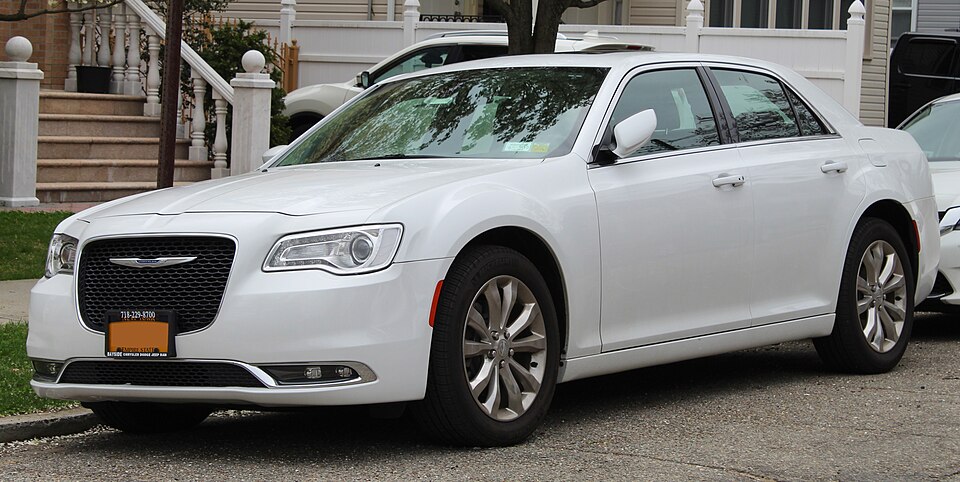
- Clase
- Auto grande
- Carrocerías
- 4dr Sedan 300 S/300c/300c Luxury AWD, 4dr Sedan 300 Touring/300 S RWD, 4dr Sedan 300c/300c Luxury RWD
- Motores
- 3.6L 6 cil., 5.7L 8 cil.
- Tracción
- Tracción trasera, Tracción total (AWD)
- Combustible
- Gasolina regular, FFV, Gasolina intermedia
- MPG (mejor)
- 23 combinadas · 19 ciudad / 30 carretera
- Largo
- 198.8 in
- Peso en vacío
- 3,962–4,513 lb
- Calificación NHTSA
- Sin calificar
- Retiros
- 6 campañas
Ventajas y desventajas
Lo bueno
- Tracción total / 4x4 disponible
A tener en cuenta
- Retiro con aviso de "no conducir"Verifica que la reparación del retiro esté hecha antes de comprarlo o manejarlo.
Calculado con datos de la EPA, la NHTSA y vPIC frente a 18 modelos similares 2013; no es una reseña. Cómo lo calculamos →
Resumen
El Chrysler 300 2013 es un auto grande disponible con 2 motores (3.6L 6 cil. y 5.7L 8 cil.), con tracción trasera y tracción total (AWD).
Mide unas 199 pulgadas de largo y 75 de ancho, con una distancia entre ejes de 120 pulgadas, y pesa alrededor de 4,513 lb (4dr Sedan 300 S/300c/300c Luxury AWD).
La EPA califica su versión más eficiente con 23 MPG combinadas (19 en ciudad / 30 en carretera), un 14 % mejor que el promedio de su clase (auto grande, 2013: 20.2 MPG), con un gasto estimado de $2,900 al año en combustible.
La NHTSA no ha publicado una calificación general de 5 estrellas para este año modelo.
Tiene 6 campañas de retiro registradas y los propietarios han presentado 290 quejas ante la NHTSA desde 2015, sobre todo por problemas de sistema eléctrico.
Novedades del 2013
Sin cambios en motores, versiones, tracción, tamaño, consumo EPA ni calificación NHTSA respecto al 300 2012: un año sin cambios según los datos.
Comparado con 2012; no incluye cambios de versiones, equipamiento ni precio. Ver el 300 2012 →
Versiones, desempeño y equipamiento
Versiones
Fabricado en: Brampton, Ontario
NHTSA vPIC, según el fabricante, para 5 configuraciones del 300 2013; puede no incluir todas las versiones. Cómo lo calculamos →
Dimensiones y peso
| Carrocería | Largo | Ancho | Alto | Distancia entre ejes | Vía del. / tras. | Peso en vacío | Peso del./tras. |
|---|---|---|---|---|---|---|---|
| 4dr Sedan 300 S/300c/300c Luxury AWD | 198.8 in | 75.2 in | 58.7 in | 120.1 in | 64.2 / 63.8 in | 4,513 lb | 54/46 |
| 4dr Sedan 300 Touring/300 S RWD | 198.8 in | 75.2 in | 58.7 in | 120.1 in | 64.2 / 63.8 in | 3,962 lb | 52/48 |
| 4dr Sedan 300c/300c Luxury RWD | 198.8 in | 75.2 in | 58.7 in | 120.1 in | 64.2 / 63.8 in | 4,270 lb | 54/46 |
Transport Canada CVS (Open Government Licence – Canada), medidas del mercado canadiense.
¿Cabe en tu garaje? Compruébalo con tus medidas →Motores, consumo y costo de uso
| Versión | Motor | Transmisión | Tracción | Ciudad / Carr. / Comb. | vs. su clase | Combustible / año | CO₂ g/mi |
|---|---|---|---|---|---|---|---|
| 300 | 3.6L 6 cil. | Automática 8-spd | Tracción trasera | 19 / 30 / 23 | +14% | $2,900 | 389 |
| 300 FFV | 3.6L 6 cil. | Automática 8-spd | Tracción trasera | 19 / 30 / 23 | +14% | $2,900 | 389 |
| 300 AWD | 3.6L 6 cil. | Automática 8-spd | Tracción total (AWD) | 18 / 27 / 21 | +4% | $3,200 | 415 |
| 300 AWD FFV | 3.6L 6 cil. | Automática 8-spd | Tracción total (AWD) | 18 / 27 / 21 | +4% | $3,200 | 415 |
| 300 | 5.7L 8 cil. | Automática 5-spd | Tracción trasera | 16 / 25 / 19 | -6% | $4,000 | 477 |
| 300 AWD | 5.7L 8 cil. | Automática 5-spd | Tracción total (AWD) | 15 / 23 / 18 | -11% | $4,200 | 503 |
Estimaciones de la EPA; "vs. su clase" compara las MPG combinadas con el promedio 2013 de su clase EPA. Cómo lo calculamos →
Calificaciones de seguridad y tecnología
La NHTSA no ha publicado calificaciones de 5 estrellas para el Chrysler 300 2013.
Auto grande similares 2013
| Modelo | Mejor MPG / autonomía | General NHTSA | Retiros |
|---|---|---|---|
| Chrysler 300 2013 (este auto) | 23 MPG | Sin calificar | 6 |
| Honda Accord 2013 | 30 MPG | Sin calificar | 6 |
| Chevrolet Impala 2013 | 22 MPG | Sin calificar | 1 |
| Toyota Camry 2013 | 40 MPG | Sin calificar | 2 |
| Chevrolet Camaro 2013 | 22 MPG | Sin calificar | 3 |
| Dodge Charger 2013 | 23 MPG | Sin calificar | 9 |
| Dodge Challenger 2013 | 21 MPG | Sin calificar | 5 |
Retiros (6)
Texto oficial de la NHTSA (en inglés).
Bolsas de aire › Frontal › Passenger Side › Inflator Module · 15 ene 2019 No conducir
Campaña NHTSA 19V018000 · 1,413,222 vehículos
- Problema
- Chrysler (FCA US LLC) is recalling certain 2010 Dodge Ram 3500, Ram 4500/5500, 2010-2011 Dodge Dakota, 2010-2014 Dodge Challenger, 2010-2015 Dodge Challenger, Chrysler 300, and 2010-2016 Jeep Wrangler vehicles. Upon deployment of the driver's frontal air bag, excessive internal pressure may cause the inflator to explode.
- Riesgo
- In the event of a crash necessitating deployment of the passenger's frontal air bag, the inflator could explode with metal fragments striking the vehicle occupants potentially resulting in serious injury or death.
- Solución
- Owners are advised not to drive their vehicle until the recall repair is complete. Chrysler will notify owners, and dealers will replace the passenger frontal air bag inflator, free of charge. The recall began February 4, 2019. Owners may contact Chrysler customer service at 1-800-853-1403. Chrysler's number for this recall is V01.
Bolsas de aire › Frontal › Passenger Side › Inflator Module · 9 ene 2018 No conducir
Campaña NHTSA 18V021000 · 328,177 vehículos
- Problema
- Chrysler (FCA US LLC) is recalling certain 2009-2013 Jeep Wrangler, Chrysler 300, Dodge Challenger and Dodge Charger vehicles, and 2009-2011 Dodge Dakota vehicles sold, or ever registered, in the states of Alabama, California, Florida, Georgia, Hawaii, Louisiana, Mississippi, South Carolina, Texas, Puerto Rico, American Samoa, Guam, the Northern Mariana Islands (Saipan), and the U.S. Virgin Islands or "Zone A." Additionally, Chrysler is recalling certain 2009-2010 RAM 4500 Cab Chassis, RAM 5500 Cab Chassis, RAM 3500 Cab Chassis, Jeep Wrangler, Chrysler 300, Dodge Dakota, Dodge Challenger, and Dodge Charger vehicles ever registered in the states of Arizona, Arkansas, Delaware, District of Columbia, Illinois, Indiana, Kansas, Kentucky, Maryland, Missouri, Nebraska, Nevada, New Jersey, New Mexico, North Carolina, Ohio, Oklahoma, Pennsylvania, Tennessee, Virginia, and West Virginia or "Zone B." Chrysler is also recalling certain 2009 RAM 3500, RAM 2500, RAM 4500 Cab Chassis, RAM 5500 Cab Chassis, Dodge Durango, Chrysler Aspen, RAM 3500 Cab Chassis, Jeep Wrangler, Chrysler 300, Dodge Dakota, Dodge Challenger, and Dodge Charger vehicles ever registered in the states of Alaska, Colorado, Connecticut, Idaho, Iowa, Maine, Massachusetts, Michigan, Minnesota, Montana, New Hampshire, New York, North Dakota, Oregon, Rhode Island, South Dakota, Utah, Vermont, Washington, Wisconsin, and Wyoming. In the event of a crash necessitating deployment of the passenger frontal air bag, these passenger air bag inflator may explode due to propellant degradation occurring after long-term exposure to absolute humidity and temperature cycling.
- Riesgo
- An inflator explosion may result in sharp metal fragments striking the driver or other occupants resulting in serious injury or death.
- Solución
- Owners are advised not to drive their vehicle until the recall repair is complete. Chrysler will notify owners, and dealers will replace the passenger frontal air bag inflator, free of charge. The recall began February 28, 2018. Owners may contact Chrysler customer service at 1-800-853-1403. Chrysler's number for this recall is U03.
Sistema eléctrico › Alternator/Generator/Regulator · 10 jul 2017
Campaña NHTSA 17V435000 · 442,214 vehículos
- Problema
- Chrysler (FCA US LLC) is recalling certain model year 2011-2014 Dodge Challenger, Dodge Charger, Chrysler 300, Dodge Durango, and 2012-2014 Jeep Grand Cherokee vehicles. The affected vehicles have electro-hydraulic power steering (EHPS) and are equipped with a 5.7L or a 3.6L engine and a 160, 180 or 220 amp alternator. In the affected vehicles, the alternator may suddenly fail.
- Riesgo
- If the alternator fails, the vehicle may stall without warning, increasing the risk of a crash. There is also the possibility that the alternator may short circuit, increasing the risk of a fire.
- Solución
- Chrysler will notify owners, and dealers will inspect the alternator and depending on the part number, will replace the alternator, if necessary, free of charge. The recall began February 12, 2018. Owners may contact Chrysler customer service at 1-800-853-1403. Chrysler's number for this recall is T36.
Tren motriz › Transmisión automática › Control Module (Tcm/Pcm/Tecm) · 25 abr 2016
Campaña NHTSA 16V240000 · 811,290 vehículos
- Problema
- Chrysler (FCA US LLC) is recalling certain model year 2012-2014 Dodge Charger and Chrysler 300 vehicles manufactured February 15, 2011, to November 27, 2014, and 2014-2015 Jeep Grand Cherokee vehicles manufactured July 16, 2012, to December 22, 2015. The affected vehicles, equipped with an eight-speed automatic transmission and a monostable gear selector, may not adequately warn the driver when driver's door is opened and the vehicle is not in PARK, allowing them to exit the vehicle while the vehicle is still in gear.
- Riesgo
- Drivers thinking that their vehicle's transmission is in the PARK position may be struck by the vehicle and injured if they attempt to get out of the vehicle while the engine is running and the parking brake is not engaged.
- Solución
- Chrysler will notify owners, and dealers will update the vehicle software to mitigate the risk of vehicle rollaway, free of charge. The recall began on June 24, 2016. Owners may contact Chrysler customer service at 1-800-853-1403. Chrysler's number for this recall is S27. Note: On October 19, 2016 Chrysler identified some previously repaired vehicles did not receive the complete software updates. Chrysler will renotify the affected owners, and dealers will update the software again.
Sistema eléctrico › Alternator/Generator/Regulator · 8 oct 2014
Campaña NHTSA 14V634000 · 435,081 vehículos
- Problema
- Chrysler Group LLC (Chrysler) is recalling certain model year 2011-2014 Chrysler 300, Dodge Charger, Challenger, and Durango; and 2012-2014 Jeep Grand Cherokee vehicles manufactured April 22, 2010, to January 2, 2014, and equipped with a 3.6L engine and a 160 amp alternator. In the affected vehicles, the alternator may suddenly fail.
- Riesgo
- If the alternator fails, the vehicle may stall without warning, increasing the risk of a crash.
- Solución
- Chrysler has notified owners, and dealers will replace the alternator, free of charge. The recall began on February 27, 2015. Owners may contact Chrysler customer service at 1-800-853-1403. Chrysler's number for this recall is P60.
Tren motriz › Transmisión automática · 6 dic 2013
Campaña NHTSA 13V610000 · 4,194 vehículos
- Problema
- Chrysler Group LLC (Chrysler) is recalling certain model year 2013 Chrysler 300 AWD, Dodge Charger AWD, and Dodge Ram 1500 4x4 vehicles equipped with ZF all wheel drive ("AWD") 8HP45 transmissions. In the affected vehicles, the transmission output shaft may fracture.
- Riesgo
- The transmission output shaft fracture could result in a loss of power, increasing the risk of a crash. Additionally, if the parking brake is not applied before exiting the vehicle, the vehicle may roll away despite the transmission being placed in 'Park'.
- Solución
- Chrysler will notify owners, and dealers will inspect and replace the transmissions, as necessary, free of charge. The recall began on March 31, 2014. Customers may contact Chrysler at 1-800-853-1403. Chrysler's recall number is N65.
No todos los 300 2013 están afectados: solo el VIN lo confirma.
Problemas reportados por propietarios
Reportes sin verificar; los más vendidos acumulan más.
Lista para comprar un Chrysler 300 2013 usado
- Consulta el VIN en nhtsa.gov/recalls. 6 retiros en este año: pide comprobantes de reparación.
- Retiro crítico de seguridad. Al menos un retiro tiene aviso de "no conducir" o "estacionar afuera". No lo compres hasta que el VIN muestre que se reparó.
- Sistema eléctrico — 138 reportes de propietarios. Prueba todas las ventanas, seguros, luces, pantallas y puertos USB; revisa la antigüedad de la batería.
- Tren motriz — 53 reportes de propietarios. Prueba todas las marchas, incluida la reversa; nota patinazos o cambios bruscos o tardíos.
- Bolsas de aire — 34 reportes de propietarios. Confirma que la luz de advertencia de las bolsas de aire se apague al arrancar y que cualquier retiro de bolsas de aire esté reparado.
- Millaje a vigilar. Los propietarios suelen reportar problemas alrededor de las 60,000 millas; pregunta qué se reparó cerca de ese punto.
- Antes de pagar: historial de servicio, reporte de antecedentes e inspección de un mecánico independiente.
Generado por DecodedCars a partir de retiros y quejas de propietarios ante la NHTSA para el Chrysler 300 2013. No sustituye una inspección profesional.
Otros años del 300
Comparar todos los años →| Año | MPG (mejor) | Largo | General | Retiros | Quejas |
|---|---|---|---|---|---|
| 300 2023 | 23 | 198.8 in | ★★★★★ | 1 | 6 |
| 300 2022 | 23 | 198.8 in | ★★★★★ | 2 | 5 |
| 300 2021 | 23 | 198.8 in | ★★★★★ | 2 | 20 |
| 300 2020 | 23 | 198.8 in | ★★★★★ | 2 | 10 |
| 300 2019 | 23 | 198.8 in | ★★★★★ | 2 | 61 |
| 300 2018 | 23 | 198.8 in | ★★★★★ | 4 | 153 |
| 300 2017 | 23 | 198.8 in | ★★★★★ | 2 | 86 |
| 300 2016 | 23 | 198.8 in | ★★★★★ | 2 | 83 |
| 300 2015 | 23 | 198.8 in | Sin calificar | 4 | 111 |
| 300 2014 | 23 | 198.8 in | ★★★★★ | 7 | 233 |
| 300 2012 | 23 | 198.8 in | Sin calificar | 9 | 391 |
| 300 2011 | 21 | 198.8 in | Sin calificar | 7 | 151 |
Fuentes: EPA, NHTSA, Transport Canada, Wikimedia Commons. Sin afiliación con la NHTSA, la EPA ni Chrysler. Cómo lo calculamos →