 DecodedCars
Audi A7 2022
Versiones, desempeño, equipamiento, consumo, seguridad y problemas conocidos, con sus ventajas y desventajas frente a modelos similares 2022.
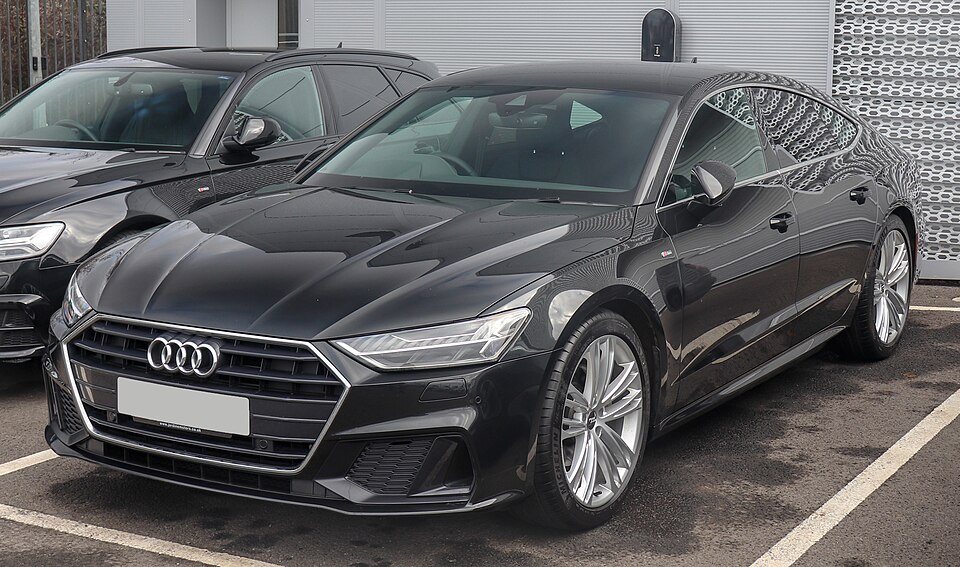
- Clase
- Auto mediano
- Carrocerías
- Sportback 4dr Sedan
- Motores
- 2.0L 4 cil. turbo, 3.0L 6 cil. turbo
- Tracción
- Tracción total (AWD), Tracción 4x4
- Combustible
- Híbrido enchufable, Híbrido
- MPG (mejor)
- 27 combinadas · 25 ciudad / 31 carretera
- Largo
- 195.7 in
- Peso en vacío
- 4,332 lb
- Calificación NHTSA
- Sin calificar
- Retiros
- 7 campañas
Ventajas y desventajas
Lo bueno
- Disponible en versión híbridaSe ofrece en versión híbrida y híbrida enchufable además de gasolina.
- Tracción total / 4x4 disponible
A tener en cuenta
- Requiere gasolina premiumTodas las versiones de gasolina usan premium, lo que encarece el uso diario.
- 7 retirosMás que modelos similares (unos 3). Confirma las reparaciones con el VIN.
Calculado con datos de la EPA, la NHTSA y vPIC frente a 31 modelos similares 2022; no es una reseña. Cómo lo calculamos →
Resumen
El Audi A7 2022 es un auto mediano disponible con 2 motores (2.0L 4 cil. turbo y 3.0L 6 cil. turbo), incluida una versión híbrida, con tracción total (AWD) y tracción 4x4.
Mide unas 196 pulgadas de largo y 75 de ancho, con una distancia entre ejes de 115 pulgadas, y pesa alrededor de 4,332 lb.
La EPA califica su versión más eficiente con 27 MPG combinadas (25 en ciudad / 31 en carretera), un 0 % mejor que el promedio de su clase (auto mediano, 2022: 27.1 MPG), con un gasto estimado de $3,050 al año en combustible.
La NHTSA no ha publicado una calificación general de 5 estrellas para este año modelo.
Tiene 7 campañas de retiro registradas.
Novedades del 2022
- Mejor consumo combinado baja de 29 a 27 MPG
Comparado con 2021; no incluye cambios de versiones, equipamiento ni precio. Ver el A7 2021 →
Dimensiones y peso
| Carrocería | Largo | Ancho | Alto | Distancia entre ejes | Vía del. / tras. | Peso en vacío | Peso del./tras. |
|---|---|---|---|---|---|---|---|
| Sportback 4dr Sedan | 195.7 in | 75.2 in | 55.9 in | 115.4 in | 65 / 64.6 in | 4,332 lb | 54/46 |
Transport Canada CVS (Open Government Licence – Canada), medidas del mercado canadiense.
¿Cabe en tu garaje? Compruébalo con tus medidas →Motores, consumo y costo de uso
| Versión | Motor | Transmisión | Tracción | Ciudad / Carr. / Comb. | vs. su clase | Combustible / año | CO₂ g/mi |
|---|---|---|---|---|---|---|---|
| A7 TFSI e quattro Híbrido enchufable | 2.0L 4 cil. turbo | Automática (AM-S7) | Tracción total (AWD) | 25 / 31 / 27 | 0% | $3,050 | 126 |
| A7 quattro Híbrido | 3.0L 6 cil. turbo | Automática (AM-S7) | Tracción 4x4 | 21 / 30 / 24 | -11% | $3,400 | 361 |
Estimaciones de la EPA; "vs. su clase" compara las MPG combinadas con el promedio 2022 de su clase EPA. Cómo lo calculamos →
Calificaciones de seguridad y tecnología
La NHTSA no ha publicado calificaciones de 5 estrellas para el Audi A7 2022.
Auto mediano similares 2022
| Modelo | Mejor MPG / autonomía | General NHTSA | Retiros |
|---|---|---|---|
| Audi A7 2022 (este auto) | 27 MPG | Sin calificar | 7 |
| BMW 5 Series 2022 | 28 MPG | Sin calificar | 0 |
| Mercedes-Benz E-Class 2022 | 26 MPG | ★★★★★ | 0 |
| Audi A4 2022 | 29 MPG | Sin calificar | 3 |
| Mercedes-Benz C-Class 2022 | 29 MPG | Sin calificar | 0 |
| Audi A6 2022 | 26 MPG | Sin calificar | 5 |
| Tesla Model S 2022 | 405 mi | Sin calificar | 20 |
Retiros (7)
Texto oficial de la NHTSA (en inglés).
Prevención de impacto en reversa › Sensing System › Camera · 19 dic 2025
Campaña NHTSA 25V900000 · 356,894 vehículos
- Problema
- Volkswagen Group of America, Inc. (Audi) is recalling certain 2019-2026 vehicles. Please see the recall report for a complete list of models. A software error may prevent the rearview camera image from displaying as intended. As such, these vehicles fail to comply with the requirements of Federal Motor Vehicle Safety Standard number 111, "Rear Visibility."
- Riesgo
- A rearview image that does not display reduces the driver's view behind the vehicle, increasing the risk of a crash.
- Solución
- Dealers will update the software, free of charge. Owner notification letters were mailed January 14, 2026. Owners may contact Audi customer service at 1-800-253-2834. Audi's number for this recall is 90TV. Vehicle Identification Numbers (VINs) involved in this recall became searchable on NHTSA.gov on December 23, 2025.
Sistema eléctrico › Propulsion System › Traction Battery · 12 feb 2025
Campaña NHTSA 25V080000 · 20,201 vehículos
- Problema
- Volkswagen Group of America, Inc. (Volkswagen) is recalling certain 2021-2024 Audi Q5, and 2022 A7 E Hybrid Electric PHEV vehicles. The high-voltage battery may overheat.
- Riesgo
- A high-voltage battery that overheats increases the risk of a fire.
- Solución
- Dealers will install advanced diagnostic software , free of charge. Volkswagen will monitor available online vehicle data and contact owners as necessary, to advise them not to charge the vehicle until the battery can be replaced. For vehicles in which online data is unavailable, owners are advised not to charge their batteries until the final remedy becomes available. Repairs will be performed free of charge. This will be a Phased recall. Phase 1 will include Interim letters 2022-2023 model year vehicles. Phase 2 will include Owner letters 2021-2024 model year vehicles, and Phase 3 will include Interim letters 2022-2023 model year vehicles. Interim owner notification letters informing owners of the safety risk were mailed February 28, 2025, and May 7, 2025. A second notice will be sent once the final remedy is available. Owner notification letters were mailed May 1, 2025. Owners may contact Audi customer service at 1-800-253-2834. Volkswagen's number for this recall is 93AA. This recall expands and replaces previous NHTSA recall number 24V898.
Sistema eléctrico › Propulsion System › Traction Battery · 27 nov 2024
Campaña NHTSA 24V898000 · 4,616 vehículos
- Problema
- Volkswagen Group of America, Inc. (Volkswagen) is recalling certain 2022-2023 Audi Q5 PHEV and 2022 Audi A7 PHEV vehicles. The high-voltage battery may overheat.
- Riesgo
- A high-voltage battery that overheats increases the risk of a fire.
- Solución
- Dealers will install advanced diagnostic software as the final remedy, anticipated to be available in the second quarter of 2025. Volkswagen will monitor available online vehicle data and contact owners as necessary, to advise them not to charge the vehicle until the battery can be replaced. For vehicles in which online data is unavailable, owners are advised not to charge their batteries until the final remedy becomes available. Repairs will be performed free of charge. Owner notification letters were mailed May 1, 2025. Owners may contact Volkswagen Audi customer service at 1-800-253-2834. Volkswagen's number for this recall is 93AA. This recall has been replaced by NHTSA recall number 25V080.
Sistema eléctrico › Propulsion System › Charging › Cable/Cord › Onboard · 13 dic 2023
Campaña NHTSA 23V842000 · 93,196 vehículos
- Problema
- Volkswagen Group of America, Inc. (Audi) is recalling certain 2022-2024 RS e-tron GT, e-tron GT, Q4 e-tron Sportback, Q4 e-tron, 2020-2021 Audi A8, 2019-2024 e-tron Quattro, 2020-2024 e-tron Sportback Quattro, Q5, and 2021-2022 A7 vehicles. When using the industrial 220V/240V plug at the 100% charge setting, some home power outlets may be incapable of handling the electrical current required to utilize the compact charging system, causing the outlet or charging cable to overheat.
- Riesgo
- An overheated outlet or charging cable can increase the risk of a fire.
- Solución
- Owners are advised not to use the 220V/240V compact/portable charging cable and only use the 110V home charging cable or public charging stations. Dealers will supply a new 220V/240V compact/portable charging cable with an incorporated temperature sensor, free of charge. Owner notification letters were mailed on March 28, 2024. Owners may contact Audi customer service at 1-800-253-2834. Audi's numbers for this recall are 93U6 and 93U8.
Sistema eléctrico · 21 nov 2022
Campaña NHTSA 22V861000 · 50,883 vehículos
- Problema
- Volkswagen Group of America, Inc. (Audi) is recalling certain 2020-2022 Audi S7, S6 Sedan, A6 Allroad, 2021-2022 RS7, RS6 Avant, 2019-2022 A7, and A6 Sedan vehicles. Liquid spilled in the rear seat may penetrate and cause the gateway control module to shut down.
- Riesgo
- A gateway control module shutdown will suddenly reduce engine power, increasing the risk of a crash.
- Solución
- Dealers will install a protective cover, free of charge. Owner notification letters are expected to be mailed January 20, 2023. Owners may contact Audi's customer service at 1-800-253-2834. Audi's number for this recall is 90V2.
Equipamiento › Electrical › Infotainment › Video (Touch)Screen/Monitor/Unit · 26 oct 2022
Campaña NHTSA 22V806000 · 6,076 vehículos
- Problema
- Volkswagen Group of America, Inc. (Audi) is recalling certain 2021-2022 AUDI A8, A6 Allroad, E-TRON Quattro, 2022 S3, RSQ8, RS7, RS6 Avant, Q8, Q7, Q3, E-TRON Sportback Quattro, S5 Cabriolet, E-TRON GT, S5 Sportback, A7, A6, A5 Sportback, A5 Cabriolet, A4, A4 Allroad, A3, S8, SQ7, SQ8, S6, and S4 vehicles. The infotainment main unit may become damaged internally when the vehicle is shut off, resulting in an inoperative rearview camera display the next time the vehicle is started. As such, these vehicles fail to comply with the requirements of Federal Motor Vehicle Safety Standard number 111, "Rear Visibility."
- Riesgo
- An inoperative rearview camera display reduces the driver's rear visibility, increasing the risk of a crash.
- Solución
- Dealers will replace the infotainment main unit, free of charge. Owner notification letters were mailed June 6, 2022. Owners may contact Audi's customer service at 1-800-253-2834. Audi's number for this recall is 91Ei.
Sistema eléctrico › Instrument Panel › Fuel Gauge › Fuel Level Float/Sensor/Sending Unit · 14 mar 2022
Campaña NHTSA 22V155000 · 47,238 vehículos
- Problema
- Volkswagen Group of America, Inc. (Audi) is recalling certain 2021-2022 RS6 Avant and RS7, 2020-2022 A6 Allroad, S6 Sedan, and S7, and 2019-2022 A6 Sedan and A7 vehicles. The fuel level sender may stick, causing an inaccurate fuel level reading to be displayed on the instrument cluster.
- Riesgo
- An inaccurate fuel reading may cause an engine stall due to lack of fuel, increasing the risk of a crash.
- Solución
- Dealers will install a new sensor in the tank, free of charge. Owner notification letters were mailed February 17, 2023. Owners may contact Audi customer service at 1-800-253-2834. Audi's number for this recall is 20DN.
No todos los A7 2022 están afectados: solo el VIN lo confirma.
Problemas reportados por propietarios
No hay quejas de propietarios del Audi A7 2022 en la base de datos de la NHTSA desde 2015.
Lista para comprar un Audi A7 2022 usado
- Consulta el VIN en nhtsa.gov/recalls. 7 retiros en este año: pide comprobantes de reparación.
- Sistema híbrido. Busca luces de advertencia del sistema híbrido y pregunta si la batería de alto voltaje se reemplazó o sigue en garantía.
- Antes de pagar: historial de servicio, reporte de antecedentes e inspección de un mecánico independiente.
Generado por DecodedCars a partir de retiros y quejas de propietarios ante la NHTSA para el Audi A7 2022. No sustituye una inspección profesional.
Otros años del A7
Comparar todos los años →| Año | MPG (mejor) | Largo | General | Retiros | Quejas |
|---|---|---|---|---|---|
| A7 2025 | 25 | 195.7 in | Sin calificar | 1 | 0 |
| A7 2024 | 25 | 195.7 in | Sin calificar | 1 | 0 |
| A7 2023 | 24 | 195.7 in | Sin calificar | 1 | 0 |
| A7 2021 | 29 | 195.7 in | Sin calificar | 11 | 8 |
| A7 2020 | 24 | 195.7 in | Sin calificar | 8 | 2 |
| A7 2019 | 25 | 195.7 in | Sin calificar | 6 | 43 |
| A7 2018 | 23 | 195.7 in | Sin calificar | 2 | 3 |
| A7 2017 | 24 | 195.7 in | Sin calificar | 4 | 1 |
| A7 2016 | 30 | 195.7 in | Sin calificar | 3 | 15 |
| A7 2015 | 29 | 195.7 in | Sin calificar | 3 | 5 |
| A7 2014 | 29 | 195.7 in | Sin calificar | 2 | 10 |
| A7 2013 | 21 | 195.7 in | Sin calificar | 5 | 15 |
Fuentes: EPA, NHTSA, Transport Canada, Wikimedia Commons. Sin afiliación con la NHTSA, la EPA ni Audi. Cómo lo calculamos →