 DecodedCars
2017 Honda Pilot
Trims, performance, features, fuel economy, safety and known problems — with the pros and cons against similar 2017 models.
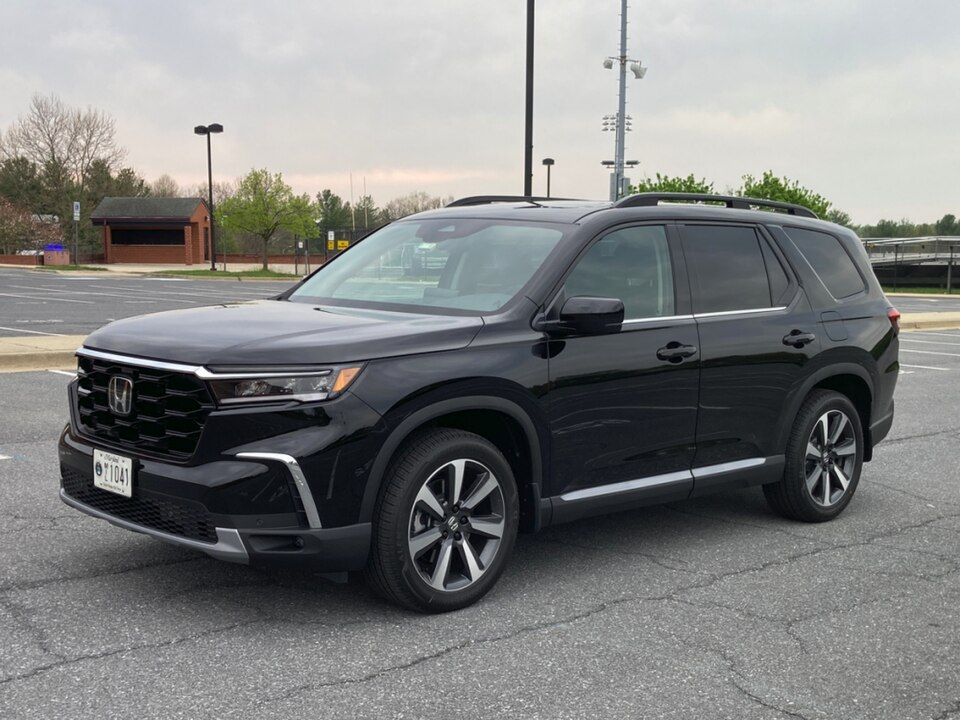
- Class
- Small Sport Utility Vehicle 2WD
- Body styles
- 4dr SUV AWD, 4dr SUV FWD
- Engines
- 3.5L 6-cyl
- Drivetrain
- Front-Wheel Drive, All-Wheel Drive
- Fuel
- Regular Gasoline
- MPG (best)
- 23 combined · 20 city / 27 hwy
- Length
- 194.9 in
- Curb weight
- 4,103–4,255 lb
- NHTSA rating
- Not rated
- Recalls
- 4 campaigns
Pros & cons
What's good
- AWD / 4WD available
Watch out for
- Many owner complaints936 complaints filed with NHTSA versus about 202 for similar models — most often about the engine.
Calculated from EPA, NHTSA and vPIC data against 22 similar 2017 models — not a review. How we calculate this →
Overview
The 2017 Honda Pilot is a small SUV offered with a 3.5L 6-cyl engine and front-wheel drive and all-wheel drive.
It measures about 195 inches long and 80 inches wide on a 111-inch wheelbase, with a curb weight of roughly 4,255 lb (4dr SUV AWD).
EPA rates its most efficient version at 23 MPG combined (20 city / 27 highway), 5% worse than the 2017 small SUV average of 24.3 MPG, for an estimated $2,900 a year in fuel.
NHTSA has not published a 5-Star overall rating for this model year.
It has 4 recall campaigns on file and owners have filed 936 complaints with NHTSA since 2015, most often about the engine.
What changed for 2017
No changes to engines, powertrains, drivetrains, size, EPA ratings or NHTSA crash rating compared with the 2016 Pilot — a carry-over year in the data.
Compared with 2016; trim, feature and price changes aren't covered. See the 2016 Pilot →
Dimensions & weight
| Body | Length | Width | Height | Wheelbase | Track F / R | Curb weight | Weight F/R |
|---|---|---|---|---|---|---|---|
| 4dr SUV AWD | 194.9 in | 79.9 in | 69.7 in | 111 in | 66.1 / 66.1 in | 4,255 lb | 57/43 |
| 4dr SUV FWD | 194.9 in | 79.9 in | 69.7 in | 111 in | 66.1 / 66.1 in | 4,103 lb | 58/42 |
Transport Canada CVS (Open Government Licence – Canada), Canadian-market figures.
Will it fit your garage? Check with your measurements →Engines, MPG & running costs
| Version | Engine | Transmission | Drive | City / Hwy / Comb | vs. class | Fuel / yr | CO₂ g/mi |
|---|---|---|---|---|---|---|---|
| Pilot FWD | 3.5L 6-cyl | Automatic (S9) | Front-Wheel Drive | 20 / 27 / 23 | -5% | $2,900 | 388 |
| Pilot FWD | 3.5L 6-cyl | Automatic 6-spd | Front-Wheel Drive | 19 / 27 / 22 | -9% | $3,050 | 405 |
| Pilot AWD | 3.5L 6-cyl | Automatic (S9) | All-Wheel Drive | 19 / 26 / 22 | -4% | $3,050 | 407 |
| Pilot AWD | 3.5L 6-cyl | Automatic 6-spd | All-Wheel Drive | 18 / 26 / 21 | -8% | $3,200 | 421 |
EPA estimates; "vs. class" is combined MPG against the 2017 EPA class average. How we calculate this →
Safety ratings & technology
NHTSA has not published 5-Star ratings for the 2017 Honda Pilot.
Similar 2017 small SUVs
| Model | Best MPG / range | NHTSA overall | Recalls |
|---|---|---|---|
| 2017 Honda Pilot (this car) | 23 MPG | Not rated | 4 |
| 2017 Toyota 4Runner | 18 MPG | Not rated | 5 |
| 2017 Ford Explorer | 22 MPG | ★★★★★ | 14 |
| 2017 Toyota Highlander | 29 MPG | Not rated | 3 |
| 2017 Jeep Grand Cherokee | 21 MPG | ★★★★★ | 5 |
| 2017 GMC Yukon | 19 MPG | ★★★★★ | 3 |
| 2017 Chevrolet Tahoe | 19 MPG | ★★★★★ | 4 |
Recalls (4)
Structure › Frame And Members · Jun 4, 2026
NHTSA campaign 26V365000 · 965,561 vehicles
- Problem
- American Honda Motor Company (Honda) is recalling certain 2016-2022 Honda Pilot, 2017-2023 Ridgeline, 2019-2023 Passport, and 2014-2020 Acura MDX vehicles that were sold in Connecticut, Delaware, District of Columbia, Illinois, Indiana, Iowa, Kentucky, Maine, Maryland, Massachusetts, Michigan, Minnesota, Missouri, New Hampshire, New Jersey, New York, Ohio, Pennsylvania, Rhode Island, Vermont, Virginia, West Virginia, or Wisconsin. The rear subframe may corrode at the suspension mounting points, which can result in rear suspension component failure.
- Risk
- Failure of rear suspension components, such as the rear control arm, can cause a loss of vehicle handling and control, increasing the risk of a crash or injury.
- Fix
- Dealers will inspect the rear subframe and install a rear subframe reinforcement kit and, as necessary, repair or replace the rear subframe components, free of charge. Interim letters notifying owners of the safety risk were mailed July 27, 2026. Additional letters will be sent once the final remedy is available, anticipated in the fall of 2026. Owners may contact Honda's customer service at 1-888-234-2138. Honda's numbers for this recall are AOU and AOT. Vehicle Identification Numbers (VINs) involved in this recall will become searchable on NHTSA.gov beginning June 10, 2026.
Air Bags › Sensor › Occupant Classification › Front Passenger · May 21, 2026
NHTSA campaign 26V332000 · 98,892 vehicles
- Problem
- Honda (American Honda Motor Co.) is recalling certain 2018-2021, 2023 Acura TLX, 2019-2024 RDX, 2017-2020, 2022-2026 MDX, 2017-2021, 2023, 2025 Honda Ridgeline, 2017-2022 Pilot, 2019-2021 Passport, 2018-2026 Odyssey, 2019-2022 Insight, 2019-2021 HR-V, 2018-2020 Fit, 2020-2022 CR-V Hybrid, 2017-2022 CR-V, 2017-2018, 2021 Civic Type R, 2017-2021 Civic hatchback, 2016-2020 Civic coupe, 2016-2022 Civic, 2017-2022 Accord Hybrid, and 2016-2022 Accord vehicles. The front passenger seat weight sensor may crack and short circuit, which can cause the air bags to deploy unintentionally during a crash.
- Risk
- Air bags that deploy unintentionally during a crash increase the risk of injury.
- Fix
- Dealers will replace the seat weight sensors, free of charge. Owner notification letters were mailed July 7, 2026. Owners may contact Honda's customer service at 1-888-234-2138. Honda's numbers for this recall are BOL, WO9, OOA, WOM, XOH, NOC, POD, BOE, UOF, POB, EOG, AOI, QO8, TOJ, DO7, and SOK. This recall expands previous NHTSA recall number 24V064. Vehicle Identification Numbers (VINs) involved in this recall will be searchable on NHTSA.gov beginning May 29, 2026.
Fuel System, Gasoline › Delivery › Fuel Pump · Dec 18, 2023
NHTSA campaign 23V858000 · 2,490,460 vehicles
- Problem
- Honda (American Honda Motor Co.) is recalling certain 2013-2023 Honda Accord, Civic Coupe, Civic Sedan, Civic Hatchback, Civic Type R, CR-V, HR-V, Ridgeline, Odyssey, Acura ILX, MDX, MDX Hybrid, RDX, RLX, TLX, 2019-2022 Honda Insight, Passport, 2020 Honda CR-V Hybrid, 2018-2019 Honda Clarity PHEV, Fit, and 2015-2020 Honda Accord Hybrid, Pilot, Acura NSX vehicles. The fuel pump inside the fuel tank may fail.
- Risk
- Fuel pump failure can cause an engine stall while driving, increasing the risk of a crash.
- Fix
- Dealers will replace the fuel pump module, free of charge. Owner letters were mailed September 6, 2024. Owners may contact Honda customer service at 1-888-234-2138. Honda's numbers for this recall are KGC and KGD. This recall is an expansion of NHTSA recall numbers 21V-215 and 20V-314.
Latches/Locks/Linkages › Hood › Latch · Nov 29, 2021
NHTSA campaign 21V932000 · 724,826 vehicles
- Problem
- Honda (American Honda Motor Co.) is recalling certain 2019 Passport, 2016-2019 Pilot, and 2017-2020 Ridgeline vehicles. The hood latch striker may become damaged and separate from the hood, which can result in the hood opening while driving.
- Risk
- A hood that opens while driving can obstruct the driver's view and increase the risk of a crash.
- Fix
- Dealers will either repair the hood latch striker, or replace the hood if necessary, free of charge. Owner notification letters were mailed January 18, 2022. Owners may contact Honda customer service at 1-888-234-2138. Honda's number for this recall is PBV.
Not every 2017 Honda Pilot is affected — only a VIN check confirms your car.
Owner-reported problems
Unverified owner reports; best-sellers collect more.
Used 2017 Honda Pilot buyer's checklist
- Run the VIN at nhtsa.gov/recalls. 4 recalls this year — ask for proof of repairs.
- Engine — 476 owner reports. Cold-start the engine, listen for knocking, and watch for warning lights or hesitation on acceleration.
- Electrical System — 256 owner reports. Test every window, lock, light, screen and USB port; check the battery age.
- Fuel/Propulsion System — 123 owner reports. Smell for fuel around the car and in the cabin, check that it starts easily when warm, and look at the oil dipstick for a fuel smell or rising level.
- Mileage to watch. Owners typically reported problems around 38,000 miles; ask what was repaired near that point.
- Before you pay: service records, a history report and an independent inspection.
Generated by DecodedCars from NHTSA recalls and owner complaints for the 2017 Honda Pilot. Not a substitute for a professional inspection.
Other Pilot years
Compare all years →| Year | MPG (best) | Length | Overall | Recalls | Complaints |
|---|---|---|---|---|---|
| 2026 Pilot | 22 | 200 in | Not rated | 1 | 27 |
| 2025 Pilot | 22 | 200 in | ★★★★★ | 4 | 216 |
| 2024 Pilot | 22 | 200 in | ★★★★★ | 6 | 116 |
| 2023 Pilot | 22 | 200 in | ★★★★★ | 5 | 146 |
| 2022 Pilot | 23 | 196.5 in | ★★★★★ | 5 | 169 |
| 2021 Pilot | 23 | 196.5 in | ★★★★★ | 10 | 450 |
| 2020 Pilot | 23 | 196.5 in | ★★★★★ | 11 | 492 |
| 2019 Pilot | 23 | 196.5 in | ★★★★★ | 13 | 920 |
| 2018 Pilot | 23 | 194.9 in | ★★★★★ | 7 | 440 |
| 2016 Pilot | 23 | 194.9 in | Not rated | 8 | 1,720 |
| 2015 Pilot | 20 | 191.3 in | Not rated | 4 | 108 |
| 2014 Pilot | 20 | 190.9 in | Not rated | 3 | 105 |
Sources: EPA, NHTSA, Transport Canada, Wikimedia Commons. Not affiliated with NHTSA, the EPA or Honda. How we calculate this →