 DecodedCars
2014 Honda Pilot
Trims, performance, features, fuel economy, safety and known problems — with the pros and cons against similar 2014 models.
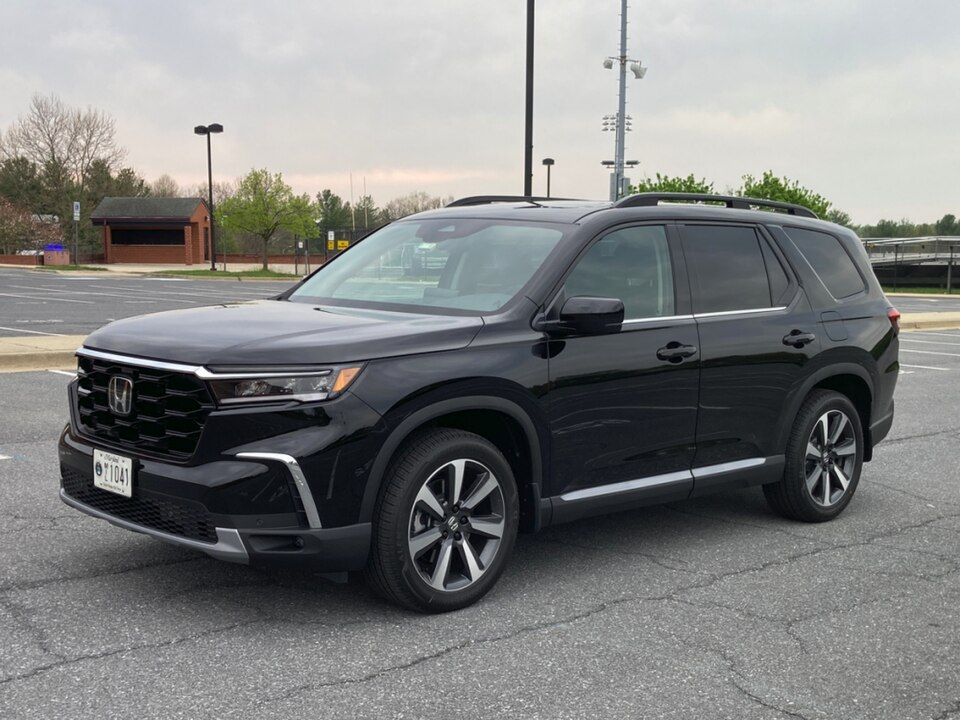
- Class
- Small Sport Utility Vehicle 2WD
- Body styles
- 4dr SUV AWD LX/EX/EX-L/Touring, 4dr SUV FWD LX
- Engines
- 3.5L 6-cyl
- Drivetrain
- Front-Wheel Drive, All-Wheel Drive
- Fuel
- Regular Gasoline
- MPG (best)
- 20 combined · 18 city / 25 hwy
- Length
- 190.9 in
- Curb weight
- 4,312–4,559 lb
- NHTSA rating
- Not rated
- Recalls
- 3 campaigns
Pros & cons
What's good
- AWD / 4WD available
- Few owner complaints105 complaints filed with NHTSA versus about 364 for similar models.
Watch out for
- Below-average fuel economyBest version gets 20 MPG combined, 13% below the 2014 small SUV average of 23.1 MPG.
Calculated from EPA, NHTSA and vPIC data against 24 similar 2014 models — not a review. How we calculate this →
Overview
The 2014 Honda Pilot is a small SUV offered with a 3.5L 6-cyl engine and front-wheel drive and all-wheel drive.
It measures about 191 inches long and 78 inches wide on a 109-inch wheelbase, with a curb weight of roughly 4,559 lb (4dr SUV AWD LX/EX/EX-L/Touring).
EPA rates its most efficient version at 20 MPG combined (18 city / 25 highway), 13% worse than the 2014 small SUV average of 23.1 MPG, for an estimated $3,350 a year in fuel.
NHTSA has not published a 5-Star overall rating for this model year.
It has 3 recall campaigns on file and owners have filed 105 complaints with NHTSA since 2015, most often about the engine.
What changed for 2014
No changes to engines, powertrains, drivetrains, size, EPA ratings or NHTSA crash rating compared with the 2013 Pilot — a carry-over year in the data.
Compared with 2013; trim, feature and price changes aren't covered. See the 2013 Pilot →
Dimensions & weight
| Body | Length | Width | Height | Wheelbase | Track F / R | Curb weight | Weight F/R |
|---|---|---|---|---|---|---|---|
| 4dr SUV AWD LX/EX/EX-L/Touring | 190.9 in | 78.3 in | 72.8 in | 109.4 in | 66.9 / 66.9 in | 4,559 lb | 55/45 |
| 4dr SUV FWD LX | 190.9 in | 78.3 in | 72.8 in | 109.4 in | 66.9 / 66.9 in | 4,312 lb | 55/45 |
Transport Canada CVS (Open Government Licence – Canada), Canadian-market figures.
Will it fit your garage? Check with your measurements →Engines, MPG & running costs
| Version | Engine | Transmission | Drive | City / Hwy / Comb | vs. class | Fuel / yr | CO₂ g/mi |
|---|---|---|---|---|---|---|---|
| Pilot 2WD | 3.5L 6-cyl | Automatic 5-spd | Front-Wheel Drive | 18 / 25 / 20 | -13% | $3,350 | 433 |
| Pilot 4WD | 3.5L 6-cyl | Automatic 5-spd | All-Wheel Drive | 17 / 24 / 20 | -8% | $3,350 | 447 |
EPA estimates; "vs. class" is combined MPG against the 2014 EPA class average. How we calculate this →
Safety ratings & technology
NHTSA has not published 5-Star ratings for the 2014 Honda Pilot.
Similar 2014 small SUVs
| Model | Best MPG / range | NHTSA overall | Recalls |
|---|---|---|---|
| 2014 Honda Pilot (this car) | 20 MPG | Not rated | 3 |
| 2014 Toyota 4Runner | 19 MPG | Not rated | 7 |
| 2014 Ford Explorer | 23 MPG | Not rated | 6 |
| 2014 Subaru Forester | 27 MPG | Not rated | 2 |
| 2014 Toyota Highlander | 28 MPG | Not rated | 4 |
| 2014 Jeep Grand Cherokee | 25 MPG | Not rated | 18 |
| 2014 Hyundai Santa Fe | 23 MPG | Not rated | 7 |
Recalls (3)
Air Bags › Frontal › Passenger Side › Inflator Module · Jun 27, 2019
NHTSA campaign 19V502000 · 9,555 vehicles
- Problem
- Honda (American Honda Motor Co.) is recalling certain 2009-2014 Acura TSX, 2011-2014 TSX Sport Wagon, 2010-2013 ZDX, 2008-2012 Honda Accord, 2010-2011 Accord Crosstour, 2006-2011 Civic and Civic Hybrid, 2008-2010 Civic GX NGV, 2012-2015 Crosstour, 2007-2011 CR-V, 2009-2013 Fit, 2014 Fit EV, 2010-2014 Insight, and 2009-2015 Pilot vehicles. The vehicles are equipped with passenger frontal air bag inflators assembled as a recall remedy part or replacement service part, that may explode due to propellant degradation occurring after long-term exposure to high absolute humidity, temperature and temperature cycling.
- Risk
- An inflator explosion may result in sharp metal fragments striking the driver or other occupants resulting in serious injury or death.
- Fix
- Honda will notify owners, and dealers will replace the passenger frontal air bag inflator, free of charge. The recall began August 12, 2019. Owners may contact Honda customer service at 1-888-234-2138. Honda's numbers for this recall are F5F and Q5E.
Air Bags › Frontal › Passenger Side › Inflator Module · May 16, 2019
NHTSA campaign 19V378000 · 19,138 vehicles
- Problem
- Honda (American Honda Motor Co.) is recalling certain 2009-2014 Acura TSX, 2011-2013 TSX Sport Wagon, and 2010-2012 ZDX and 2008-2012 Honda Accord, 2010-2011 Accord Crosstour, 2006-2011 Civic, Civic Hybrid and Civic NGV, 2012-2014 Crosstour, 2007-2011 CR-V, 2009-2013 Fit, 2010-2013 Insight, and 2009-2015 Pilot vehicles. The front passenger air bag inflator may have been installed incorrectly during replacement.
- Risk
- An incorrectly installed air bag inflator may not properly deploy the passenger frontal air bag in the event of a crash, increasing the risk of injury.
- Fix
- Honda will notify owners, and dealers will inspect the inflator installation and, if necessary, replace the passenger frontal air bag module assembly, free of charge. The recall began July 5, 2019. Owners may contact Honda customer service at 1-888-234-2138. Honda's numbers for this recall are M4O, P4R, T4Q, and W4P.
Air Bags › Frontal › Passenger Side › Inflator Module · Sep 27, 2018
NHTSA campaign 18V661000 · 1,355,406 vehicles
- Problem
- Honda (American Honda Motor Co.) is recalling certain 2014 Honda Insight and Acura TSX and TSX Wagon, 2014-2015 Honda Crosstour and Pilot vehicles nationwide, as well as certain 2014 Honda FCX Clarity and Fit EV vehicles in Florida, Hawaii, Puerto Rico, Texas, Alabama, Georgia, Louisiana, Mississippi, South Carolina, California, American Samoa, Guam, the Northern Mariana Islands (Saipan) and the U.S. Virgin Islands. Honda is also recalling certain 2011-2013 Acura TSX, TSX Wagon and ZDX, Honda Crosstour, Insight, Fit and Pilot vehicles, 2011-2012 Honda Accord and 2011 Honda Civic NGV, Civic, Civic Hybrid and CR-V vehicles in Arizona, Arkansas, Delaware, the District of Columbia, Illinois, Indiana, Kansas, Kentucky, Maryland, Missouri, Nebraska, Nevada, New Jersey, New Mexico, North Carolina, Ohio, Oklahoma, Pennsylvania, Tennessee, Virginia and West Virginia. Lastly, Honda is recalling certain 2010-2013 Acura TSX and ZDX, Honda Crosstour, Fit, Insight and Pilot, 2011-2013 TSX Wagon, 2010-2012 Honda Accord and 2010-2011 Honda Civic NGV, Civic, Civic Hybrid and CR-V vehicles in Alaska, Colorado, Connecticut, Idaho, Iowa, Maine, Massachusetts, Michigan, Minnesota, Montana, New Hampshire, New York, North Dakota, Oregon, Rhode Island, South Dakota, Utah, Vermont, Washington, Wisconsin and Wyoming. These vehicles are equipped with certain air bag air bag inflators assembled as part of the frontal air bag modules, and used as original equipment or replacement equipment (such as after a vehicle crash necessitating replacement of the original air bags), may explode due to propellant degradation occurring after long-term exposure to higher absolute humidity, temperature and temperature cycling.
- Risk
- An inflator explosion may result in sharp metal fragments striking the driver or other occupants resulting in serious injury or death.
- Fix
- Honda will notify owners, and dealers will replace the passenger frontal air bag inflator, free of charge. The recall began November 6, 2018. Owners may contact Honda customer service at 1-888-234-2138. Honda's numbers for this recall are M2J and S2K.
Not every 2014 Honda Pilot is affected — only a VIN check confirms your car.
Owner-reported problems
Unverified owner reports; best-sellers collect more.
Used 2014 Honda Pilot buyer's checklist
- Run the VIN at nhtsa.gov/recalls. 3 recalls this year — ask for proof of repairs.
- Engine — 28 owner reports. Cold-start the engine, listen for knocking, and watch for warning lights or hesitation on acceleration.
- Structure › Body — 19 owner reports. Open and close every door, the hood and tailgate; look for rust or misaligned panels.
- Wheels — 16 owner reports. Ask the seller and mechanic specifically about this system.
- Mileage to watch. Owners typically reported problems around 44,000 miles; ask what was repaired near that point.
- Before you pay: service records, a history report and an independent inspection.
Generated by DecodedCars from NHTSA recalls and owner complaints for the 2014 Honda Pilot. Not a substitute for a professional inspection.
Other Pilot years
Compare all years →| Year | MPG (best) | Length | Overall | Recalls | Complaints |
|---|---|---|---|---|---|
| 2026 Pilot | 22 | 200 in | Not rated | 1 | 27 |
| 2025 Pilot | 22 | 200 in | ★★★★★ | 4 | 216 |
| 2024 Pilot | 22 | 200 in | ★★★★★ | 6 | 116 |
| 2023 Pilot | 22 | 200 in | ★★★★★ | 5 | 146 |
| 2022 Pilot | 23 | 196.5 in | ★★★★★ | 5 | 169 |
| 2021 Pilot | 23 | 196.5 in | ★★★★★ | 10 | 450 |
| 2020 Pilot | 23 | 196.5 in | ★★★★★ | 11 | 492 |
| 2019 Pilot | 23 | 196.5 in | ★★★★★ | 13 | 920 |
| 2018 Pilot | 23 | 194.9 in | ★★★★★ | 7 | 440 |
| 2017 Pilot | 23 | 194.9 in | Not rated | 4 | 936 |
| 2016 Pilot | 23 | 194.9 in | Not rated | 8 | 1,720 |
| 2015 Pilot | 20 | 191.3 in | Not rated | 4 | 108 |
Sources: EPA, NHTSA, Transport Canada, Wikimedia Commons. Not affiliated with NHTSA, the EPA or Honda. How we calculate this →