 DecodedCars
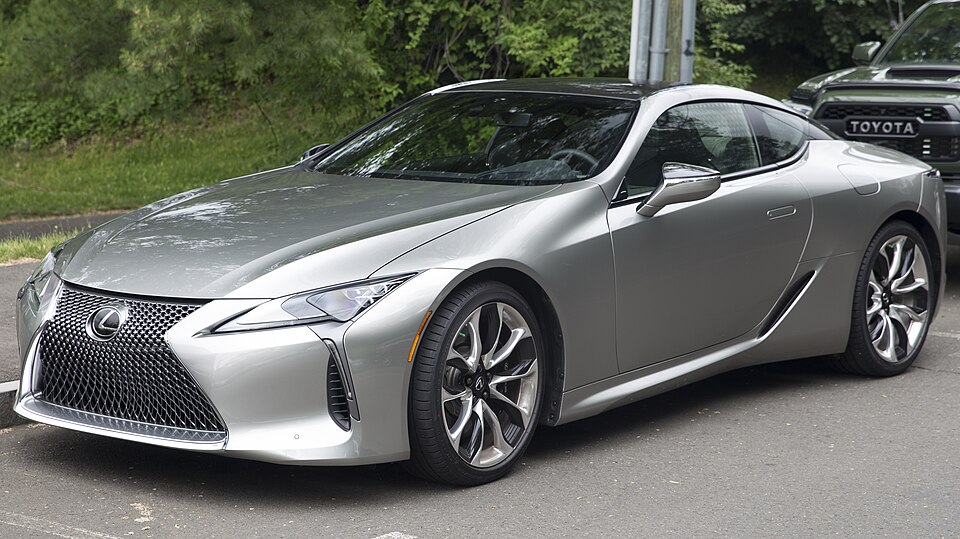
Lexus LC 2019
Versiones, desempeño, equipamiento, consumo, seguridad y problemas conocidos, con sus ventajas y desventajas frente a modelos similares 2019.
- Clase
- Auto subcompacto
- Carrocerías
- 500 2dr Coupe, 500h 2dr Coupe
- Motores
- 3.5L 6 cil., 5.0L 8 cil.
- Tracción
- Tracción trasera
- Combustible
- Híbrido, Gasolina premium
- MPG (mejor)
- 30 combinadas · 27 ciudad / 35 carretera
- Largo
- 187.4 in
- Peso en vacío
- 4,266–4,696 lb
- Calificación NHTSA
- Sin calificar
- Retiros
- 3 campañas
Ventajas y desventajas
Lo bueno
- Excelente consumo de combustibleHasta 30 MPG combinadas: un 28 % mejor que el promedio de su clase (auto subcompacto, 2019: 23.5 MPG).
- Disponible en versión híbridaSe ofrece en versión híbrida además de gasolina.
A tener en cuenta
- Requiere gasolina premiumTodas las versiones de gasolina usan premium, lo que encarece el uso diario.
Calculado con datos de la EPA, la NHTSA y vPIC frente a 32 modelos similares 2019; no es una reseña. Cómo lo calculamos →
Resumen
El Lexus LC 2019 es un auto subcompacto disponible con 2 motores (3.5L 6 cil. y 5.0L 8 cil.), incluida una versión híbrida, con tracción trasera.
Mide unas 187 pulgadas de largo y 76 de ancho, con una distancia entre ejes de 113 pulgadas, y pesa alrededor de 4,266 lb (500 2dr Coupe).
La EPA califica su versión más eficiente con 30 MPG combinadas (27 en ciudad / 35 en carretera), un 28 % mejor que el promedio de su clase (auto subcompacto, 2019: 23.5 MPG), con un gasto estimado de $2,750 al año en combustible.
La NHTSA no ha publicado una calificación general de 5 estrellas para este año modelo.
Tiene 3 campañas de retiro registradas.
Novedades del 2019
Sin cambios en motores, versiones, tracción, tamaño, consumo EPA ni calificación NHTSA respecto al LC 2018: un año sin cambios según los datos.
Comparado con 2018; no incluye cambios de versiones, equipamiento ni precio. Ver el LC 2018 →
Dimensiones y peso
| Carrocería | Largo | Ancho | Alto | Distancia entre ejes | Vía del. / tras. | Peso en vacío | Peso del./tras. |
|---|---|---|---|---|---|---|---|
| 500 2dr Coupe | 187.4 in | 75.6 in | 53.1 in | 113 in | 64.2 / 64.2 in | 4,266 lb | 52/48 |
| 500h 2dr Coupe | 187.4 in | 75.6 in | 53.1 in | 113 in | 64.2 / 64.2 in | 4,696 lb | 52/48 |
Transport Canada CVS (Open Government Licence – Canada), medidas del mercado canadiense.
¿Cabe en tu garaje? Compruébalo con tus medidas →Motores, consumo y costo de uso
| Versión | Motor | Transmisión | Tracción | Ciudad / Carr. / Comb. | vs. su clase | Combustible / año | CO₂ g/mi |
|---|---|---|---|---|---|---|---|
| LC 500h Híbrido | 3.5L 6 cil. | Automática (AV-S10) | Tracción trasera | 27 / 35 / 30 | +28% | $2,750 | 298 |
| LC 500 | 5.0L 8 cil. | Automática (S10) | Tracción trasera | 16 / 25 / 19 | -19% | $4,350 | 473 |
Estimaciones de la EPA; "vs. su clase" compara las MPG combinadas con el promedio 2019 de su clase EPA. Cómo lo calculamos →
Calificaciones de seguridad y tecnología
La NHTSA no ha publicado calificaciones de 5 estrellas para el Lexus LC 2019.
Auto subcompacto similares 2019
| Modelo | Mejor MPG / autonomía | General NHTSA | Retiros |
|---|---|---|---|
| Lexus LC 2019 (este auto) | 30 MPG | Sin calificar | 3 |
| BMW 3 Series 2019 | 30 MPG | ★★★★★ | 0 |
| BMW 5 Series 2019 | 29 MPG | Sin calificar | 0 |
| Mercedes-Benz E-Class 2019 | 25 MPG | ★★★★★ | 0 |
| Lexus IS 2019 | 24 MPG | Sin calificar | 2 |
| Mercedes-Benz C-Class 2019 | 27 MPG | Sin calificar | 0 |
| Tesla Model 3 2019 | 310 mi | ★★★★★ | 22 |
Retiros (3)
Texto oficial de la NHTSA (en inglés).
Combustible (gasolina) › Delivery › Fuel Pump · 4 nov 2020
Campaña NHTSA 20V682000 · 1,525,742 vehículos
- Problema
- Toyota Motor Engineering & Manufacturing (Toyota) is recalling certain 2018-2019 4Runner, 2019-2020 Avalon, 2019 Corolla Hatchback, 2017-2019 Highlander, 2018-2020 Camry, 2020 Corolla, 2018-2019 Land Cruiser, 2017-2020 Tacoma, 2019-2020 RAV4, 2019-2020 Sequoia, 2017-2020 Sienna, 2019-2020 Tundra, 2018-2020 Lexus ES350, 2017 Lexus GS200t, 2017-2019 Lexus GS350, 2019 Lexus GS300, 2018-2020 Lexus LC500h, 2019-2020 Lexus LS500, 2018-2019 Lexus GX460, 2017 Lexus IS200t, 2019 Lexus IS300, 2019 Lexus IS350, 2018-2020 Lexus LC500, 2018 Lexus LS500, 2019 Lexus LS500h, 2018-2019 Lexus LX570, 2017 Lexus RC200t, 2019 Lexus RC300, RC350, 2017 and 2019-2020 Lexus RX350, 2018-2020 RX350L, 2019 Lexus UX200, 2018-2019 Lexus NX300 vehicles. The low-pressure fuel pump inside the fuel tank may fail.
- Riesgo
- If the fuel pump fails, the engine can stall while driving, increasing the risk of a crash.
- Solución
- Toyota will notify owners, and dealers will replace the fuel pump assembly with an improved one, free of charge. Owners of specific models were notified that remedy parts were available starting January 21, 2021. Owners of other models will be notified as remedy parts become available. Remedy parts should be available for all affected vehicles by late March 2021. Owners may contact Toyota customer service at 1-888-270-9371 or Lexus customer service at 1-800-255-3987. Note: This recall is an expansion of recall 20V-012. Toyota's number for this recall is 20TA02. Lexus' number for this recall is 20LA01.
Combustible (gasolina) › Delivery › Fuel Pump · 13 ene 2020
Campaña NHTSA 20V012000 · 1,830,752 vehículos
- Problema
- Toyota Motor Engineering & Manufacturing (Toyota) recalled certain 2018-2019 4Runner, Highlander, Camry, Land Cruiser, Sequoia, Sienna, Tacoma and Tundra, and Lexus RC 300, RC 350, GS 350, GX 460, IS 300, LC 500, LS 500, LX 570, RX 350L, and 2019 Toyota Avalon and Corolla, and certain Lexus NX 300, and ES 350 vehicles on January 13, 2020. On March 4, 2020, Toyota expanded the recall to include certain 2014-2015 Toyota 4Runner and Land Cruiser, 2018 Avalon, Corolla, 2014 FJ Cruiser, 2017 Sienna and Lexus 2018 ES 350, 2018-2019 GS 300, 2013-2014 GS350, 2014-2015 GX 460, IS 350 and LX 570, 2014 IS F, 2018-2019 IS 350, LC 500H and LS 500H, 2013-2015 LS 460, 2015 NX 200T and RC350, 2017 RC 200T and RX 350. Toyota also removed the 2018-2019 Toyota 4Runner and Land Cruiser and 2018-2019 Lexus GX 460 and LX 570 and 2019 NX300 from inclusion in this recall. On March 19, 2020, Toyota expanded the recall to include 2015 Lexus GS350 vehicles. The low-pressure fuel pump inside the fuel tank may fail.
- Riesgo
- If the fuel pump fails, the engine can stall while driving, increasing the risk of a crash.
- Solución
- Toyota will notify owners, and dealers will replace the fuel pump, free of charge. The recall began May 4, 2020. Owners may contact Toyota customer service at 1-888-270-9371 or Lexus customer service at 1-800-255-3987. Toyota's numbers for this recall are 20TB02 and 20TA02 for Toyota vehicles and 20LB01 and 20LA01 for Lexus vehicles.
Frenos · 24 jul 2019
Campaña NHTSA 19V544000 · 6,925 vehículos
- Problema
- Toyota Motor Engineering & Manufacturing (Toyota) is recalling certain 2019 Lexus LS500, LC500, ES300h, UX250h, LS500h, Toyota Prius, RAV4 HV, 2019-2020 Toyota Prius Prime, and 2020 Corolla HV vehicles. The brake booster pump may fail causing a deactivation of the Vehicle Stability Control system and a loss of braking assist. As such, these vehicles fail to comply with the requirements of Federal Motor Vehicle Safety Standard (FMVSS) number 126, "Electronic Stability Control Systems."
- Riesgo
- Deactivation of the vehicle stability control system or a loss of braking assist increases the risk of a crash.
- Solución
- Toyota will notify owners, and dealers will inspect and, if necessary, replace the brake booster pump, free of charge. The recall began September 20, 2019. Toyota owners may contact Toyota customer service at 1-888-270-9371 and Lexus owners may contact Lexus customer service at 1-800-255-3987. Toyota's numbers for this recall are K1L/K0L. Lexus' numbers for this recall are K2F/KLF.
No todos los LC 2019 están afectados: solo el VIN lo confirma.
Problemas reportados por propietarios
No hay quejas de propietarios del Lexus LC 2019 en la base de datos de la NHTSA desde 2015.
Lista para comprar un Lexus LC 2019 usado
- Consulta el VIN en nhtsa.gov/recalls. 3 retiros en este año: pide comprobantes de reparación.
- Sistema híbrido. Busca luces de advertencia del sistema híbrido y pregunta si la batería de alto voltaje se reemplazó o sigue en garantía.
- Antes de pagar: historial de servicio, reporte de antecedentes e inspección de un mecánico independiente.
Generado por DecodedCars a partir de retiros y quejas de propietarios ante la NHTSA para el Lexus LC 2019. No sustituye una inspección profesional.
Otros años del LC
Comparar todos los años →Fuentes: EPA, NHTSA, Transport Canada, Wikimedia Commons. Sin afiliación con la NHTSA, la EPA ni Lexus. Cómo lo calculamos →