 DecodedCars
Honda CR-V 2006
Versiones, desempeño, equipamiento, consumo, seguridad y problemas conocidos, con sus ventajas y desventajas frente a modelos similares 2006.
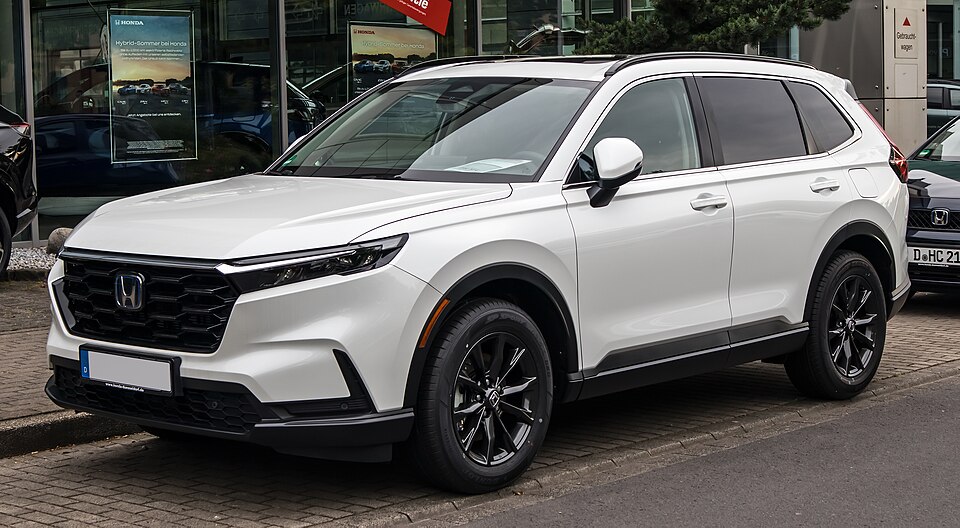
- Clase
- SUV (2WD)
- Carrocerías
- 4dr SUV AWD EX-L, 4dr SUV AWD Se/EX
- Motores
- 2.4L 4 cil.
- Potencia
- 156 hp
- Transmisión
- 5-speed Automática
- Tracción
- Tracción delantera, Tracción 4x4
- Combustible
- Gasolina regular
- MPG (mejor)
- 23 combinadas · 20 ciudad / 26 carretera
- Largo
- 174 in
- Peso en vacío
- 3,373–3,494 lb
- Calificación NHTSA
- Sin calificar
- Retiros
- 11 campañas
Ventajas y desventajas
Lo bueno
- Excelente consumo de combustibleHasta 23 MPG combinadas: un 26 % mejor que el promedio de su clase (SUV, 2006: 18.3 MPG).
- Tracción total / 4x4 disponible
A tener en cuenta
- Muchas quejas de propietarios175 quejas ante la NHTSA frente a unas 41 de modelos similares; sobre todo por problemas de bolsas de aire.
- 11 retirosMás que modelos similares (unos 1). Confirma las reparaciones con el VIN.
Calculado con datos de la EPA, la NHTSA y vPIC frente a 23 modelos similares 2006; no es una reseña. Cómo lo calculamos →
Resumen
El Honda CR-V 2006 es un SUV con motor 2.4L 4 cil., con tracción delantera y tracción 4x4.
Mide unas 174 pulgadas de largo y 70 de ancho, con una distancia entre ejes de 103 pulgadas, y pesa alrededor de 3,494 lb (4dr SUV AWD EX-L).
La EPA califica su versión más eficiente con 23 MPG combinadas (20 en ciudad / 26 en carretera), un 26 % mejor que el promedio de su clase (SUV, 2006: 18.3 MPG), con un gasto estimado de $2,900 al año en combustible.
Tiene 11 campañas de retiro registradas y los propietarios han presentado 175 quejas ante la NHTSA desde 2015, sobre todo por problemas de bolsas de aire.
Novedades del 2006
Sin cambios en motores, versiones, tracción, tamaño, consumo EPA ni calificación NHTSA respecto al CR-V 2005: un año sin cambios según los datos.
Comparado con 2005; no incluye cambios de versiones, equipamiento ni precio. Ver el CR-V 2005 →
Versiones, desempeño y equipamiento
Versiones
Fabricado en: Sayama, Saitama · Swindon, Wiltshire
NHTSA vPIC, según el fabricante, para 5 configuraciones del CR-V 2006; puede no incluir todas las versiones. Cómo lo calculamos →
Dimensiones y peso
| Carrocería | Largo | Ancho | Alto | Distancia entre ejes | Vía del. / tras. | Peso en vacío | Peso del./tras. |
|---|---|---|---|---|---|---|---|
| 4dr SUV AWD EX-L | 174 in | 70.1 in | 66.1 in | 103.1 in | 60.6 / 60.6 in | 3,494 lb | 55/45 |
| 4dr SUV AWD Se/EX | 174 in | 70.1 in | 66.1 in | 103.1 in | 60.6 / 60.6 in | 3,373 lb | 55/45 |
Transport Canada CVS (Open Government Licence – Canada), medidas del mercado canadiense.
¿Cabe en tu garaje? Compruébalo con tus medidas →Motores, consumo y costo de uso
| Versión | Motor | Transmisión | Tracción | Ciudad / Carr. / Comb. | vs. su clase | Combustible / año | CO₂ g/mi |
|---|---|---|---|---|---|---|---|
| CR-V 2WD | 2.4L 4 cil. | Automática 5-spd | Tracción delantera | 20 / 26 / 23 | +26% | $2,900 | 386 |
| CR-V 4WD | 2.4L 4 cil. | Automática 5-spd | Tracción 4x4 | 20 / 25 / 22 | +29% | $3,050 | 404 |
| CR-V 4WD | 2.4L 4 cil. | Manual 5-spd | Tracción 4x4 | 19 / 24 / 21 | +24% | $3,200 | 423 |
Estimaciones de la EPA; "vs. su clase" compara las MPG combinadas con el promedio 2006 de su clase EPA. Cómo lo calculamos →
Calificaciones de seguridad y tecnología
La NHTSA no ha publicado calificaciones de 5 estrellas para el Honda CR-V 2006 con el programa de pruebas actual (2011+).
SUV similares 2006
| Modelo | Mejor MPG / autonomía | General NHTSA | Retiros |
|---|---|---|---|
| Honda CR-V 2006 (este auto) | 23 MPG | Sin calificar | 11 |
| Toyota RAV4 2006 | 24 MPG | Sin calificar | 10 |
| Hyundai Tucson 2006 | 22 MPG | Sin calificar | 1 |
| Subaru Forester 2006 | 22 MPG | Sin calificar | 1 |
| Kia Sportage 2006 | 22 MPG | Sin calificar | 0 |
| Hyundai Santa Fe 2006 | 20 MPG | Sin calificar | 1 |
| Ford Escape 2006 | 29 MPG | Sin calificar | 2 |
Retiros (11)
Texto oficial de la NHTSA (en inglés).
Visibilidad › Power Window Devices And Controls · 10 dic 2020
Campaña NHTSA 20V768000 · 268,655 vehículos
- Problema
- Honda (American Honda Motor Co.) is recalling certain 2002-2006 CR-V vehicles. Moisture may enter the driver side power window master switch, causing the switch to fail or melt.
- Riesgo
- If the switch fails, it could overheat and smoke, increasing the risk of a fire.
- Solución
- Honda will notify owners, and dealers will replace the power window master switch and inspect the wiring harness for damage, replacing it if necessary, free of charge. The recall began January 29, 2021. Owners may contact Honda customer service at 1-888-234-2138. Honda's number for this recall is P9D.
Bolsas de aire › Frontal › Passenger Side › Inflator Module · 27 jun 2019
Campaña NHTSA 19V501000 · 1,657,752 vehículos
- Problema
- Honda (American Honda Motor Co.) is recalling certain 2003-2006 Acura MDX, 2005-2012 RL, 2003-2007 Honda Accord, 2001-2005 Civic, 2003-2005 Civic Hybrid, 2001-2005 Civic GX NGV, 2002-2006 CR-V, 2003-2011 Element, 2007-2008 Fit, 2002-2004 Odyssey, 2003-2008 Pilot, and 2006-2014 Ridgeline vehicles. The vehicles are equipped with passenger frontal air bag inflators assembled as a recall remedy part or replacement service part, that may explode due to propellant degradation occurring after long-term exposure to high absolute humidity, temperature and temperature cycling.
- Riesgo
- An inflator explosion may result in sharp metal fragments striking the driver or other occupants resulting in serious injury or death.
- Solución
- Honda will notify owners, and dealers will replace the passenger frontal airbag inflator, free of charge. The recall began August 12, 2019. Owners may contact Honda customer service at 1-888-234-2138. Honda's numbers for this recall are E5D and X5C.
Bolsas de aire › Frontal › Driver Side › Inflator Module · 27 jun 2019
Campaña NHTSA 19V499000 · 3,947 vehículos
- Problema
- Honda (American Honda Motor Co.) is recalling certain 2003 Acura 3.2CL, 2002-2003 3.2TL, 2003-2006 MDX, 2001-2007 Honda Accord, 2001-2005 Civic, 2003-2005 Civic Hybrid, 2001-2005 Civic GX NGV, 2002-2006 CR-V, 2003-2011 Element, 2002-2004 Odyssey, 2003-2008 Pilot and 2006 Ridgeline vehicles. These vehicles are equipped with driver frontal air bag inflators assembled as a recall remedy part or replacement service part, that may explode due to propellant degradation occurring after long-term exposure to high absolute humidity, temperature and temperature cycling.
- Riesgo
- An inflator explosion may result in sharp metal fragments striking the driver or other occupants resulting in serious injury or death.
- Solución
- Honda will notify owners, and dealers will replace the driver frontal air bag inflator, free of charge. The recall began August 12, 2019. Owners may contact Honda customer service at 1-888-234-2138. Honda's numbers for this recall are Q5A and Y58.
Bolsas de aire › Frontal › Driver Side › Inflator Module · 6 mar 2019
Campaña NHTSA 19V182000 · 1,101,534 vehículos
- Problema
- Honda (American Honda Motor Co.) is recalling specific 2003 Acura 3.2CL, 2013-2016 ILX, 2013-2014 ILX Hybrid, 2003-2006 MDX, 2007-2016 RDX, 2002-2003 3.2TL, 2004-2006, and 2009-2014 TL, 2010-2013 ZDX and 2001-2007 and 2009 Honda Accord, 2001-2005 Civic, 2003-2005 Civic Hybrid, 2001-2005 Civic GX NGV, 2002-2007 and 2010-2011 CR-V, 2003-2011 Element, 2007 Fit, 2002-2004 Odyssey, 2003-2008 Pilot, and 2006-2014 Ridgeline vehicles. The affected vehicles received a replacement driver air bag inflator as part of a previous Takata inflator recall remedy or a replacement driver air bag module containing the same inflator type as a service part. Due to a manufacturing error, in the event of a crash necessitating deployment of the driver frontal air bag, these inflators may explode.
- Riesgo
- An explosion of an inflator within the driver frontal air bag module may result in sharp metal fragments striking the driver, front seat passenger or other occupants resulting in serious injury or death.
- Solución
- Honda will notify owners, and dealers will replace the driver's air bag inflator with an alternate inflator, free of charge. The recall began April 10, 2019. Honda owners may contact customer service at 1-888-234-2138. Honda's number for this recall is O41. Acura owners may contact customer service at 1-888-234-2138. Acura's number for this recall is U40.
Bolsas de aire › Frontal › Passenger Side › Inflator Module · 26 abr 2018
Campaña NHTSA 18V268000 · 1,335 vehículos
- Problema
- Honda (American Honda Motor Co.) is recalling certain 2003-2012 Honda Accord and Pilot, 2010 Accord Crosstour, 2001-2011 Civic, 2002-2011 CR-V, 2003-2004, 2006-2008 and 2011 Element, 2007 and 2009-2013 Fit, 2010-2012 Insight, 2002-2004 Odyssey, and 2012 Ridgeline vehicles. The front passenger air bag may have been installed incorrectly during replacement.
- Riesgo
- An incorrectly installed air bag may deploy improperly in the event of a crash, increasing the risk of injury.
- Solución
- Honda will notify owners, and dealers will inspect and, if necessary, replace the passenger frontal air bag module assembly, free of charge. The recall began June 22, 2018. Owners may contact Honda customer service at 1-888-234-2138. Honda's numbers for this recall are K1P, and M1O.
Bolsas de aire › Frontal › Passenger Side › Inflator Module · 10 ene 2017
Campaña NHTSA 17V029000 · 308,884 vehículos
- Problema
- Honda (American Honda Motor Co.) is recalling certain 2005-2006 Acura MDX and Honda CR-V vehicles, 2005-2011 Honda Element vehicles, 2005-2012 Acura RL vehicles, 2006-2012 Honda Ridgeline vehicles, 2007-2008 Honda Fit vehicles and 2005-2008 Honda Pilot vehicles originally sold, or ever registered, in Alabama, California, Florida, Georgia, Hawaii, Louisiana, Mississippi, South Carolina, Texas, Puerto Rico, American Samoa, Guam, the Northern Mariana Islands (Saipan), and the U.S. Virgin Islands, or "Zone A." Additionally, if not included in "Zone A" above, Honda is recalling certain 2005-2006 Acura MDX and Honda CR-V vehicles, 2005-2009 Acura RL and Honda Element vehicles, 2007-2008 Honda Fit vehicles, 2005-2008 Honda Pilot vehicles and 2006-2009 Honda Ridgeline vehicles originally sold, or ever registered, in Arizona, Arkansas, Delaware, District of Columbia, Illinois, Indiana, Kansas, Kentucky, Maryland, Missouri, Nebraska, Nevada, New Jersey, New Mexico, North Carolina, Ohio, Oklahoma, Pennsylvania, Tennessee, Virginia, and West Virginia, or "Zone B." Additionally, if not included in "Zone A" or "Zone B" above, Honda is recalling certain 2005-2006 Acura MDX and Honda CR-V vehicles, 2005-2008 Acura RL, Honda Element and Honda Pilot vehicles, 2007-2008 Honda Fit vehicles and 2006-2008 Honda Ridgeline vehicles originally sold, or ever registered in Alaska, Colorado, Connecticut, Idaho, Iowa, Maine, Massachusetts, Michigan, Minnesota, Montana, New Hampshire, New York, North Dakota, Oregon, Rhode Island, South Dakota, Utah, Vermont, Washington, Wisconsin, and Wyoming. These vehicles are equipped with certain air bag inflators assembled as part of the passenger frontal air bag modules used as original equipment or replacement equipment. In the event of a crash necessitating deployment of the front air bags, these inflators may rupture due to propellant degradation occurring after long-term exposure to absolute humidity and temperature cycling.
- Riesgo
- An inflator rupture may result in metal fragments striking the vehicle occupants resulting in serious injury or death.
- Solución
- Honda will notify owners, and dealers will replace the front passenger air bag inflator, free of charge. The recall bagan March 2017. Owners may contact Honda customer service at 1-888-234-2138. Honda's numbers for this recall are KD9 and KE0.
Bolsas de aire › Frontal › Passenger Side › Inflator Module · 23 may 2016
Campaña NHTSA 16V344000 · 1,790,894 vehículos
- Problema
- Honda (American Honda Motor Co.) is recalling certain model year 2003-2006 Acura MDX, 2005-2011 Acura RL, 2005-2006 Honda CR-V, 2003-2011 Element, 2007-2008 Fit, 2003-2008 Pilot, 2002-2004 Odyssey, and 2006-2011 Ridgeline vehicles originally sold, or that have ever been registered, in Alabama, California, Florida, Georgia, Hawaii, Louisiana, Mississippi, South Carolina, Texas, Puerto Rico, American Samoa, Guam, the Northern Mariana Islands (Saipan), and the U.S. Virgin Islands, or "Zone A." Additionally, unless included in "Zone A" above, Honda is recalling certain model year 2003-2006 Acura MDX, 2005-2008 Acura RL, 2005-2006 Honda CR-V, 2003-2008 Element, 2007-2008 Fit, 2003-2008 Pilot, 2002-2004 Odyssey, and 2006-2008 Ridgeline vehicles originally sold, or that have ever been registered, in Arizona, Arkansas, Delaware, District of Columbia, Illinois, Indiana, Kansas, Kentucky, Maryland, Missouri, Nebraska, Nevada, New Jersey, New Mexico, North Carolina, Ohio, Oklahoma, Pennsylvania, Tennessee, Virginia, and West Virginia, or "Zone B." Lastly, unless included in "Zone A" or "Zone B" above, Honda is recalling model year 2002-2004 Odyssey and model year 2003-2004 Acura MDX, Honda Element, and Honda Pilot vehicles originally sold, or registered, in Alaska, Colorado, Connecticut, Idaho, Iowa, Maine, Massachusetts, Michigan, Minnesota, Montana, New Hampshire, New York, North Dakota, Oregon, Rhode Island, South Dakota, Utah, Vermont, Washington, Wisconsin, and Wyoming. These vehicles are equipped with certain air bag inflators assembled as part of the passenger frontal air bag modules, and used as original equipment or replacement equipment. In the event of a crash necessitating deployment of the front air bags, these inflators may rupture due to propellant degradation occurring after long-term exposure to absolute humidity and temperature cycling.
- Riesgo
- An inflator rupture may result in metal fragments striking the vehicle occupants resulting in serious injury or death.
- Solución
- Honda will notify owners, and dealers will replace the passenger frontal air bag inflator, free of charge. The recall began June 27, 2016. Owners may contact Honda customer service at 1-888-234-2138. Honda's numbers for this recall are KA0, KA1, KA2, and KA3.
Bolsas de aire › Frontal › Driver Side › Inflator Module · 28 may 2015
Campaña NHTSA 15V320000 · 6,281,043 vehículos
- Problema
- Honda (American Honda Motor Co.) is recalling certain model year 2001-2007 Accord, 2001-2005 Civic, 2001-2004 Honda Civic GX, 2003-2005 Honda Civic Hybrid, 2002-2006 CR-V, 2003-2011 Element, 2002-2004 Odyssey, 2003-2008 Pilot, 2006 Ridgeline, 2003 Acura 3.2CL, 2003-2006 Acura MDX, and 2002-2003 Acura 3.2TL vehicles. The affected vehicles are equipped with a dual-stage driver frontal air bag that may be susceptible to moisture intrusion and other factors, including manufacturing variability that, over time, could cause the inflator to rupture.
- Riesgo
- In the event of a crash necessitating deployment of the driver's frontal air bag, the inflator could rupture with metal fragments striking the driver or other occupants resulting in serious injury or death.
- Solución
- Honda will notify owners, and dealers will replace the driver frontal air bag inflator, free of charge. The recall began on July 1, 2015. Owners may contact Honda customer service at 1-888-234-2138. Owners may contact Acura customer service at 1-800-382-2238, select option 4. Note: Vehicles that have had their driver frontal air bag replaced previously as part of a recall remedy prior to September 12, 2014 need to have their air bag replaced under this recall as well. Vehicles that, on or after September 12, 2014, received a remedy for a prior driver frontal air bag inflator recall already received an inflator of a different design, and therefore are not included in this recall and do not require additional servicing. Note: This recall fully supersedes recalls 08V-593, 09V-259, 10V-041, 11V-260, 14V-351 and 15V-153. Honda's numbers for this recall are JQ9, JR0, JR1, JR2, JR3, JR4, JR5, JR6, JR7, and JR8.
Visibilidad › Power Window Devices And Controls · 5 oct 2012
Campaña NHTSA 12V486000 · 268,655 vehículos
- Problema
- Honda is recalling certain model year 2002-2006 CR-V passenger vehicles, manufactured from February 19, 2002, through July 28, 2006. The driver-side power window switch may fail or melt.
- Riesgo
- If the switch fails, it could overheat, smoke, and cause a fire. A switch failure, and a fire, could occur even if the vehicle is not in use. As a precaution, owners are advised to park outside until the recall repair has been performed.
- Solución
- Honda will notify owners, and dealers will inspect and repair the switches, as necessary, free of charge. The safety recall began on November 2, 2012. Owners may contact Honda at 1-800-999-1009.
Suspensión › Front › Control Arm › Lower Arm · 23 mar 2012
Campaña NHTSA 12V124000 · 1,316 vehículos
- Problema
- HONDA IS RECALLING CERTAIN MODEL YEAR 2006 CR-V VEHICLES. THE WELD STRENGTH ATTACHING THE SUB-FRAME BUSHING COLLAR TO THE PASSENGER-SIDE FRONT LOWER ARM IS INSUFFICIENT. THE COLLAR CAN SEPARATE FROM THE ARM DUE TO VIBRATION WHILE DRIVING.
- Riesgo
- AS A RESULT, A LOSS OF STEERING CAN OCCUR, INCREASING THE RISK OF CRASH.
- Solución
- HONDA WILL NOTIFY OWNERS, AND DEALERS WILL INSPECT THE PRODUCTION LOT STAMP ON THE PASSENGER-SIDE FRONT LOWER ARM AND, IF NECESSARY, REPLACE THE LOWER ARM, FREE OF CHARGE. THE SAFETY RECALL IS EXPECTED TO BEGIN ON OR ABOUT APRIL 17, 2012. OWNERS MAY CONTACT HONDA CUSTOMER SERVICE AT 1-800-999-1009.
Sistema eléctrico · 7 sept 2011
Campaña NHTSA 11V456000 · 80,111 vehículos
- Problema
- HONDA IS RECALLING CERTAIN MODEL YEAR 2006 CR-V PASSENGER CARS MANUFACTURED FROM OCTOBER 3, 2005, THROUGH JULY 21, 2006. THE DRIVER-SIDE POWER WINDOW SWITCH MAY FAIL OR MELT.
- Riesgo
- IF THE SWITCH FAILS, THE POWER WINDOWS MAY BECOME INOPERATIVE PREVENTING THEM FROM BEING ROLLED UP OR DOWN. IF THE SWITCH MELTS, IT WILL PRODUCE SMOKE AND A FIRE COULD OCCUR.
- Solución
- HONDA WILL NOTIFY OWNERS, AND DEALERS WILL REPLACE THE DRIVER SIDE POWER WINDOW SWITCH ASSEMBLY FREE OF CHARGE. THE SAFETY RECALL IS EXPECTED TO BEGIN ON OR ABOUT OCTOBER 5, 2011. OWNERS MAY CONTACT HONDA AUTOMOBILE CUSTOMER SERVICE AT 1-800-999-1009.
No todos los CR-V 2006 están afectados: solo el VIN lo confirma.
Problemas reportados por propietarios
Reportes sin verificar; los más vendidos acumulan más.
Lista para comprar un Honda CR-V 2006 usado
- Consulta el VIN en nhtsa.gov/recalls. 11 retiros en este año: pide comprobantes de reparación.
- Bolsas de aire — 58 reportes de propietarios. Confirma que la luz de advertencia de las bolsas de aire se apague al arrancar y que cualquier retiro de bolsas de aire esté reparado.
- Iluminación exterior — 35 reportes de propietarios. Revisa todas las luces exteriores, los limpiaparabrisas y que el parabrisas no tenga grietas.
- Sistema eléctrico — 29 reportes de propietarios. Prueba todas las ventanas, seguros, luces, pantallas y puertos USB; revisa la antigüedad de la batería.
- Millaje a vigilar. Los propietarios suelen reportar problemas alrededor de las 114,000 millas; pregunta qué se reparó cerca de ese punto.
- Antes de pagar: historial de servicio, reporte de antecedentes e inspección de un mecánico independiente.
Generado por DecodedCars a partir de retiros y quejas de propietarios ante la NHTSA para el Honda CR-V 2006. No sustituye una inspección profesional.
Otros años del CR-V
Comparar todos los años →| Año | MPG (mejor) | Largo | General | Retiros | Quejas |
|---|---|---|---|---|---|
| CR-V 2027 | 40 | – | Sin calificar | 0 | 0 |
| CR-V 2026 | 40 | 184.6 in | Sin calificar | 2 | 177 |
| CR-V 2025 | 40 | 184.6 in | ★★★★★ | 6 | 290 |
| CR-V 2024 | 40 | 184.6 in | ★★★★★ | 5 | 481 |
| CR-V 2023 | 40 | 184.6 in | ★★★★★ | 8 | 633 |
| CR-V 2022 | 38 | 180.7 in | ★★★★★ | 6 | 348 |
| CR-V 2021 | 38 | 180.7 in | ★★★★★ | 5 | 444 |
| CR-V 2020 | 38 | 180.7 in | ★★★★★ | 9 | 444 |
| CR-V 2019 | 30 | 180.7 in | ★★★★★ | 8 | 1,107 |
| CR-V 2018 | 30 | 180.7 in | ★★★★★ | 5 | 2,161 |
| CR-V 2017 | 30 | 180.7 in | ★★★★★ | 7 | 1,777 |
| CR-V 2016 | 29 | 179.5 in | Sin calificar | 3 | 394 |
Fuentes: EPA, NHTSA, Transport Canada, Wikimedia Commons. Sin afiliación con la NHTSA, la EPA ni Honda. Cómo lo calculamos →