 DecodedCars
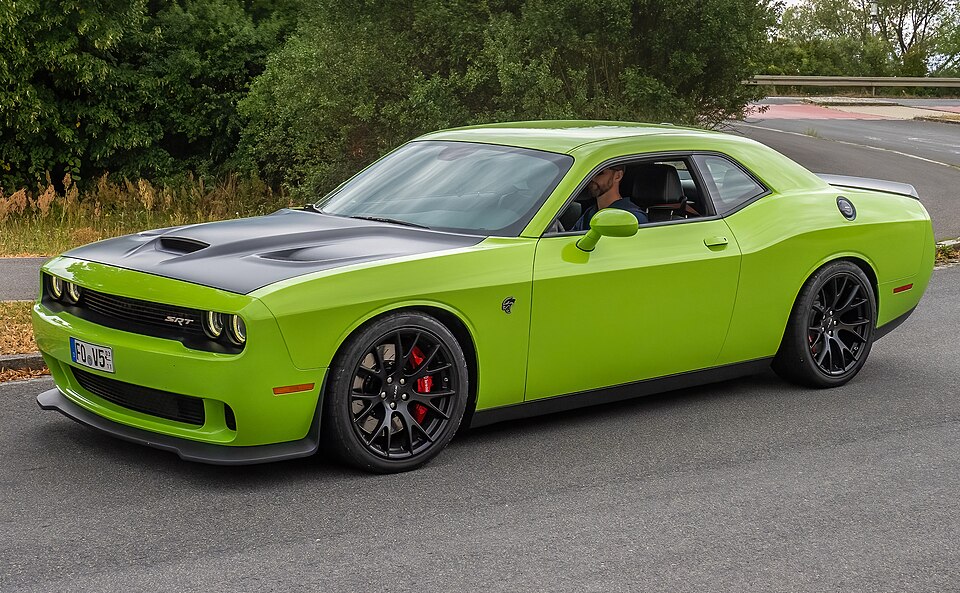
2017 Dodge Challenger
Trims, performance, features, fuel economy, safety and known problems — with the pros and cons against similar 2017 models.
- Class
- Midsize Cars
- Body styles
- 2dr Coupe RWD Srt 392 / Hellcat, 2dr Coupe RWD V6, 2dr Coupe RWD V8, GT 2dr Coupe AWD V6
- Engines
- 3.6L 6-cyl, 5.7L 8-cyl, 6.4L 8-cyl, 6.2L 8-cyl
- Horsepower
- 305–707 hp
- Drivetrain
- Rear-Wheel Drive, All-Wheel Drive
- Seats
- 5
- Fuel
- Regular Gasoline, Midgrade Gasoline, Premium Gasoline
- MPG (best)
- 23 combined · 19 city / 30 hwy
- Length
- 197.6 in
- Curb weight
- 3,935–4,169 lb
- NHTSA rating
- Not rated
- Recalls
- 3 campaigns
Pros & cons
What's good
- Strong performanceUp to 707 hp, versus about 292 hp for similar 2017 models.
- AWD / 4WD available
Watch out for
- Below-average fuel economyBest version gets 23 MPG combined, 14% below the 2017 midsize car average of 26.9 MPG.
Calculated from EPA, NHTSA and vPIC data against 19 similar 2017 models — not a review. How we calculate this →
Overview
The 2017 Dodge Challenger is a midsize car offered with 4 engines (3.6L 6-cyl, 5.7L 8-cyl, 6.4L 8-cyl and 6.2L 8-cyl) and rear-wheel drive and all-wheel drive.
It measures about 198 inches long and 76 inches wide on a 116-inch wheelbase, with a curb weight of roughly 4,169 lb (2dr Coupe RWD Srt 392 / Hellcat).
EPA rates its most efficient version at 23 MPG combined (19 city / 30 highway), 14% worse than the 2017 midsize car average of 26.9 MPG, for an estimated $2,900 a year in fuel.
NHTSA has not published a 5-Star overall rating for this model year.
It has 3 recall campaigns on file and owners have filed 49 complaints with NHTSA since 2015, most often about the unknown or other.
What changed for 2017
- All-wheel or four-wheel drive now available
Compared with 2016; trim, feature and price changes aren't covered. See the 2016 Challenger →
Trims, performance & features
Trims
Safety & driver-assist features
Built in: Brampton, Ontario
NHTSA vPIC, as reported by the manufacturer for 5 2017 Challenger configurations; may not list every trim. How we calculate this →
Dimensions & weight
| Body | Length | Width | Height | Wheelbase | Track F / R | Curb weight | Weight F/R |
|---|---|---|---|---|---|---|---|
| 2dr Coupe RWD Srt 392 / Hellcat | 197.6 in | 75.6 in | 57.1 in | 116.1 in | 63 / 63.8 in | 4,169 lb | 56/44 |
| 2dr Coupe RWD V6 | 197.6 in | 75.6 in | 57.1 in | 116.1 in | 63 / 63.8 in | 3,935 lb | 56/44 |
| 2dr Coupe RWD V8 | 197.6 in | 75.6 in | 57.1 in | 116.1 in | 63 / 63.8 in | 4,083 lb | 56/44 |
| GT 2dr Coupe AWD V6 | 197.6 in | 75.6 in | 57.1 in | 116.1 in | 63 / 63.8 in | 4,116 lb | 56/44 |
Transport Canada CVS (Open Government Licence – Canada), Canadian-market figures.
Will it fit your garage? Check with your measurements →Engines, MPG & running costs
| Version | Engine | Transmission | Drive | City / Hwy / Comb | vs. class | Fuel / yr | CO₂ g/mi |
|---|---|---|---|---|---|---|---|
| Challenger | 3.6L 6-cyl | Automatic 8-spd | Rear-Wheel Drive | 19 / 30 / 23 | -14% | $2,900 | 389 |
| Challenger GT | 3.6L 6-cyl | Automatic 8-spd | All-Wheel Drive | 18 / 27 / 21 | -22% | $3,200 | 415 |
| Challenger | 5.7L 8-cyl | Automatic 8-spd | Rear-Wheel Drive | 16 / 25 / 19 | -29% | $4,000 | 466 |
| Challenger | 6.4L 8-cyl | Automatic 8-spd | Rear-Wheel Drive | 15 / 25 / 18 | -33% | $4,550 | 486 |
| Challenger | 5.7L 8-cyl | Manual 6-spd | Rear-Wheel Drive | 15 / 23 / 18 | -33% | $4,550 | 494 |
| Challenger SRT | 6.4L 8-cyl | Automatic 8-spd | Rear-Wheel Drive | 15 / 25 / 18 | -33% | $4,550 | 486 |
| Challenger | 6.4L 8-cyl | Manual 6-spd | Rear-Wheel Drive | 14 / 23 / 17 | -37% | $4,850 | 523 |
| Challenger SRT | 6.4L 8-cyl | Manual 6-spd | Rear-Wheel Drive | 14 / 23 / 17 | -37% | $4,850 | 523 |
| Challenger SRT | 6.2L 8-cyl | Automatic 8-spd | Rear-Wheel Drive | 13 / 22 / 16 | -41% | $5,150 | 546 |
| Challenger SRT | 6.2L 8-cyl | Manual 6-spd | Rear-Wheel Drive | 13 / 21 / 16 | -41% | $5,150 | 567 |
EPA estimates; "vs. class" is combined MPG against the 2017 EPA class average. How we calculate this →
Safety ratings & technology
NHTSA has not published 5-Star ratings for the 2017 Dodge Challenger.
Similar 2017 midsize cars
| Model | Best MPG / range | NHTSA overall | Recalls |
|---|---|---|---|
| 2017 Dodge Challenger (this car) | 23 MPG | Not rated | 3 |
| 2017 Ford Mustang | 24 MPG | ★★★★★ | 6 |
| 2017 Honda Accord | 48 MPG | Not rated | 3 |
| 2017 Chevrolet Impala | 25 MPG | ★★★★★ | 0 |
| 2017 Toyota Camry | 40 MPG | ★★★★★ | 3 |
| 2017 Chevrolet Camaro | 25 MPG | Not rated | 3 |
| 2017 Dodge Charger | 23 MPG | Not rated | 4 |
Recalls (3)
Electrical System › Software · May 17, 2018
NHTSA campaign 18V332000 · 4,815,661 vehicles
- Problem
- Chrysler (FCA US LLC) is recalling certain 2014-2018 Dodge Journey, Charger and Durango, RAM 2500, 3500, 3500 Cab Chassis (more than 10,000lb), 4500 Cab Chassis and 5500 Cab Chassis, Jeep Cherokee and Grand Cherokee and Chrysler 300, 2014-2019 RAM 1500, 2015-2018 Dodge Challenger, 2015-2017 Chrysler 200, 2016-2018 RAM 3500 Cab Chassis (less than 10,000 lb), 2017-2018 Chrysler Pacifica and 2018 Jeep Wrangler vehicles. These vehicles are being recalled to address a defect that could prevent the cruise control system from disengaging. If, when using cruise control, there is a short circuit within the vehicle's wiring, the driver may not be able to shut off the cruise control either by depressing the brake pedal or manually turning the system off once it has been engaged, resulting in either the vehicle maintaining its current speed or possibly accelerating.
- Risk
- If the vehicle maintains its speed or accelerates despite attempts to deactivate the cruise control, there would be an increased risk of a crash.
- Fix
- Chrysler will notify owners, and dealers will inspect the software, and perform a software flash on the engine or powertrain control module, free of charge. The recall began June 4, 2018. Owners may contact Chrysler customer service at 1-800-853-1403. Note: Owners are advised to stop using cruise control until the software update has been performed. In the event that cruise control cannot be disengaged while driving, owners should firmly and steadily apply the brakes and shift the transmission to neutral, placing the vehicle in park once it has stopped.
Engine And Engine Cooling › Engine · Aug 8, 2017
NHTSA campaign 17V496000 · 1,207 vehicles
- Problem
- Chrysler (FCA US LLC) is recalling certain 2017 Dodge Challenger and Charger vehicles equipped with Hellcat engines. The engine oil cooler (EOC) hoses may fail resulting in a rapid loss of engine oil.
- Risk
- If an EOC line fails, oil may spray onto the windshield or contact a hot surface, impairing driver visibility and increasing the risk of a crash or fire.
- Fix
- Chrysler will notify owners, and dealers will replace the EOC lines, free of charge. The recall began October 3, 2017. Owners may contact Chrysler customer service at 1-800-853-1403. Chrysler's number for this recall is T48.
Power Train › Automatic Transmission › Control Module (Tcm/Pcm/Tecm) · Jul 7, 2017
NHTSA campaign 17V431000 · 7,802 vehicles
- Problem
- Chrysler (FCA US LLC) is recalling certain 2017 Dodge Challenger vehicles equipped with 5.7L V8 engines and eight-speed automatic transmissions. The transmission may not remain in the PARK position if that gear is selected, the engine is still running, and the driver exits the vehicle exited.
- Risk
- If the vehicle is exited without the transmission remaining in the PARK position and without the parking brake set, the vehicle may roll, increasing the risk of a crash.
- Fix
- Chrysler will notify owners, and dealers will update the transmission control module software, free of charge. The recall began 28, 2017. Owners may the Chrysler customer service at 1-800-853-1403. Chrysler's number for this recall is T41.
Not every 2017 Dodge Challenger is affected — only a VIN check confirms your car.
Owner-reported problems
Unverified owner reports; best-sellers collect more.
Used 2017 Dodge Challenger buyer's checklist
- Run the VIN at nhtsa.gov/recalls. 3 recalls this year — ask for proof of repairs.
- Electrical System — 16 owner reports. Test every window, lock, light, screen and USB port; check the battery age.
- Engine — 5 owner reports. Cold-start the engine, listen for knocking, and watch for warning lights or hesitation on acceleration.
- Power Train — 5 owner reports. Test-drive through all gears, including reverse; note slipping, harsh or delayed shifts.
- Mileage to watch. Owners typically reported problems around 34,000 miles; ask what was repaired near that point.
- Before you pay: service records, a history report and an independent inspection.
Generated by DecodedCars from NHTSA recalls and owner complaints for the 2017 Dodge Challenger. Not a substitute for a professional inspection.
Other Challenger years
Compare all years →| Year | MPG (best) | Length | Overall | Recalls | Complaints |
|---|---|---|---|---|---|
| 2023 Challenger | 23 | 197.6 in | ★★★★★ | 2 | 43 |
| 2022 Challenger | 23 | 197.6 in | ★★★★★ | 2 | 9 |
| 2021 Challenger | 23 | 197.6 in | ★★★★★ | 2 | 19 |
| 2020 Challenger | 23 | 197.6 in | ★★★★★ | 1 | 20 |
| 2019 Challenger | 23 | 197.6 in | ★★★★★ | 3 | 59 |
| 2018 Challenger | 23 | 197.6 in | ★★★★★ | 3 | 75 |
| 2016 Challenger | 23 | 197.6 in | Not rated | 1 | 78 |
| 2015 Challenger | 23 | 197.6 in | Not rated | 5 | 127 |
| 2014 Challenger | 21 | 197.6 in | Not rated | 4 | 135 |
| 2013 Challenger | 21 | 197.6 in | Not rated | 5 | 159 |
| 2012 Challenger | 21 | 197.6 in | Not rated | 6 | 195 |
| 2011 Challenger | 21 | 197.6 in | Not rated | 6 | 149 |
Sources: EPA, NHTSA, Transport Canada, Wikimedia Commons. Not affiliated with NHTSA, the EPA or Dodge. How we calculate this →