 DecodedCars
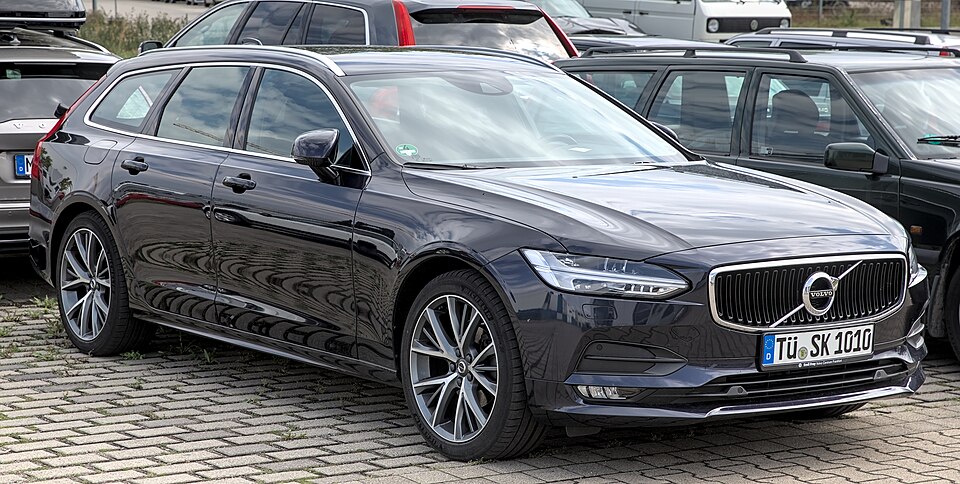
2020 Volvo V90
Trims, performance, features, fuel economy, safety and known problems — with the pros and cons against similar 2020 models.
- Class
- Midsize Station Wagons
- Body styles
- 4dr Wagon, Crosscountry 4dr Wagon
- Engines
- 2.0L 4-cyl turbo
- Drivetrain
- Front-Wheel Drive, All-Wheel Drive
- Fuel
- Premium Gasoline
- MPG (best)
- 26 combined · 22 city / 33 hwy
- Length
- 194.5 in
- Curb weight
- 4,026–4,118 lb
- NHTSA rating
- Not rated
- Recalls
- 2 campaigns
Pros & cons
What's good
- Excellent fuel economyUp to 26 MPG combined — 21% better than the average 2020 midsize station wagon (21.4 MPG).
- AWD / 4WD available
Watch out for
- Premium fuel requiredEvery gasoline version is rated for premium, which raises running costs.
Calculated from EPA, NHTSA and vPIC data — not a review. How we calculate this →
Overview
The 2020 Volvo V90 is a midsize station wagon offered with a 2.0L 4-cyl turbo engine and front-wheel drive and all-wheel drive.
It measures about 195 inches long and 74 inches wide on a 116-inch wheelbase, with a curb weight of roughly 4,026 lb (4dr Wagon).
EPA rates its most efficient version at 26 MPG combined (22 city / 33 highway), 21% better than the 2020 midsize station wagon average of 21.4 MPG, for an estimated $3,150 a year in fuel.
NHTSA has not published a 5-Star overall rating for this model year.
It has 2 recall campaigns on file and owners have filed 5 complaints with NHTSA since 2015, most often about the electrical system.
What changed for 2020
No changes to engines, powertrains, drivetrains, size, EPA ratings or NHTSA crash rating compared with the 2019 V90 — a carry-over year in the data.
Compared with 2019; trim, feature and price changes aren't covered. See the 2019 V90 →
Dimensions & weight
| Body | Length | Width | Height | Wheelbase | Track F / R | Curb weight | Weight F/R |
|---|---|---|---|---|---|---|---|
| 4dr Wagon | 194.5 in | 74.4 in | 56.7 in | 115.7 in | 64.2 / 64.2 in | 4,026 lb | 54/46 |
| Crosscountry 4dr Wagon | 194.5 in | 74.4 in | 59.4 in | 115.7 in | 64.2 / 64.2 in | 4,118 lb | 54/46 |
Transport Canada CVS (Open Government Licence – Canada), Canadian-market figures.
Will it fit your garage? Check with your measurements →Engines, MPG & running costs
| Version | Engine | Transmission | Drive | City / Hwy / Comb | vs. class | Fuel / yr | CO₂ g/mi |
|---|---|---|---|---|---|---|---|
| V90 FWD | 2.0L 4-cyl turbo | Automatic (S8) | Front-Wheel Drive | 22 / 33 / 26 | +21% | $3,150 | 339 |
| V90 AWD | 2.0L 4-cyl turbo | Automatic (S8) | All-Wheel Drive | 21 / 31 / 25 | +17% | $3,300 | 357 |
| V90 CC AWD | 2.0L 4-cyl turbo | Automatic (S8) | All-Wheel Drive | 20 / 30 / 24 | +12% | $3,400 | 373 |
EPA estimates; "vs. class" is combined MPG against the 2020 EPA class average. How we calculate this →
Safety ratings & technology
NHTSA has not published 5-Star ratings for the 2020 Volvo V90.
Similar 2020 midsize station wagons
| Model | Best MPG / range | NHTSA overall | Recalls |
|---|---|---|---|
| 2020 Volvo V90 (this car) | 26 MPG | Not rated | 2 |
| 2020 Volvo V60 | 30 MPG | Not rated | 5 |
Recalls (2)
Fuel System, Gasoline › Delivery › Fuel Pump · Jun 2, 2021
NHTSA campaign 21V414000 · 85,550 vehicles
- Problem
- Volvo Car USA, LLC (Volvo Car) is recalling certain 2019-2020 V90, XC60, S60, V60, V60CC, S90, V90CC, S90L, and XC90 vehicles. The low-pressure fuel pump can blow a fuse and fail.
- Risk
- Failure of the low-pressure fuel pump can cause a stall, increasing the risk of a crash.
- Fix
- Dealers will replace the fuse, free of charge. Owner notification letters were mailed July 2, 2021. Owners may contact Volvo Car customer service at 1-888-458-1552. Volvo Car's number for this recall is R10100.
Forward Collision Avoidance › Automatic Emergency Braking · Mar 12, 2020
NHTSA campaign 20V144000 · 121,605 vehicles
- Problem
- Volvo Cars USA LLC (Volvo Cars) is recalling certain 2019-2020 S60, V60, V60 Cross Country, S90L, V90, V90 Cross Country, XC40, XC60, and XC90 vehicles. Due to a software/hardware incompatibility, the Automatic Emergency Brake (AEB) system may not detect obstacles and engage as intended.
- Risk
- If the automatic emergency braking system does not engage as intended, it can increase the risk of a crash.
- Fix
- Volvo will notify owners, and dealers will update the Active Safety Domain Master (ASDM) software, free of charge. The recall began April 9, 2020. Owners may contact Volvo customer service at 1-800-458-1552. Volvo's number for this recall is R29998.
Not every 2020 Volvo V90 is affected — only a VIN check confirms your car.
Owner-reported problems
Unverified owner reports; best-sellers collect more.
Used 2020 Volvo V90 buyer's checklist
- Run the VIN at nhtsa.gov/recalls. 2 recalls this year — ask for proof of repairs.
- Electrical System — 2 owner reports. Test every window, lock, light, screen and USB port; check the battery age.
- Tires — 1 owner reports. Ask the seller and mechanic specifically about this system.
- Service Brakes — 1 owner reports. Brake firmly from speed; check for pulling, pulsing pedal or ABS warning light.
- Before you pay: service records, a history report and an independent inspection.
Generated by DecodedCars from NHTSA recalls and owner complaints for the 2020 Volvo V90. Not a substitute for a professional inspection.
Other V90 years
Compare all years →Sources: EPA, NHTSA, Transport Canada, Wikimedia Commons. Not affiliated with NHTSA, the EPA or Volvo. How we calculate this →