 DecodedCars
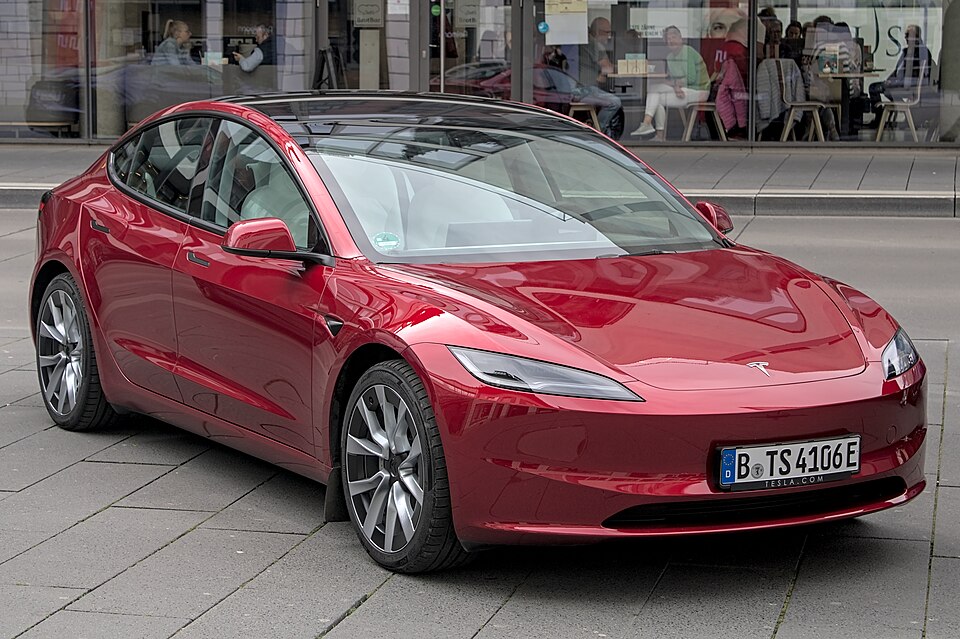
2023 Tesla Model 3
Trims, performance, features, fuel economy, safety and known problems — with the pros and cons against similar 2023 models.
- Class
- Midsize Cars
- Body styles
- 4dr Sedan Long Range AWD, 4dr Sedan Long Range RWD, 4dr Sedan Mid Range, 4dr Sedan Standard
- Engines
- Electric motor
- Transmission
- 1-speed automatic
- Drivetrain
- Rear-Wheel Drive, All-Wheel Drive
- Seats
- 5
- Fuel
- EV
- EV range
- 358 mi · 10 h on 240 V
- Length
- 184.6 in
- Curb weight
- 3,627–4,072 lb
- NHTSA rating
- ★★★★★
- Recalls
- 12 campaigns
Pros & cons
What's good
- Long EV rangeUp to 358 miles on a charge (EPA).
- AWD / 4WD available
- 5-star NHTSA safety ratingTop overall score in federal crash tests.
- Lots of standard safety tech5 of 5 key driver aids standard on the versions we checked.
Watch out for
- Many owner complaints428 complaints filed with NHTSA versus about 3 for similar models — most often about the forward collision avoidance: adaptive cruise control.
- 12 recallsMore than similar models (about 1). Confirm repairs with the VIN.
Calculated from EPA, NHTSA and vPIC data against 27 similar 2023 models — not a review. How we calculate this →
Overview
The 2023 Tesla Model 3 is a midsize car powered by electricity and rear-wheel drive and all-wheel drive.
It measures about 185 inches long and 73 inches wide on a 113-inch wheelbase, with a curb weight of roughly 4,072 lb (4dr Sedan Long Range AWD).
The electric version has an EPA-rated range of up to 358 miles and takes about 10 hours to charge on a 240-volt Level 2 charger.
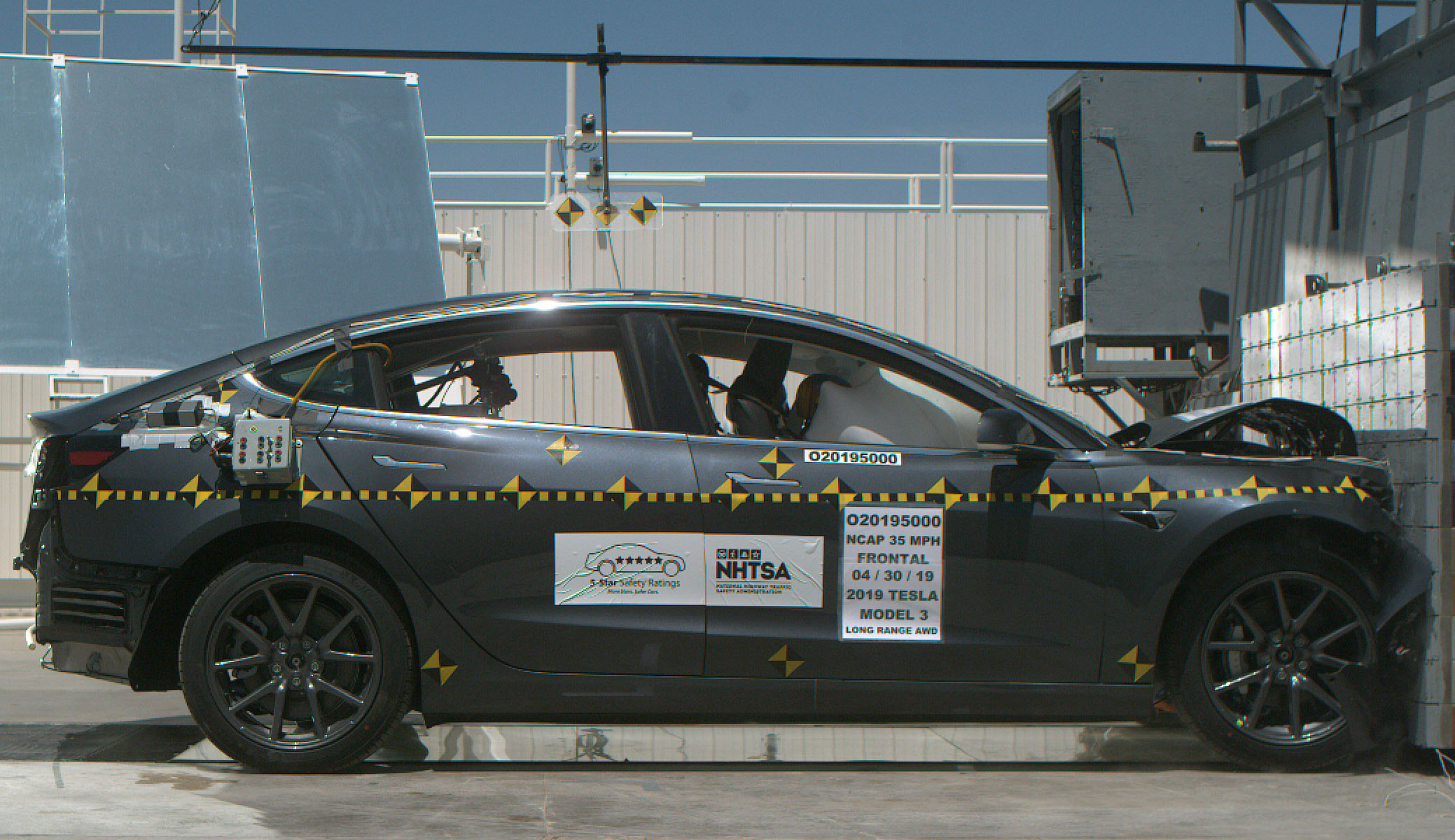
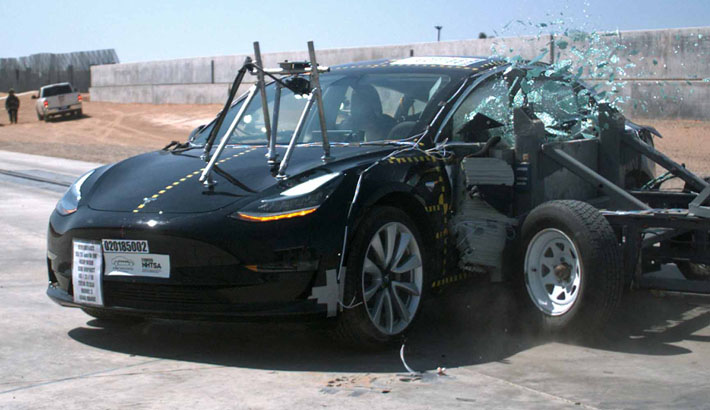
In NHTSA crash testing it earned the top 5-star overall rating.
It has 12 recall campaigns on file and owners have filed 428 complaints with NHTSA since 2015, most often about the forward collision avoidance.
What changed for 2023
No changes to engines, powertrains, drivetrains, size, EPA ratings or NHTSA crash rating compared with the 2022 Model 3 — a carry-over year in the data.
Compared with 2022; trim, feature and price changes aren't covered. See the 2022 Model 3 →
Trims, performance & features
Safety & driver-assist features
Built in: Fremont, California
NHTSA vPIC, as reported by the manufacturer for 3 2023 Model 3 configurations; may not list every trim. How we calculate this →
Dimensions & weight
| Body | Length | Width | Height | Wheelbase | Track F / R | Curb weight | Weight F/R |
|---|---|---|---|---|---|---|---|
| 4dr Sedan Long Range AWD | 184.6 in | 72.8 in | 56.7 in | 113.4 in | 63 / 62.6 in | 4,072 lb | 48/52 |
| 4dr Sedan Long Range RWD | 184.6 in | 72.8 in | 56.7 in | 113.4 in | 63 / 62.6 in | 3,805 lb | 48/52 |
| 4dr Sedan Mid Range | 184.6 in | 72.8 in | 56.7 in | 113.4 in | 63 / 62.6 in | 3,686 lb | 48/52 |
| 4dr Sedan Standard | 184.6 in | 72.8 in | 56.7 in | 113.4 in | 63 / 62.6 in | 3,627 lb | 47/53 |
Transport Canada CVS (Open Government Licence – Canada), Canadian-market figures.
Will it fit your garage? Check with your measurements →Engines, MPG & running costs
| Version | Engine | Transmission | Drive | City / Hwy / Comb | vs. class | Fuel / yr | CO₂ g/mi |
|---|---|---|---|---|---|---|---|
| Model 3 RWD EV | 192 kW AC 3-Phase | Automatic (A1) | Rear-Wheel Drive | 272 mi · 25.4929 kWh/100mi | – | $550 | – |
| Model 3 Long Range AWD EV | 98 and 195 kW AC 3-Phase | Automatic (A1) | All-Wheel Drive | 358 mi · 25.8238 kWh/100mi | – | $600 | – |
| Model 3 Performance AWD EV | 131 and 190 kW AC 3-Phase | Automatic (A1) | All-Wheel Drive | 315 mi · 29.9572 kWh/100mi | – | $650 | – |
EPA estimates; "vs. class" is combined MPG against the 2023 EPA class average. How we calculate this →
Safety ratings & technology
| Version | Overall | Frontal | Driver / passenger | Side | Side pole | Rollover | Rollover risk |
|---|---|---|---|---|---|---|---|
| 2023 Tesla Model 3 4 DR AWD | ★★★★★ | ★★★★★ | 5★ / 5★ | ★★★★★ | ★★★★★ | ★★★★★ | 6.6% |
| 2023 Tesla Model 3 4 DR RWD | ★★★★★ | ★★★★★ | 5★ / 5★ | ★★★★★ | ★★★★★ | ★★★★★ | 6.6% |
Similar 2023 midsize cars
| Model | Best MPG / range | NHTSA overall | Recalls |
|---|---|---|---|
| 2023 Tesla Model 3 (this car) | 358 mi | ★★★★★ | 12 |
| 2023 BMW 3 Series | 29 MPG | Not rated | 1 |
| 2023 Mercedes-Benz E-Class | 26 MPG | ★★★★★ | 0 |
| 2023 Lexus IS | 25 MPG | Not rated | 0 |
| 2023 Audi A4 | 28 MPG | Not rated | 1 |
| 2023 Mercedes-Benz C-Class | 29 MPG | Not rated | 0 |
| 2023 Audi A6 | 27 MPG | Not rated | 1 |
Recalls (12)
Exterior Lighting › Headlights · Aug 4, 2026
NHTSA campaign 26V507000 · 20,349 vehicles
- Problem
- Tesla, Inc. (Tesla) is recalling certain 2017-2023 Model 3 and 2020-2023 Model Y vehicles. The headlight low beams may be too bright and exceed the maximum light output. As such, these vehicles fail to comply with the requirements of Federal Motor Vehicle Safety Standard (FMVSS) number 108, "Lamps, Reflective Devices, and Associated Equipment."
- Risk
- Headlight low beams that are too bright can reduce visibility for oncoming drivers, increasing the risk of a crash.
- Fix
- Tesla Service will replace the headlights, free of charge. Interim owner notification letters explaining the safety risk were be mailed October 3, 2026. Another notice will be sent once the repair becomes available. Owners may contact Tesla customer service at 1-877-798-3752. Tesla's number for this recall is SB-24-17-003.
Back Over Prevention › Software · May 4, 2026
NHTSA campaign 26V283000 · 218,868 vehicles
- Problem
- Tesla, Inc. (Tesla) is recalling certain 2017, 2021-2023 Model 3, 2020-2023 Model Y, 2021-2023 Model S, and Model X vehicles operating software version 2026.8.6. The rearview camera image may be delayed when the vehicle is placed in reverse. As such, these vehicles fail to comply with the requirements of Federal Motor Vehicle Safety Standard number 111, "Rear Visibility."
- Risk
- A delayed rearview image reduces the driver's view behind the vehicle, increasing the risk of a crash.
- Fix
- Tesla has released an over-the-air (OTA) software update, free of charge. Owner notification letters were mailed July 3, 2026. Owners may contact Tesla customer service at 1-877-798-3752. Tesla's number for this recall is SB-26-00-001.
Steering › Electric Power Assist System · Feb 14, 2025
NHTSA campaign 25V092000 · 376,241 vehicles
- Problem
- Tesla, Inc. (Tesla) is recalling certain 2023 Model 3 and Model Y vehicles operating software prior to 2023.38.4. The printed circuit board for the electronic power steering assist may experience an overstress condition, causing a loss of power steering assist when the vehicle reaches a stop and then accelerates again.
- Risk
- A loss of power steering assist can require greater steering effort, especially at low speeds, increasing the risk of a crash.
- Fix
- Tesla has released an over-the-air (OTA) software update, free of charge. Owner notification letters were mailed March 25, 2025. Owners may contact Tesla customer service at 1-877-798-3752. Tesla's number for this recall is SB-25-00-004.
Tires › Pressure Monitoring And Regulating Systems · Dec 17, 2024
NHTSA campaign 24V935000 · 696,281 vehicles
- Problem
- Tesla, Inc. (Tesla) is recalling certain 2024 Cybertruck, 2017-2025 Model 3, and 2020-2025 Model Y vehicles. The tire pressure monitoring system (TPMS) warning light may not remain illuminated between drive cycles, failing to warn the driver of low tire pressure. As such, these vehicles fail to comply with the requirements of Federal Motor Vehicle Safety Standard number 138, "Tire Pressure Monitoring Systems."
- Risk
- Driving with improperly inflated tires increases the risk of a crash.
- Fix
- Tesla released an over-the-air (OTA) software update, free of charge. Owner notification letters were mailed February 15, 2025. Owners may contact Tesla customer service at 1-877-798-3752. Tesla's number for this recall is SB-24-00-018.
Electrical System › Software · Jul 24, 2024
NHTSA campaign 24V554000 · 1,849,638 vehicles
- Problem
- Tesla, Inc. (Tesla) is recalling certain 2021-2024 Model 3, Model S, Model X, and 2020-2024 Model Y vehicles. The hood latch assembly may fail to detect an unlatched hood condition after the hood has been opened.
- Risk
- An unlatched hood can fully open, obstructing the driver's view and increasing the risk of a crash.
- Fix
- Tesla has released an over-the-air (OTA) software update, free of charge. Owner notification letters were mailed September 24, 2024. Owners may contact Tesla customer service at 1-877-798-3752. Tesla's number for this recall is SB-24-00-012.
Seat Belts › Front › Warning Light/Devices · May 28, 2024
NHTSA campaign 24V376000 · 125,233 vehicles
- Problem
- Tesla, Inc. (Tesla) is recalling certain 2012-2024 Model S, 2015-2024 Model X, 2017-2023 Model 3, and 2020-2023 Model Y vehicles. In the event of an unbelted driver, the seat belt warning light and audible chime may not activate as intended. As such, these vehicles fail to comply with the requirements of Federal Motor Vehicle Safety Standard number 208, "Occupant Crash Protection."
- Risk
- A seat belt warning system that fails to alert occupants of an unbelted seat belt can increase the risk of injury during a crash.
- Fix
- Tesla will release an over-the-air (OTA) software update. Owner notification letters were mailed July 26, 2024. Owners may contact Tesla customer service at 1-877-798-3752. Tesla's number for this recall is SB-24-00-008.
Electrical System › Instrument Cluster/Panel · Jan 30, 2024
NHTSA campaign 24V051000 · 2,193,869 vehicles
- Problem
- Tesla, Inc. (Tesla) is recalling certain 2012-2023 Model S, 2016-2024 Model X, 2017-2023 Model 3, 2019-2024 Model Y, and 2024 Cybertruck vehicles. An incorrect font size is displayed on the instrument panel for the Brake, Park, and Antilock Brake System (ABS) warning lights. As such, these vehicles fail to comply with the requirements of Federal Motor Vehicle Safety Standard number 105, "Hydraulic and Electric Brake Systems" and 135, "Light Vehicle Brake Systems."
- Risk
- Warning lights with a smaller font size can make critical safety information on the instrument panel difficult to read, increasing the risk of a crash.
- Fix
- Tesla began releasing an over-the-air (OTA) software update, free of charge. Owners may contact Tesla customer service at 1-877-798-3752. Tesla's number for this recall is SB-24-00-003.
Electrical System › Adas › Driver Monitoring › Software · Dec 12, 2023
NHTSA campaign 23V838000 · 2,031,220 vehicles
- Problem
- Tesla, Inc. (Tesla) is recalling 2012-2023 Model S, 2016-2023 Model X, 2017-2023 Model 3, and 2020-2023 Model Y vehicles equipped with all versions of Autosteer leading up to the version(s) that contains the recall remedy. In certain circumstances when Autosteer is engaged, the prominence and scope of the feature's controls may not be sufficient to prevent driver misuse of the SAE Level 2 advanced driver-assistance feature.
- Risk
- In certain circumstances when Autosteer is engaged, and the driver does not maintain responsibility for vehicle operation and is unprepared to intervene as necessary or fails to recognize when Autosteer is canceled or not engaged, there may be an increased risk of a crash.
- Fix
- Tesla will release an over-the-air (OTA) software update, free of charge. Owner notification letters were mailed February 10, 2024. Owners may contact Tesla customer service at 1-877-798-3752. Tesla's number for this recall is SB-23-00-008.
Electrical System › Propulsion System › Traction Battery · Jun 19, 2023
NHTSA campaign 23V434000 · 26 vehicles
- Problem
- Tesla, Inc. (Tesla) is recalling certain 2023 Model 3 and Model Y vehicles. The pyrotechnic battery disconnect may be defective.
- Risk
- A defective battery disconnect may not isolate the vehicle's high voltage battery after a crash or fault detection, increasing the risk of electrical shock and injury.
- Fix
- Tesla Service will replace the pyrotechnic battery disconnect, free of charge. Owner notification letters were mailed August 18, 2023. Owners may contact Tesla customer service at 1-877-798-3752. Tesla's number for this recall is SB-23-16-005.
Steering › Automated/Adaptive Steering · Feb 15, 2023
NHTSA campaign 23V085000 · 362,758 vehicles
- Problem
- Tesla, Inc. (Tesla) is recalling certain 2016-2023 Model S, Model X, 2017-2023 Model 3, and 2020-2023 Model Y vehicles equipped with Full Self-Driving Beta (FSD Beta) software or pending installation. The FSD Beta system may allow the vehicle to act unsafe around intersections, such as traveling straight through an intersection while in a turn-only lane, entering a stop sign-controlled intersection without coming to a complete stop, or proceeding into an intersection during a steady yellow traffic signal without due caution. In addition, the system may respond insufficiently to changes in posted speed limits or not adequately account for the driver's adjustment of the vehicle's speed to exceed posted speed limits.
- Risk
- FSD Beta software that allows a vehicle to exceed speed limits or travel through intersections in an unlawful or unpredictable manner increases the risk of a crash.
- Fix
- Tesla will release an over-the-air (OTA) software update, free of charge. Owner notification letters were mailed April 15, 2023. Owners may contact Tesla customer service at 1-877-798-3752. Tesla's number for this recall is SB-23-00-001.
Exterior Lighting › Tail Lights · Nov 15, 2022
NHTSA campaign 22V844000 · 321,628 vehicles
- Problem
- Tesla, Inc. (Tesla) is recalling certain 2023 Model 3 and 2020-2023 Model Y vehicles. One or both taillights may intermittently fail to illuminate.
- Risk
- A taillight that fails to illuminate may reduce the visibility of the vehicle, increasing the risk of a crash.
- Fix
- Tesla has released an over-the-air (OTA) software update, free of charge. Owner notification letters were mailed January 14, 2023. Owners may contact Tesla customer service at 1-877-798-3752. Tesla's number for this recall is SB-22-00-016.
Air Bags › Side/Window › Curtain · Oct 25, 2021
NHTSA campaign 21V834000 · 3 vehicles
- Problem
- Tesla, Inc. (Tesla) is recalling certain 2020-2021, 2023 Model 3 vehicles. The left and/or right side curtain air bag may have been improperly secured to the roof rail, which could result in a twisted air bag. As such, these vehicles fail to comply with the requirements of Federal Motor Vehicle Safety Standard numbers 214, "Side Impact Protection" and 226, "Ejection Mitigation."
- Risk
- A twisted side curtain air bag may improperly deploy, increasing the risk of injury or occupant ejection during a crash.
- Fix
- Tesla Service will inspect and realign the left and right side curtain air bag as necessary, free of charge. Owner notification letters were mailed December 23, 2021. Owners may contact Tesla customer service at 1-877-798-3752. Tesla's number for this recall is SB-21-20-006.
Not every 2023 Tesla Model 3 is affected — only a VIN check confirms your car.
Owner-reported problems
Unverified owner reports; best-sellers collect more.
Used 2023 Tesla Model 3 buyer's checklist
- Run the VIN at nhtsa.gov/recalls. 12 recalls this year — ask for proof of repairs.
- Forward Collision Avoidance › Adaptive Cruise Control — 114 owner reports. Make sure driver-assist systems and the backup camera work without error messages.
- Forward Collision Avoidance › Automatic Emergency Braking — 97 owner reports. Make sure driver-assist systems and the backup camera work without error messages.
- Steering — 87 owner reports. Turn lock-to-lock while parked and on the road; listen for noises and feel for heavy or loose steering.
- Mileage to watch. Owners typically reported problems around 3,400 miles; ask what was repaired near that point.
- Battery health. Ask for a battery state-of-health report, check the remaining battery warranty, and compare the displayed range at 100% charge with the EPA's 358 miles.
- Before you pay: service records, a history report and an independent inspection.
Generated by DecodedCars from NHTSA recalls and owner complaints for the 2023 Tesla Model 3. Not a substitute for a professional inspection.
Other Model 3 years
Compare all years →| Year | MPG (best) | Length | Overall | Recalls | Complaints |
|---|---|---|---|---|---|
| 2027 Model 3 | 316 mi | – | Not rated | 0 | 0 |
| 2026 Model 3 | 363 mi | 185.8 in | Not rated | 1 | 29 |
| 2025 Model 3 | 363 mi | 185.8 in | Not rated | 3 | 122 |
| 2024 Model 3 | 363 mi | 185.8 in | Not rated | 5 | 222 |
| 2022 Model 3 | 358 mi | 184.6 in | ★★★★★ | 18 | 773 |
| 2021 Model 3 | 353 mi | 184.6 in | ★★★★★ | 22 | 673 |
| 2020 Model 3 | 330 mi | 184.6 in | ★★★★★ | 21 | 452 |
| 2019 Model 3 | 310 mi | 184.6 in | ★★★★★ | 22 | 620 |
| 2018 Model 3 | 310 mi | 184.6 in | ★★★★★ | 19 | 1,034 |
| 2017 Model 3 | 310 mi | – | Not rated | 16 | 27 |
Sources: EPA, NHTSA, Transport Canada, Wikimedia Commons. Not affiliated with NHTSA, the EPA or Tesla. How we calculate this →