 DecodedCars
2017 Lexus LX
Trims, performance, features, fuel economy, safety and known problems — with the pros and cons against similar 2017 models.
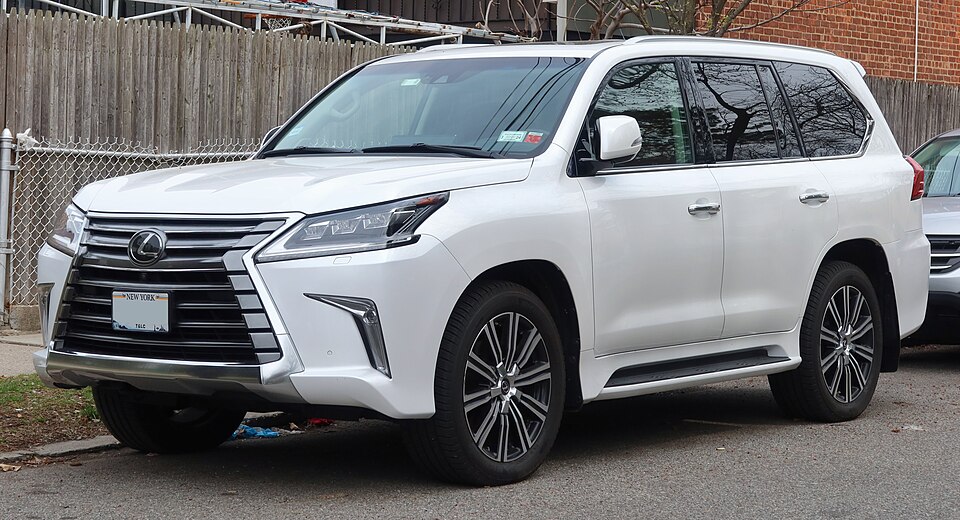
- Class
- Standard Sport Utility Vehicle 4WD
- Body styles
- 570 4dr SUV
- Engines
- 5.7L 8-cyl
- Horsepower
- 383 hp
- Transmission
- 8-speed automatic
- Drivetrain
- 4-Wheel Drive
- Seats
- 8
- Fuel
- Premium Gasoline
- MPG (best)
- 15 combined · 13 city / 18 hwy
- Length
- 200 in
- Curb weight
- 5,908 lb
- NHTSA rating
- Not rated
- Recalls
- 1 campaign
Pros & cons
What's good
- Seats up to 83 rows of seating.
- Lots of standard safety tech4 of 5 key driver aids standard on the versions we checked.
- Few owner complaints1 complaints filed with NHTSA versus about 52 for similar models.
Watch out for
- Below-average fuel economyBest version gets 15 MPG combined, 19% below the 2017 standard SUV average of 18.5 MPG.
- Premium fuel requiredEvery gasoline version is rated for premium, which raises running costs.
Calculated from EPA, NHTSA and vPIC data against 18 similar 2017 models — not a review. How we calculate this →
Overview
The 2017 Lexus LX is a standard SUV offered with a 5.7L 8-cyl engine and 4-wheel drive.
It measures about 200 inches long and 78 inches wide on a 112-inch wheelbase, with a curb weight of roughly 5,908 lb.
EPA rates its most efficient version at 15 MPG combined (13 city / 18 highway), 19% worse than the 2017 standard SUV average of 18.5 MPG, for an estimated $5,500 a year in fuel.
NHTSA has not published a 5-Star overall rating for this model year.
It has 1 recall campaign on file and owners have filed 1 complaint with NHTSA since 2015, most often about the fuel/propulsion system.
What changed for 2017
No changes to engines, powertrains, drivetrains, size, EPA ratings or NHTSA crash rating compared with the 2016 LX — a carry-over year in the data.
Compared with 2016; trim, feature and price changes aren't covered. See the 2016 LX →
Trims, performance & features
Trims
Safety & driver-assist features
Built in: Toyota City, Aichi
NHTSA vPIC, as reported by the manufacturer for 1 2017 LX configuration; may not list every trim. How we calculate this →
Dimensions & weight
| Body | Length | Width | Height | Wheelbase | Track F / R | Curb weight | Weight F/R |
|---|---|---|---|---|---|---|---|
| 570 4dr SUV | 200 in | 78 in | 75.2 in | 112.2 in | 64.6 / 64.6 in | 5,908 lb | 52/48 |
Transport Canada CVS (Open Government Licence – Canada), Canadian-market figures.
Will it fit your garage? Check with your measurements →Engines, MPG & running costs
| Version | Engine | Transmission | Drive | City / Hwy / Comb | vs. class | Fuel / yr | CO₂ g/mi |
|---|---|---|---|---|---|---|---|
| LX 570 | 5.7L 8-cyl | Automatic (S8) | 4-Wheel Drive | 13 / 18 / 15 | -19% | $5,500 | 596 |
EPA estimates; "vs. class" is combined MPG against the 2017 EPA class average. How we calculate this →
Safety ratings & technology
NHTSA has not published 5-Star ratings for the 2017 Lexus LX.
Similar 2017 standard SUVs
| Model | Best MPG / range | NHTSA overall | Recalls |
|---|---|---|---|
| 2017 Lexus LX (this car) | 15 MPG | Not rated | 1 |
| 2017 Porsche Cayenne | 22 MPG | Not rated | 2 |
| 2017 BMW X5 | 25 MPG | ★★★★★ | 6 |
| 2017 Cadillac Escalade | 17 MPG | ★★★★★ | 2 |
| 2017 Lexus RX | 30 MPG | Not rated | 3 |
| 2017 Audi Q7 | 22 MPG | Not rated | 7 |
| 2017 Tesla Model X | 295 mi | Not rated | 10 |
Recalls (1)
Air Bags › Frontal › Passenger Side › Inflator Module · Dec 13, 2018
NHTSA campaign 18V887000 · 89,740 vehicles
- Problem
- Toyota Motor Engineering & Manufacturing (Toyota) is recalling certain 2008-2019 Toyota Land Cruiser and Lexus LX 570 vehicles. Over time, the seat belt tension sensor wire harness may break and deactivate the front passenger air bag, knee air bag, and passenger seat-mounted side airbag.
- Risk
- In the event of a crash, deactivated air bags can increase the risk of injury .
- Fix
- Toyota will notify owners, and dealers will modify the front passenger seat belt assembly or replace it with an improved one, as necessary, free of charge. The recall began February 11, 2019. Owners may contact Toyota customer service at 1-888-270-9371 or Lexus customer service at 1-800-255-3987. Toyota's numbers for this recall are Lexus Interim J2L and Remedy JLL, Toyota Interim J15 and Remedy J05.
Not every 2017 Lexus LX is affected — only a VIN check confirms your car.
Owner-reported problems
Unverified owner reports; best-sellers collect more.
Used 2017 Lexus LX buyer's checklist
- Run the VIN at nhtsa.gov/recalls. 1 recall this year — ask for proof of repairs.
- Fuel/Propulsion System — 1 owner reports. Smell for fuel around the car and in the cabin, check that it starts easily when warm, and look at the oil dipstick for a fuel smell or rising level.
- Before you pay: service records, a history report and an independent inspection.
Generated by DecodedCars from NHTSA recalls and owner complaints for the 2017 Lexus LX. Not a substitute for a professional inspection.
Other LX years
Compare all years →| Year | MPG (best) | Length | Overall | Recalls | Complaints |
|---|---|---|---|---|---|
| 2026 LX | 20 | 200.4 in | Not rated | 1 | 1 |
| 2025 LX | 20 | 200.4 in | Not rated | 1 | 0 |
| 2024 LX | 19 | 200.4 in | Not rated | 4 | 3 |
| 2023 LX | 19 | 200.4 in | Not rated | 5 | 13 |
| 2022 LX | 19 | 200.4 in | Not rated | 6 | 5 |
| 2021 LX | 14 | 200 in | Not rated | 0 | 0 |
| 2020 LX | 14 | 200 in | Not rated | 0 | 1 |
| 2019 LX | 15 | 200 in | Not rated | 2 | 1 |
| 2018 LX | 15 | 200 in | Not rated | 2 | 4 |
| 2016 LX | 15 | 200 in | Not rated | 1 | 2 |
| 2015 LX | 14 | 197.2 in | Not rated | 2 | 0 |
| 2014 LX | 14 | 197.2 in | Not rated | 2 | 0 |
Sources: EPA, NHTSA, Transport Canada, Wikimedia Commons. Not affiliated with NHTSA, the EPA or Lexus. How we calculate this →