 DecodedCars
Infiniti QX65
1 model years from 2027 to 2027, compared on size, efficiency, safety and reliability.
- Model years
- 2027–2027
- Class
- Standard Sport Utility Vehicle 4WD
- Latest engines
- 2.0L 4-cyl turbo
- Best MPG
- 22–22 combined, by year
- Latest rating
- Not rated
- Recalls
- 0 campaigns, all years
- Interest
- 2,522 Wikipedia views / 30 days
The 2027 QX65 in brief
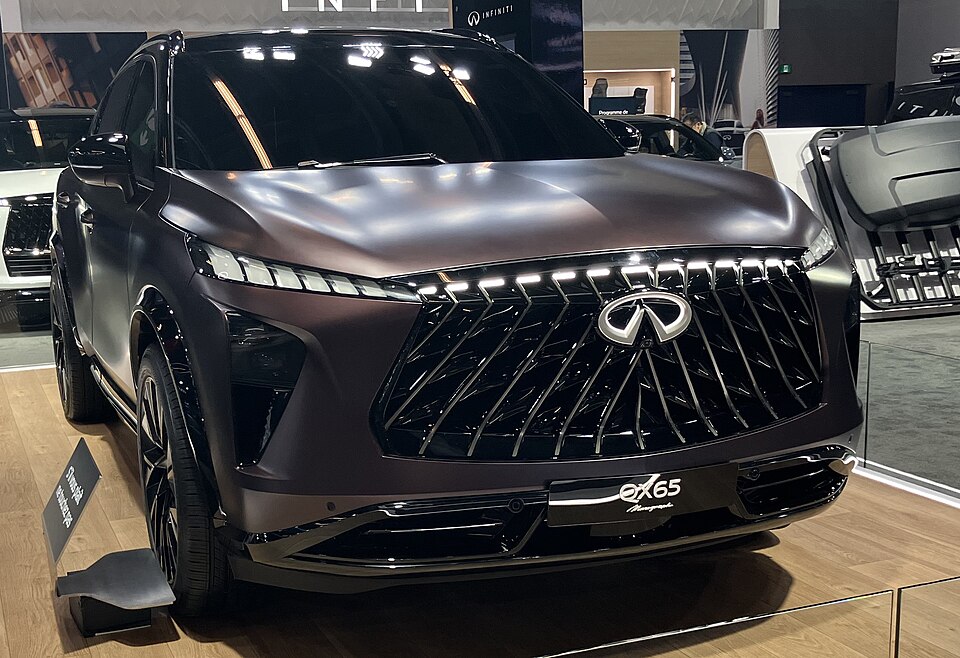
The 2027 Infiniti QX65 is a standard SUV offered with a 2.0L 4-cyl turbo engine and all-wheel drive.
EPA rates its most efficient version at 22 MPG combined (20 city / 26 highway), 13% better than the 2027 standard SUV average of 19.4 MPG, for an estimated $3,750 a year in fuel.
There are no recalls or owner complaints on file with NHTSA for this model year.
The Infiniti QX65 has 1 model year in our data, from 2027 to 2027.
About the Infiniti QX65
The Infiniti QX65 is a mid-size luxury crossover SUV with a sloping roofline produced by Nissan for their Infiniti luxury brand. It debuted on March 27, 2026 in the United States. Production has started since April 2026.
From the Wikipedia article "Infiniti QX65", licensed under CC BY-SA 4.0.
2027 QX65 pros & cons
Full 2027 details →What's good
Nothing stands out against similar models in the data.
Watch out for
- Premium fuel requiredEvery gasoline version is rated for premium, which raises running costs.
Show all 1 model years side by side
| Year | Latest engines | Best MPG / range | Length | Weight | Overall | Recalls | Complaints |
|---|---|---|---|---|---|---|---|
| 2027 | 2.0L 4-cyl turbo | 22 MPG | – | – | Not rated | 0 | 0 |
Alternatives to the 2027 QX65
| Model | Best MPG / range | NHTSA overall | Recalls |
|---|---|---|---|
| 2027 BMW X5 | 26 MPG | Not rated | 0 |
| 2027 Volvo XC90 | 25 MPG | Not rated | 0 |
| 2027 Lincoln Navigator | 18 MPG | Not rated | 1 |
| 2027 BMW iX3 | 434 mi | Not rated | 0 |
| 2027 Audi Q8 | 19 MPG | Not rated | 0 |
| 2027 Infiniti QX80 | 18 MPG | Not rated | 1 |
Sources: EPA, NHTSA, Transport Canada, Wikipedia, Wikimedia Commons. Not affiliated with NHTSA, the EPA or Infiniti. How we calculate this →