 DecodedCars
Volvo XC90 2016
Versiones, desempeño, equipamiento, consumo, seguridad y problemas conocidos, con sus ventajas y desventajas frente a modelos similares 2016.
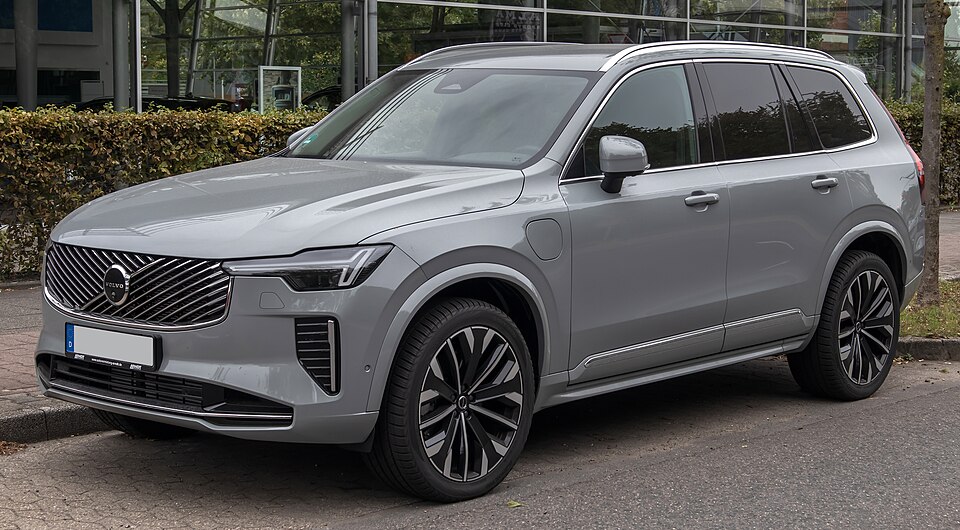
- Clase
- SUV grande (4WD)
- Carrocerías
- 4dr SUV AWD T6
- Motores
- 2.0L 4 cil. turbo
- Potencia
- 310–316 hp
- Tracción
- Tracción total (AWD), Tracción delantera
- Asientos
- 7
- Combustible
- Híbrido enchufable, Gasolina premium
- MPG (mejor)
- 25 combinadas · 24 ciudad / 27 carretera
- Largo
- 194.9 in
- Peso en vacío
- 6,063 lb
- Calificación NHTSA
- Sin calificar
- Retiros
- 8 campañas
Ventajas y desventajas
Lo bueno
- Excelente consumo de combustibleHasta 25 MPG combinadas: un 34 % mejor que el promedio de su clase (SUV grande, 2016: 18.7 MPG).
- Disponible en versión híbrida enchufableSe ofrece en versión híbrida enchufable además de gasolina.
- Tracción total / 4x4 disponible
- Hasta 7 asientos
A tener en cuenta
- Requiere gasolina premiumTodas las versiones de gasolina usan premium, lo que encarece el uso diario.
- 8 retirosMás que modelos similares (unos 2). Confirma las reparaciones con el VIN.
Calculado con datos de la EPA, la NHTSA y vPIC frente a 9 modelos similares 2016; no es una reseña. Cómo lo calculamos →
Resumen
El Volvo XC90 2016 es un SUV grande con motor 2.0L 4 cil. turbo, incluida una versión híbrida, con tracción total (AWD) y tracción delantera.
Mide unas 195 pulgadas de largo y 79 de ancho, con una distancia entre ejes de 117 pulgadas, y pesa alrededor de 6,063 lb.
La EPA califica su versión más eficiente con 25 MPG combinadas (24 en ciudad / 27 en carretera), un 34 % mejor que el promedio de su clase (SUV grande, 2016: 18.7 MPG), con un gasto estimado de $3,300 al año en combustible.
La NHTSA no ha publicado una calificación general de 5 estrellas para este año modelo.
Tiene 8 campañas de retiro registradas y los propietarios han presentado 198 quejas ante la NHTSA desde 2015, sobre todo por problemas de motor.
Novedades del 2016
- Nuevas dimensiones: 5.9 in más largo, distancia entre ejes +4.7 in — probablemente un rediseño o nueva generación
- Nueva versión híbrida enchufable
- Motor nuevo: 2.0L 4 cil. turbo
- Motor retirado: 3.2L 6 cil.
- Mejor consumo combinado sube de 19 a 25 MPG
Comparado con 2014; no incluye cambios de versiones, equipamiento ni precio. Ver el XC90 2014 →
Versiones, desempeño y equipamiento
Versiones
Fabricado en: Torslanda, Sweden
NHTSA vPIC, según el fabricante, para 5 configuraciones del XC90 2016; puede no incluir todas las versiones. Cómo lo calculamos →
Dimensiones y peso
| Carrocería | Largo | Ancho | Alto | Distancia entre ejes | Vía del. / tras. | Peso en vacío | Peso del./tras. |
|---|---|---|---|---|---|---|---|
| 4dr SUV AWD T6 | 194.9 in | 79.1 in | 70.1 in | 117.3 in | 65.7 / 65.7 in | 6,063 lb | 53/47 |
Transport Canada CVS (Open Government Licence – Canada), medidas del mercado canadiense.
¿Cabe en tu garaje? Compruébalo con tus medidas →Motores, consumo y costo de uso
| Versión | Motor | Transmisión | Tracción | Ciudad / Carr. / Comb. | vs. su clase | Combustible / año | CO₂ g/mi |
|---|---|---|---|---|---|---|---|
| XC90 AWD PHEV Híbrido enchufable | 2.0L 4 cil. turbo | Automática (S8) | Tracción total (AWD) | 24 / 27 / 25 | +34% | $3,300 | 241 |
| XC90 FWD | 2.0L 4 cil. turbo | Automática (S8) | Tracción delantera | 22 / 26 / 24 | +26% | $3,400 | 373 |
| XC90 AWD | 2.0L 4 cil. turbo | Automática (S8) | Tracción total (AWD) | 22 / 25 / 23 | +23% | $3,550 | 384 |
| XC90 AWD | 2.0L 4 cil. turbo | Automática (S8) | Tracción total (AWD) | 20 / 25 / 22 | +18% | $3,750 | 397 |
Estimaciones de la EPA; "vs. su clase" compara las MPG combinadas con el promedio 2016 de su clase EPA. Cómo lo calculamos →
Calificaciones de seguridad y tecnología
La NHTSA no ha publicado calificaciones de 5 estrellas para el Volvo XC90 2016.
SUV grande similares 2016
| Modelo | Mejor MPG / autonomía | General NHTSA | Retiros |
|---|---|---|---|
| Volvo XC90 2016 (este auto) | 25 MPG | Sin calificar | 8 |
| Lexus RX 2016 | 30 MPG | Sin calificar | 3 |
| Tesla Model X 2016 | 289 mi | Sin calificar | 12 |
| Acura MDX 2016 | 23 MPG | ★★★★★ | 7 |
| Infiniti QX60 2016 | 26 MPG | ★★★★★ | 2 |
| Cadillac SRX 2016 | 19 MPG | ★★★★★ | 2 |
| Infiniti QX70 2016 | 19 MPG | Sin calificar | 0 |
Retiros (8)
Texto oficial de la NHTSA (en inglés).
Cinturones de seguridad › Critical Fasteners · 7 dic 2023
Campaña NHTSA 23V827000 · 2,911 vehículos
- Problema
- Volvo Car USA, LLC (Volvo Car) is recalling certain 2015-2024 XC90 vehicles. The second-row seat belt buckle and lower belt anchor bolts may not be tightened properly.
- Riesgo
- An improperly tightened seat belt buckle may not restrain an occupant as intended, increasing their risk of injury during a crash.
- Solución
- Dealers will inspect and tighten the second-row seat belt buckle anchorage bolts, as necessary, free of charge. Owner notification letters were mailed January 19, 2024. Owners may contact Volvo Car customer service at 1-800-458-1552. Volvo Car's number for this recall is R10259.
Sistema eléctrico › Software · 21 abr 2021
Campaña NHTSA 21V273000 · 162 vehículos
- Problema
- Volvo Car USA, LLC (Volvo Car) is recalling certain 2016-2020 XC90 Excellence vehicles. Liquid or condensation on the rear seat control display may cause the front passenger seat to move back as far as possible.
- Riesgo
- The rear passenger may become trapped by the front seat without the ability to cancel the seat's movement, increasing the risk of injury.
- Solución
- Volvo Car will notify owners, and dealers will update the rear seat control display software, free of charge. Owner notification letters were mailed July 14, 2021. Owners may contact Volvo Car customer service at 1-888-458-1552. Volvo Car's number for this recall is R10093.
Motor y refrigeración › Cooling System › Hoses/Lines/Piping/Fittings · 17 abr 2019
Campaña NHTSA 19V308000 · 34,006 vehículos
- Problema
- Volvo Cars of N.A., LLC (Volvo Cars) is recalling certain 2016 XC90 vehicles. Exposure to heat and humidity may cause the engine coolant bleeder hose to crack, resulting in a coolant leak.
- Riesgo
- If the coolant leak goes unnoticed, coolant may accumulate in the catalytic converter heat shield insulation and catch fire when the vehicle is stationary, increasing the risk of injury.
- Solución
- Volvo Cars will notify owners, and dealers will replace the engine side coolant bleeder hose, free of charge. The recall began June 12, 2019. Owners may contact Volvo customer service at 1-800-458-1552. Volvo's number for this recall is R29936.
Cinturones de seguridad › Front › Buckle Assembly · 2 nov 2016
Campaña NHTSA 16V798000 · 74,027 vehículos
- Problema
- Volvo Car USA LLC (Volvo) is recalling certain model year 2016-2017 XC90, S90, XC60, V60 Cross Country, V60, S60 Cross Country, S60, and S60 Inscription vehicles manufactured February 16, 2015, to August 22, 2016. On the affected vehicles, the front passenger seat belt buckle attaching stud may loosen, allowing the buckle to separate from the seat belt bracket. As such, these vehicles fail to comply with the requirements of Federal Motor Vehicle Safety Standard (FMVSS) number 210, "Seat Belt Assembly Anchorages" and number 209, "Seat Belt Assemblies."
- Riesgo
- If the seat belt buckle separates from the bracket, the front seat passenger may not be adequately restrained in the event of a crash, increasing their risk of injury in the event of a crash.
- Solución
- Volvo will notify owners, and dealers will inspect the front passenger seat belt buckle stud, replacing the seat belt buckle as needed, free of charge. The recall began January 2017. Owners may contact Volvo customer service at 1-800-458-1552. Volvo's number for this recall is R89708.
Equipamiento › Appliance › Air Conditioner · 26 sept 2016
Campaña NHTSA 16V690000 · 43,766 vehículos
- Problema
- Volvo Cars of North America, LLC (Volvo) is recalling certain model year 2016-2017 Volvo XC90 and S90 vehicles manufactured April 15, 2015 through September 19, 2016. In the affected vehicles, the drain hose for the air conditioning may leak into the passenger compartment due to a drain hose installation error during manufacturing.
- Riesgo
- Significant water drainage into the passenger compartment may adversely affect air bag deployment in the event of a crash, increasing the risk of occupant injury.
- Solución
- Volvo will notify owners, and dealers will inspect the air conditioning drain hose for proper installation, replacing the hose as necessary, free of charge. The recall is expected to begin on November the 14, 2016. Owners may contact Volvo at 1-800-458-1552. Volvo's number for this campaign is R89707.
Visibilidad › Sun/Moon Roof Assembly · 4 may 2016
Campaña NHTSA 16V268000 · 30,214 vehículos
- Problema
- Volvo Car USA LLC (Volvo) is recalling certain model year 2016 XC90 vehicles manufactured January 27, 2015, to April 23, 2016. The sunroofs on the affected vehicles have a switch on the overhead console that may not be adequately recessed to prevent the switch from being unintentionally pressed. When pressed, the sunroof may fully close. As such, these vehicles fail to comply with the requirements of Federal Motor Vehicle Safety Standard (FMVSS) number 118, "Power-Operated Window, Partition, and Roof Panel Systems."
- Riesgo
- If the switch is unintentionally pressed and the sunroof panel closes, there is an increased risk of occupant injury.
- Solución
- Volvo will notify owners, and dealers will perform a software upgrade that disables the auto-close function, free of charge. The recall began June 24, 2016. Owners may contact Volvo customer service at 1-800-458-1552 or by visiting http://Volvo.custhelp.com. Volvo's number for this recall is R89702.
Bolsas de aire › Side/Window · 6 ago 2015
Campaña NHTSA 15V497000 · 3,911 vehículos
- Problema
- Volvo Cars of N.A., LLC (Volvo) is recalling certain model year 2016 Volvo XC90 vehicles manufactured January 27, 2015, to July 10, 2015. The third row seating side curtain air bags may not fully inflate.
- Riesgo
- Underinflated air bags may not fully protect third row occupants, increasing the risk of injury in the event of a crash.
- Solución
- Volvo will notify owners, and dealers will modify the D-pillar interior panels to allow full inflation of the third row airbags, free of charge. The recall began on September 21, 2015. Owners may contact Volvo Customer Care at 1-800-458-1552.
Bolsas de aire › Side/Window · 3 jun 2015
Campaña NHTSA 15V342000 · 584 vehículos
- Problema
- Volvo Cars of N.A., LLC (Volvo) is recalling certain model year 2016 Volvo XC90 vehicles manufactured January 27, 2015, to May 19, 2015. The affected vehicles have front seats whose wiring harness for the Side Impact Protection System (SIPS) may have been routed incorrectly.
- Riesgo
- If the wiring harness is routed incorrectly, the wiring may be damaged, disabling the front seat side impact air bag, and increasing the risk of injury to the seat occupant in the event of a crash necessitating deployment of the front seat side impact air bag.
- Solución
- Volvo will notify owners, and dealers will inspect the routing of the SIPS wiring, correcting the routing and installing a protective sleeve as necessary, free of charge. The recall began on June 30, 2015. Owners may contact Volvo customer service at 1-800-458-1552. Volvo's number for this recall is R89571.
No todos los XC90 2016 están afectados: solo el VIN lo confirma.
Problemas reportados por propietarios
Reportes sin verificar; los más vendidos acumulan más.
Lista para comprar un Volvo XC90 2016 usado
- Consulta el VIN en nhtsa.gov/recalls. 8 retiros en este año: pide comprobantes de reparación.
- Motor — 87 reportes de propietarios. Arranca el motor en frío, escucha si golpetea y fíjate en luces de advertencia o titubeos al acelerar.
- Sistema eléctrico — 56 reportes de propietarios. Prueba todas las ventanas, seguros, luces, pantallas y puertos USB; revisa la antigüedad de la batería.
- Estructura › Carrocería — 21 reportes de propietarios. Abre y cierra todas las puertas, el cofre y la cajuela; busca óxido o paneles desalineados.
- Millaje a vigilar. Los propietarios suelen reportar problemas alrededor de las 21,000 millas; pregunta qué se reparó cerca de ese punto.
- Sistema híbrido. Busca luces de advertencia del sistema híbrido y pregunta si la batería de alto voltaje se reemplazó o sigue en garantía.
- Antes de pagar: historial de servicio, reporte de antecedentes e inspección de un mecánico independiente.
Generado por DecodedCars a partir de retiros y quejas de propietarios ante la NHTSA para el Volvo XC90 2016. No sustituye una inspección profesional.
Otros años del XC90
Comparar todos los años →| Año | MPG (mejor) | Largo | General | Retiros | Quejas |
|---|---|---|---|---|---|
| XC90 2027 | 25 | – | Sin calificar | 0 | 0 |
| XC90 2026 | 27 | 195.7 in | Sin calificar | 1 | 8 |
| XC90 2025 | 27 | 194.9 in | Sin calificar | 3 | 29 |
| XC90 2024 | 27 | 194.9 in | Sin calificar | 4 | 37 |
| XC90 2023 | 27 | 194.9 in | Sin calificar | 7 | 41 |
| XC90 2022 | 27 | 194.9 in | Sin calificar | 5 | 31 |
| XC90 2021 | 27 | 194.9 in | Sin calificar | 7 | 42 |
| XC90 2020 | 27 | 194.9 in | Sin calificar | 9 | 34 |
| XC90 2019 | 25 | 194.9 in | Sin calificar | 6 | 42 |
| XC90 2018 | 27 | 194.9 in | Sin calificar | 3 | 52 |
| XC90 2017 | 25 | 194.9 in | Sin calificar | 7 | 82 |
| XC90 2014 | 19 | 189 in | Sin calificar | 0 | 4 |
Fuentes: EPA, NHTSA, Transport Canada, Wikimedia Commons. Sin afiliación con la NHTSA, la EPA ni Volvo. Cómo lo calculamos →