 DecodedCars
Hyundai Tucson 2016
Versiones, desempeño, equipamiento, consumo, seguridad y problemas conocidos, con sus ventajas y desventajas frente a modelos similares 2016.
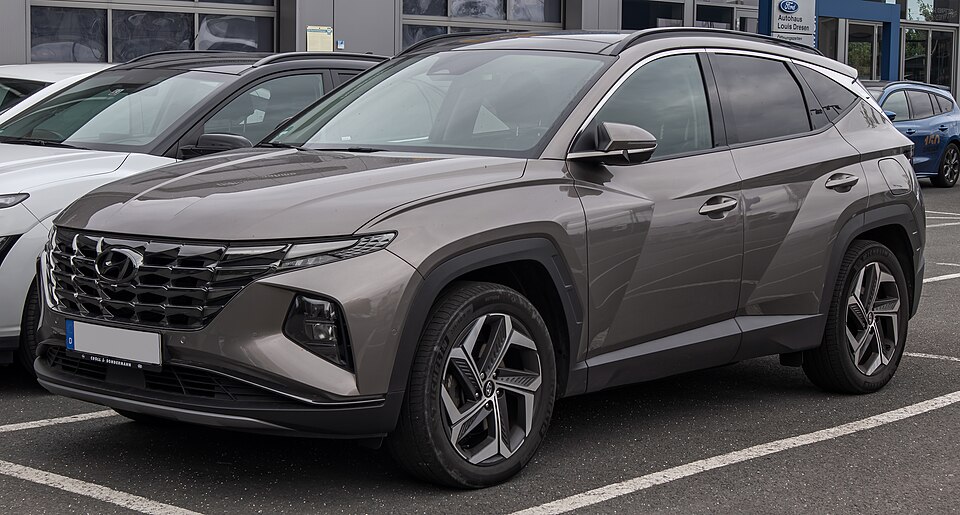
- Clase
- SUV pequeño (2WD)
- Carrocerías
- 4dr SUV AWD, 4dr SUV Fcev, 4dr SUV FWD
- Motores
- 1.6L 4 cil. turbo, 2.0L 4 cil.
- Tracción
- Tracción delantera, Tracción total (AWD)
- Combustible
- FCV, Gasolina regular
- MPG (mejor)
- 28 combinadas · 26 ciudad / 32 carretera
- Largo
- 173.6–176.4 in
- Peso en vacío
- 3,439–4,101 lb
- Calificación NHTSA
- Sin calificar
- Retiros
- 5 campañas
Ventajas y desventajas
Lo bueno
- Tracción total / 4x4 disponible
A tener en cuenta
- Muchas quejas de propietarios1,626 quejas ante la NHTSA frente a unas 257 de modelos similares; sobre todo por problemas de tren motriz.
- Retiro con aviso de "estacionar afuera"Verifica que la reparación del retiro esté hecha antes de comprarlo o manejarlo.
Calculado con datos de la EPA, la NHTSA y vPIC frente a 22 modelos similares 2016; no es una reseña. Cómo lo calculamos →
Resumen
El Hyundai Tucson 2016 es un SUV pequeño disponible con 2 motores (1.6L 4 cil. turbo y 2.0L 4 cil.), con tracción delantera y tracción total (AWD).
Mide unas 176 pulgadas de largo y 73 de ancho, con una distancia entre ejes de 105 pulgadas, y pesa alrededor de 3,602 lb (4dr SUV AWD).
La EPA califica su versión más eficiente con 28 MPG combinadas (26 en ciudad / 32 en carretera), un 14 % mejor que el promedio de su clase (SUV pequeño, 2016: 24.6 MPG), con un gasto estimado de $2,400 al año en combustible.
La NHTSA no ha publicado una calificación general de 5 estrellas para este año modelo.
Tiene 5 campañas de retiro registradas y los propietarios han presentado 1,626 quejas ante la NHTSA desde 2015, sobre todo por problemas de tren motriz.
Novedades del 2016
- Nuevas dimensiones: 3.2 in más largo, distancia entre ejes +1.2 in — probablemente un rediseño o nueva generación
- Motor nuevo: 1.6L 4 cil. turbo
- Motor retirado: 2.4L 4 cil.
- Mejor consumo combinado sube de 25 a 28 MPG
Comparado con 2015; no incluye cambios de versiones, equipamiento ni precio. Ver el Tucson 2015 →
Versiones, desempeño y equipamiento
Versiones
Fabricado en: Ulsan, South Korea
NHTSA vPIC, según el fabricante, para 5 configuraciones del Tucson 2016; puede no incluir todas las versiones. Cómo lo calculamos →
Dimensiones y peso
| Carrocería | Largo | Ancho | Alto | Distancia entre ejes | Vía del. / tras. | Peso en vacío | Peso del./tras. |
|---|---|---|---|---|---|---|---|
| 4dr SUV AWD | 176.4 in | 72.8 in | 65 in | 105.1 in | 63.4 / 63.8 in | 3,602 lb | 58/42 |
| 4dr SUV Fcev | 173.6 in | 71.3 in | 65.4 in | 103.9 in | 62.2 / 62.2 in | 4,101 lb | |
| 4dr SUV FWD | 176.4 in | 72.8 in | 65 in | 105.1 in | 63.4 / 63.8 in | 3,439 lb | 58/42 |
Transport Canada CVS (Open Government Licence – Canada), medidas del mercado canadiense.
¿Cabe en tu garaje? Compruébalo con tus medidas →Motores, consumo y costo de uso
| Versión | Motor | Transmisión | Tracción | Ciudad / Carr. / Comb. | vs. su clase | Combustible / año | CO₂ g/mi |
|---|---|---|---|---|---|---|---|
| Tucson Fuel Cell FCV | Automática (A1) | Tracción delantera | 49 / 51 / 50 | – | – | – | |
| Tucson Eco FWD | 1.6L 4 cil. turbo | Automática (AM7) | Tracción delantera | 26 / 32 / 28 | +14% | $2,400 | 317 |
| Tucson FWD | 1.6L 4 cil. turbo | Automática (AM7) | Tracción delantera | 25 / 30 / 27 | +10% | $2,500 | 335 |
| Tucson Eco AWD | 1.6L 4 cil. turbo | Automática (AM7) | Tracción total (AWD) | 25 / 30 / 27 | +17% | $2,500 | 334 |
| Tucson FWD | 2.0L 4 cil. | Automática (S6) | Tracción delantera | 23 / 30 / 26 | +6% | $2,600 | 342 |
| Tucson AWD | 1.6L 4 cil. turbo | Automática (AM7) | Tracción total (AWD) | 24 / 28 / 25 | +9% | $2,700 | 355 |
| Tucson AWD | 2.0L 4 cil. | Automática (S6) | Tracción total (AWD) | 21 / 26 / 23 | 0% | $2,900 | 389 |
Estimaciones de la EPA; "vs. su clase" compara las MPG combinadas con el promedio 2016 de su clase EPA. Cómo lo calculamos →
Calificaciones de seguridad y tecnología
La NHTSA no ha publicado calificaciones de 5 estrellas para el Hyundai Tucson 2016.
SUV pequeño similares 2016
| Modelo | Mejor MPG / autonomía | General NHTSA | Retiros |
|---|---|---|---|
| Hyundai Tucson 2016 (este auto) | 28 MPG | Sin calificar | 5 |
| Toyota RAV4 2016 | 32 MPG | Sin calificar | 3 |
| Honda CR-V 2016 | 29 MPG | Sin calificar | 3 |
| Subaru Forester 2016 | 27 MPG | Sin calificar | 3 |
| Mazda CX-5 2016 | 29 MPG | Sin calificar | 4 |
| Honda HR-V 2016 | 31 MPG | Sin calificar | 2 |
| Volkswagen Tiguan 2016 | 23 MPG | Sin calificar | 2 |
Retiros (5)
Texto oficial de la NHTSA (en inglés).
Frenos hidráulicos › Antilock/Traction Control/Electronic Limited Slip › Control Unit/Module · 4 sept 2020 Estacionar afuera
Campaña NHTSA 20V543000 · 652,024 vehículos
- Problema
- Hyundai Motor America (Hyundai) recalled certain 2019-2021 Tucson vehicles on September 4, 2020. On December 30, 2020, Hyundai expanded the recall population, and added certain 2016-2018 Tucson vehicles. The Anti-lock Brake Hydraulic Electronic Control Unit (HECU) could corrode internally and cause an electrical short, possibly resulting in an engine compartment fire.
- Riesgo
- An engine compartment fire can increase the risk of injury or crash.
- Solución
- Hyundai will notify owners, and dealers will replace the HECU fuse. For 2019-2021 model years, the Electronic Stability Control (ESC) software will also be updated. Recall repairs will be performed free of charge. Owners are advised to park outside and away from structures as a precaution until the recall repair is complete. The recall began November 2, 2020. Owners may contact Hyundai customer service at 1-855-371-9460. Hyundai's number for this recall is 195.
Enganche de remolque · 21 nov 2016
Campaña NHTSA 16V842000 · 6,172 vehículos
- Problema
- Hyundai Motor America (Hyundai) is recalling certain model year 2016-2017 Tucson vehicles manufactured May 19, 2015, to November 14, 2016, and 2017 Santa Fe vehicles manufactured November 28, 2015, to November 14, 2016. The affected vehicles may be equipped with an accessory trailer hitch wiring harness that, due to a malfunction of the tow hitch module, may result, in the trailer brake lights being constantly illuminated. As such, these vehicles fail to comply with the requirements of Federal Motor Vehicle Safety Standard (FMVSS) number 108, " Lamps, Reflective Devices, and Associated Equipment."
- Riesgo
- If the trailer brake lights stay illuminated while being used, other drivers may be confused, increasing the risk of a crash.
- Solución
- Hyundai will notify owners, and dealers will replace the affected accessory trailer hitch wiring harnesses, free of charge. The recall is expected to begin January 13, 2017. Owners may contact Hyundai customer service at 1-800-633-5151. Hyundai's number for this recall is 153.
Sistema eléctrico › Software · 30 ago 2016
Campaña NHTSA 16V628000 · 41,000 vehículos
- Problema
- Hyundai Motor Company (Hyundai) is recalling certain model year 2016 Tucson vehicles manufactured May 20, 2015 through May 31, 2016 and equipped with a 7-speed EcoShift Dual Clutch Transmission. Certain driving conditions and high temperatures may cause the vehicle to not move if the accelerator pedal is pressed and released repeatedly.
- Riesgo
- Inability to move the vehicle while in traffic may increase the risk of a crash.
- Solución
- Hyundai will notify owners, and dealers will update the Transmission Control Module software, free of charge. The recall is expected to begin on October 28, 2016. Owners may contact Hyundai customer service at 1-855-671-3059. Hyundai's number for this recall is 149.
Cerraduras y seguros › Hood › Latch · 24 may 2016
Campaña NHTSA 16V348000 · 81,000 vehículos
- Problema
- Hyundai Motor Company (Hyundai) is recalling certain model year 2016 Tucson vehicles manufactured May 19, 2015 to March 14, 2016. In the affected vehicles, if the primary hood latch has been released, and the vehicle is driven, the secondary hood latch may not hold adequately secure the hood to prevent it from opening while the vehicle is in motion.
- Riesgo
- If the primary hood latch is inadvertently released and the secondary latch cannot secure the hood, the hood may unexpectedly open while driving, increasing the risk of a crash.
- Solución
- Hyundai will notify owners, and dealers will replace the secondary hood latch, free of charge. The recall began on June 30, 2016. Owners may contact Hyundai customer service at 1-855-371-9460. Hyundai's number for this recall is 145.
Iluminación exterior › Tail Lights · 10 mar 2016
Campaña NHTSA 16V147000 · 2,263 vehículos
- Problema
- Hyundai Motor America (Hyundai) is recalling certain model year 2016 Hyundai Tucson vehicles manufactured May 26, 2015 to January 15, 2016 and equipped with an accessory trailer hitch harness either included with the accessory trailer hitch or sold as a service part. In the affected vehicles, when the vehicle's engine is running and the brake lights are illuminated, if the turn signal is activated, the trailer turn signal lights will either turn off or remain continuously illuminated (not flash). As such, these vehicles fail to comply with the requirements of Federal Motor Vehicle Safety Standard Number 108, " Lamps, Reflective Devices, and Associated Equipment."
- Riesgo
- Failure to illuminate the trailer's turn signal lights would prevent the communication of the driver's intent, increasing the risk of a crash.
- Solución
- Hyundai will notify owners, and dealers will update the tow hitch harness, free of charge. The recall began on May 2, 2016. Owners may contact Hyundai customer service at 1-855-371-9640. Hyundai's number for this recall is 142.
No todos los Tucson 2016 están afectados: solo el VIN lo confirma.
Problemas reportados por propietarios
Reportes sin verificar; los más vendidos acumulan más.
Lista para comprar un Hyundai Tucson 2016 usado
- Consulta el VIN en nhtsa.gov/recalls. 5 retiros en este año: pide comprobantes de reparación.
- Retiro crítico de seguridad. Al menos un retiro tiene aviso de "no conducir" o "estacionar afuera". No lo compres hasta que el VIN muestre que se reparó.
- Tren motriz — 515 reportes de propietarios. Prueba todas las marchas, incluida la reversa; nota patinazos o cambios bruscos o tardíos.
- Motor — 424 reportes de propietarios. Arranca el motor en frío, escucha si golpetea y fíjate en luces de advertencia o titubeos al acelerar.
- Estructura › Carrocería — 221 reportes de propietarios. Abre y cierra todas las puertas, el cofre y la cajuela; busca óxido o paneles desalineados.
- Millaje a vigilar. Los propietarios suelen reportar problemas alrededor de las 5,500 millas; pregunta qué se reparó cerca de ese punto.
- Antes de pagar: historial de servicio, reporte de antecedentes e inspección de un mecánico independiente.
Generado por DecodedCars a partir de retiros y quejas de propietarios ante la NHTSA para el Hyundai Tucson 2016. No sustituye una inspección profesional.
Otros años del Tucson
Comparar todos los años →| Año | MPG (mejor) | Largo | General | Retiros | Quejas |
|---|---|---|---|---|---|
| Tucson 2026 | 38 | 182.3 in | Sin calificar | 6 | 99 |
| Tucson 2025 | 38 | 182.3 in | ★★★★★ | 7 | 448 |
| Tucson 2024 | 38 | 182.3 in | ★★★★★ | 4 | 152 |
| Tucson 2023 | 38 | 182.3 in | ★★★★★ | 2 | 182 |
| Tucson 2022 | 38 | 182.3 in | ★★★★★ | 3 | 506 |
| Tucson 2021 | 25 | 176.4 in | ★★★★★ | 1 | 80 |
| Tucson 2020 | 25 | 176.4 in | ★★★★★ | 1 | 179 |
| Tucson 2019 | 26 | 176.4 in | ★★★★★ | 1 | 385 |
| Tucson 2018 | 27 | 176.4 in | ★★★★★ | 1 | 399 |
| Tucson 2017 | 28 | 176.4 in | ★★★★★ | 3 | 1,093 |
| Tucson 2015 | 25 | 173.2 in | Sin calificar | 2 | 229 |
| Tucson 2014 | 25 | 173.2 in | Sin calificar | 2 | 195 |
Fuentes: EPA, NHTSA, Transport Canada, Wikimedia Commons. Sin afiliación con la NHTSA, la EPA ni Hyundai. Cómo lo calculamos →