 DecodedCars
2025 BMW i4
Trims, performance, features, fuel economy, safety and known problems — with the pros and cons against similar 2025 models.
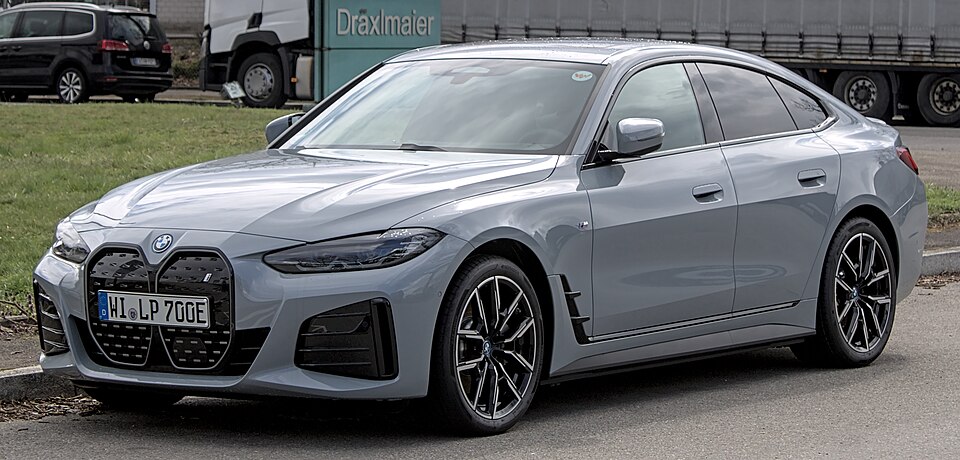
- Class
- Compact Cars
- Engines
- Electric motor
- Horsepower
- 335–396 hp
- Drivetrain
- Rear-Wheel Drive, All-Wheel Drive
- Fuel
- EV
- EV range
- 318 mi · 8 h on 240 V
- Length
- –
- Curb weight
- –
- NHTSA rating
- Not rated
- Recalls
- 2 campaigns
Pros & cons
What's good
- Long EV rangeUp to 318 miles on a charge (EPA).
- Strong performanceUp to 396 hp, versus about 311 hp for similar 2025 models.
- AWD / 4WD available
Watch out for
No weak spots against similar models in the data.
Calculated from EPA, NHTSA and vPIC data against 13 similar 2025 models — not a review. How we calculate this →
Overview
The 2025 BMW i4 is a compact car powered by electricity and rear-wheel drive and all-wheel drive.
The electric version has an EPA-rated range of up to 318 miles and takes about 8 hours to charge on a 240-volt Level 2 charger.
NHTSA has not published a 5-Star overall rating for this model year.
It has 2 recall campaigns on file and owners have filed 12 complaints with NHTSA since 2015, most often about the power train.
What changed for 2025
- Longest EV range up from 307 to 318 miles
Compared with 2024; trim, feature and price changes aren't covered. See the 2024 i4 →
Trims, performance & features
Trims
Safety & driver-assist features
Built in: Munich, Germany
NHTSA vPIC, as reported by the manufacturer for 2 2025 i4 configurations; may not list every trim. How we calculate this →
Engines, MPG & running costs
| Version | Engine | Transmission | Drive | City / Hwy / Comb | vs. class | Fuel / yr | CO₂ g/mi |
|---|---|---|---|---|---|---|---|
| i4 eDrive35 Gran Coupe (18 inch Wheels) EV | 250 kW EESM | Automatic (A1) | Rear-Wheel Drive | 266 mi · 29.1671 kWh/100mi | – | $650 | – |
| i4 eDrive40 Gran Coupe (18 inch wheels) EV | 250 kW EESM | Automatic (A1) | Rear-Wheel Drive | 318 mi · 30.1552 kWh/100mi | – | $700 | – |
| i4 eDrive35 Gran Coupe (19 inch Wheels) EV | 250 kW EESM | Automatic (A1) | Rear-Wheel Drive | 244 mi · 31.7304 kWh/100mi | – | $700 | – |
| i4 eDrive40 Gran Coupe (19 inch Wheels) EV | 250 kW EESM | Automatic (A1) | Rear-Wheel Drive | 295 mi · 32.3112 kWh/100mi | – | $750 | – |
| i4 xDrive40 Gran Coupe (18 inch Wheels) EV | 190 and 230 kW EESM | Automatic (A1) | All-Wheel Drive | 287 mi · 33.4089 kWh/100mi | – | $750 | – |
| i4 M50 Gran Coupe (19 inch wheels) EV | 190 and 230 kW EESM | Automatic (A1) | All-Wheel Drive | 267 mi · 35.8724 kWh/100mi | – | $800 | – |
| i4 xDrive40 Gran Coupe (19 inch Wheels) EV | 190 and 230 kW EESM | Automatic (A1) | All-Wheel Drive | 268 mi · 35.9861 kWh/100mi | – | $800 | – |
| i4 M50 Gran Coupe (20 inch wheels) EV | 190 and 230 kW EESM | Automatic (A1) | All-Wheel Drive | 227 mi · 42.1631 kWh/100mi | – | $950 | – |
EPA estimates; "vs. class" is combined MPG against the 2025 EPA class average. How we calculate this →
Safety ratings & technology
NHTSA has not published 5-Star ratings for the 2025 BMW i4.
Similar 2025 compact cars
| Model | Best MPG / range | NHTSA overall | Recalls |
|---|---|---|---|
| 2025 BMW i4 (this car) | 318 mi | Not rated | 2 |
| 2025 BMW 3 Series | 31 MPG | Not rated | 0 |
| 2025 Lexus IS | 25 MPG | Not rated | 0 |
| 2025 Audi A4 | 29 MPG | Not rated | 0 |
| 2025 Mercedes-Benz C-Class | 29 MPG | Not rated | 0 |
| 2025 Volvo S60 | 31 MPG | Not rated | 3 |
| 2025 Porsche Taycan | 318 mi | Not rated | 4 |
Recalls (2)
Electrical System › Propulsion System › Cables · Dec 23, 2025
NHTSA campaign 25V906000 · 1 vehicles
- Problem
- BMW of North America, LLC (BMW) is recalling one 2025 I4 EDRIVE40 vehicle. The connection between the positive battery cable and the rear power distributor may become loose.
- Risk
- A loose positive battery cable connection could lead to the vehicle stalling, increasing the risk of a crash. In addition, a loose battery cable can overheat, increasing the risk of a fire.
- Fix
- A dealer will check the positive battery cable connection and, if necessary, repair it, free of charge. The owner notification letter is expected to be mailed on February 13, 2026. Owners may contact BMW customer service at 1-800-525-7417. The Vehicle Identification Number (VIN) involved in this recall will be searchable on NHTSA.gov beginning February 13, 2026.
Electrical System › Propulsion System › Traction Motor › Controller › Software · Jul 23, 2025
NHTSA campaign 25V395000 · 71,286 vehicles
- Problem
- BMW of North America, LLC (BMW) is recalling certain 2022-2025 i4, 2022-2024 IX, 2023-2024 I7, and 2024 I5 vehicles. The electric drive motor software may shut down the high-voltage system, causing a loss of drive power.
- Risk
- A loss of drive power increases the risk of a crash.
- Fix
- The electric drive motor software will be updated over-the-air (OTA) or by a dealer, free of charge. Owner notification letters are expected to be mailed August 5, 2025. Owners may contact BMW customer service at 1-800-525-7417.
Not every 2025 BMW i4 is affected — only a VIN check confirms your car.
Owner-reported problems
Unverified owner reports; best-sellers collect more.
Used 2025 BMW i4 buyer's checklist
- Run the VIN at nhtsa.gov/recalls. 2 recalls this year — ask for proof of repairs.
- Power Train — 2 owner reports. Test-drive through all gears, including reverse; note slipping, harsh or delayed shifts.
- Steering — 2 owner reports. Turn lock-to-lock while parked and on the road; listen for noises and feel for heavy or loose steering.
- Wheels — 2 owner reports. Ask the seller and mechanic specifically about this system.
- Mileage to watch. Owners typically reported problems around 22 miles; ask what was repaired near that point.
- Battery health. Ask for a battery state-of-health report, check the remaining battery warranty, and compare the displayed range at 100% charge with the EPA's 318 miles.
- Before you pay: service records, a history report and an independent inspection.
Generated by DecodedCars from NHTSA recalls and owner complaints for the 2025 BMW i4. Not a substitute for a professional inspection.
Other i4 years
Compare all years →Sources: EPA, NHTSA, Transport Canada, Wikimedia Commons. Not affiliated with NHTSA, the EPA or BMW. How we calculate this →