 DecodedCars
2019 Audi TT
Trims, performance, features, fuel economy, safety and known problems — with the pros and cons against similar 2019 models.
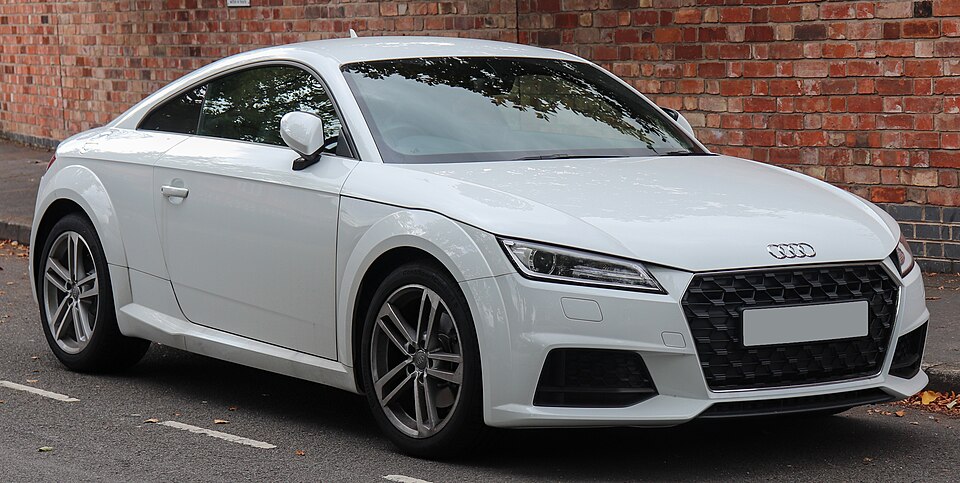
- Class
- Two Seaters
- Body styles
- 2dr Coupe
- Engines
- 2.0L 4-cyl turbo
- Drivetrain
- All-Wheel Drive
- Fuel
- Regular Gasoline
- MPG (best)
- 26 combined · 23 city / 31 hwy
- Length
- 164.6 in
- Curb weight
- 3,164 lb
- NHTSA rating
- Not rated
- Recalls
- 1 campaign
Pros & cons
What's good
- Excellent fuel economyUp to 26 MPG combined — 32% better than the average 2019 two seaters (19.7 MPG).
Watch out for
No weak spots against similar models in the data.
Calculated from EPA, NHTSA and vPIC data against 5 similar 2019 models — not a review. How we calculate this →
Overview
The 2019 Audi TT is a two seaters offered with a 2.0L 4-cyl turbo engine and all-wheel drive.
It measures about 165 inches long and 72 inches wide on a 99-inch wheelbase, with a curb weight of roughly 3,164 lb.
EPA rates its most efficient version at 26 MPG combined (23 city / 31 highway), 32% better than the 2019 two seaters average of 19.7 MPG, for an estimated $2,600 a year in fuel.
NHTSA has not published a 5-Star overall rating for this model year.
It has 1 recall campaign on file.
Dimensions & weight
| Body | Length | Width | Height | Wheelbase | Track F / R | Curb weight | Weight F/R |
|---|---|---|---|---|---|---|---|
| 2dr Coupe | 164.6 in | 72 in | 53.1 in | 98.8 in | 61.8 / 61 in | 3,164 lb | 60/40 |
Transport Canada CVS (Open Government Licence – Canada), Canadian-market figures.
Will it fit your garage? Check with your measurements →Engines, MPG & running costs
| Version | Engine | Transmission | Drive | City / Hwy / Comb | vs. class | Fuel / yr | CO₂ g/mi |
|---|---|---|---|---|---|---|---|
| TT Roadster quattro | 2.0L 4-cyl turbo | Automatic (AM-S7) | All-Wheel Drive | 23 / 31 / 26 | +32% | $2,600 | 340 |
| TT Coupe quattro | 2.0L 4-cyl turbo | Automatic (AM-S7) | All-Wheel Drive | 23 / 31 / 26 | +11% | $2,600 | 340 |
EPA estimates; "vs. class" is combined MPG against the 2019 EPA class average. How we calculate this →
Safety ratings & technology
NHTSA has not published 5-Star ratings for the 2019 Audi TT.
Similar 2019 two seaterss
| Model | Best MPG / range | NHTSA overall | Recalls |
|---|---|---|---|
| 2019 Audi TT (this car) | 26 MPG | Not rated | 1 |
| 2019 Porsche Boxster | 25 MPG | Not rated | 0 |
| 2019 Porsche Cayman | 25 MPG | Not rated | 0 |
| 2019 BMW Z4 | 28 MPG | Not rated | 6 |
| 2019 Alfa Romeo 4C | 28 MPG | Not rated | 0 |
| 2019 Mercedes-Benz SLC-Class | 27 MPG | Not rated | 0 |
Recalls (1)
Fuel System, Gasoline › Storage › Tank Assembly · Feb 12, 2020
NHTSA campaign 20V076000 · 8,572 vehicles
- Problem
- Volkswagen Group of America, Inc. (Volkswagen) is recalling certain 2016-2019 Audi TT Roadster Quattro and TT Coupe Quattro vehicles. In the event of a crash, the fuel tank may become damaged by the fuel tank heat shield bracket .
- Risk
- A damaged fuel tank may leak fuel, increasing the risk of a fire.
- Fix
- Volkswagen will notify owners, and dealers will install a protective cap on the fuel tank heat shield bracket, free of charge. The recall began March 19, 2020. Owners may contact Volkswagen customer service at 1-800-893-5298. Volkswagen's number for this recall is 20BX.
Not every 2019 Audi TT is affected — only a VIN check confirms your car.
Owner-reported problems
No owner complaints for the 2019 Audi TT in NHTSA's database since 2015.
Used 2019 Audi TT buyer's checklist
- Run the VIN at nhtsa.gov/recalls. 1 recall this year — ask for proof of repairs.
- Before you pay: service records, a history report and an independent inspection.
Generated by DecodedCars from NHTSA recalls and owner complaints for the 2019 Audi TT. Not a substitute for a professional inspection.
Other TT years
Compare all years →Sources: EPA, NHTSA, Transport Canada, Wikimedia Commons. Not affiliated with NHTSA, the EPA or Audi. How we calculate this →