 DecodedCars
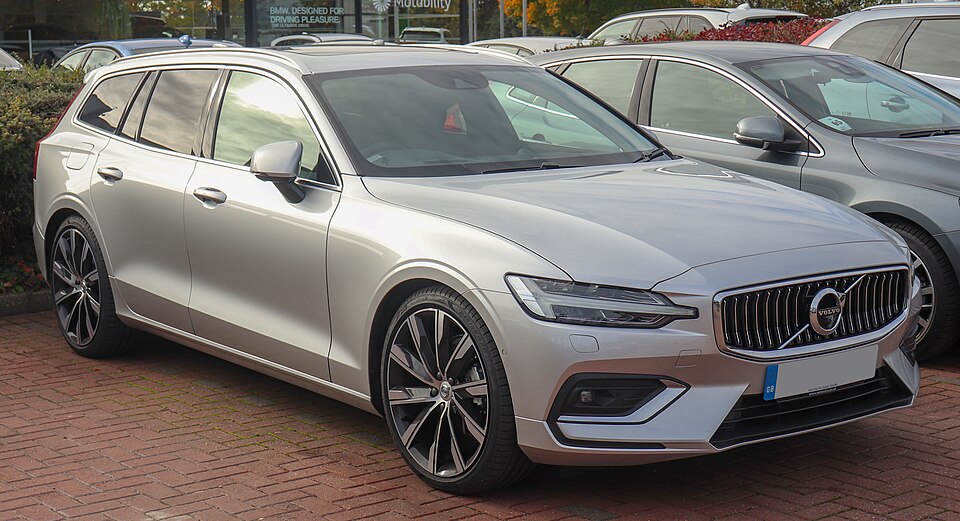
2023 Volvo V60
Trims, performance, features, fuel economy, safety and known problems — with the pros and cons against similar 2023 models.
- Class
- Small Station Wagons
- Body styles
- AWD 4dr Wagon, Cross Country 4dr Wagon, Recharge 4dr Wagon
- Engines
- 2.0L 4-cyl turbo
- Horsepower
- 247–312 hp
- Drivetrain
- All-Wheel Drive
- Fuel
- Plug-in Hybrid, Hybrid
- MPG (best)
- 31 combined · 30 city / 33 hwy
- Length
- 188.2 in
- Curb weight
- 4,012–4,555 lb
- NHTSA rating
- Not rated
- Recalls
- 5 campaigns
Pros & cons
What's good
- Hybrid version availableOffered as a hybrid and plug-in hybrid as well as gas.
- Lots of standard safety tech4 of 5 key driver aids standard on the versions we checked.
Watch out for
- Premium fuel requiredEvery gasoline version is rated for premium, which raises running costs.
- 5 recallsMore than similar models (about 0). Confirm repairs with the VIN.
Calculated from EPA, NHTSA and vPIC data — not a review. How we calculate this →
Overview
The 2023 Volvo V60 is a small station wagon offered with a 2.0L 4-cyl turbo engine, including a hybrid version and all-wheel drive.
It measures about 188 inches long and 73 inches wide on a 113-inch wheelbase, with a curb weight of roughly 4,041 lb (AWD 4dr Wagon).
EPA rates its most efficient version at 31 MPG combined (30 city / 33 highway), 1% better than the 2023 small station wagon average of 30.8 MPG, for an estimated $2,650 a year in fuel.
NHTSA has not published a 5-Star overall rating for this model year.
It has 5 recall campaigns on file and owners have filed 5 complaints with NHTSA since 2015, most often about the back over prevention.
What changed for 2023
- New hybrid version
- Lightest version 201 lb heavier
Compared with 2022; trim, feature and price changes aren't covered. See the 2022 V60 →
Trims, performance & features
Trims
Safety & driver-assist features
NHTSA vPIC, as reported by the manufacturer for 4 2023 V60 configurations; may not list every trim. How we calculate this →
Dimensions & weight
| Body | Length | Width | Height | Wheelbase | Track F / R | Curb weight | Weight F/R |
|---|---|---|---|---|---|---|---|
| AWD 4dr Wagon | 188.2 in | 72.8 in | 59.1 in | 113 in | 63 / 63 in | 4,041 lb | 56/44 |
| Cross Country 4dr Wagon | 188.2 in | 72.8 in | 59.1 in | 113 in | 65 / 64.2 in | 4,012 lb | 56/44 |
| Recharge 4dr Wagon | 188.2 in | 72.8 in | 59.1 in | 113 in | 63 / 63 in | 4,555 lb | 56/44 |
Transport Canada CVS (Open Government Licence – Canada), Canadian-market figures.
Will it fit your garage? Check with your measurements →Engines, MPG & running costs
| Version | Engine | Transmission | Drive | City / Hwy / Comb | vs. class | Fuel / yr | CO₂ g/mi |
|---|---|---|---|---|---|---|---|
| V60 T8 AWD Recharge ext. Range Plug-in Hybrid | 2.0L 4-cyl turbo | Automatic (S8) | All-Wheel Drive | 30 / 33 / 31 | +1% | $2,650 | 99 |
| V60CC B5 AWD Hybrid | 2.0L 4-cyl turbo | Automatic (S8) | All-Wheel Drive | 23 / 30 / 26 | -16% | $3,150 | 339 |
EPA estimates; "vs. class" is combined MPG against the 2023 EPA class average. How we calculate this →
Safety ratings & technology
NHTSA has not published 5-Star ratings for the 2023 Volvo V60.
Recalls (5)
Back Over Prevention › Software · Dec 23, 2025
NHTSA campaign 25V908000 · 413,151 vehicles
- Problem
- Volvo Car USA, LLC (Volvo Car) is recalling certain 2021-2025 XC40, 2022 V90, 2022-2024 C40BEV, 2022-2025 S90, V90CC, XC60, 2023-2025 S60, V60, V60CC, XC90, and 2025 EC40, and EX40 vehicles. The rearview camera image may not display when the vehicle is placed in reverse. As such, these vehicles fail to comply with the requirements of Federal Motor Vehicle Safety Standard number 111, "Rear Visibility."
- Risk
- A rearview camera image that does not display reduces the driver's view behind the vehicle, increasing the risk of a crash.
- Fix
- The software will be updated by a dealer or through an over-the-air (OTA) update, free of charge. Owner notification letters were mailed February 24, 2026. Owners may contact Volvo Carâs customer service at 1-800-458-1552. Volvo Car's number for this recall is R10333. Vehicle Identification Numbers (VINs) involved in this recall will be searchable on NHTSA.gov beginning February 16, 2026. This recall replaces previous NHTSA recall number 25V282. Vehicles previously repaired under recall 25V282 will need to have the new remedy performed.
Back Over Prevention › Software · May 8, 2025
NHTSA campaign 25V282000 · 413,151 vehicles
- Problem
- Volvo Car USA, LLC (Volvo Car) is recalling certain 2021-2025 XC40, 2022 V90, 2022-2025 S90, V90CC, C40, XC60, 2023-2025 S60, V60, V60CC, XC90, and 2025 EC40 and EX40 vehicles. The rearview camera image may not display when the vehicle is placed in reverse. As such, these vehicles fail to comply with the requirements of Federal Motor Vehicle Safety Standard number 111, "Rear Visibility."
- Risk
- A rearview camera image that does not display reduces the driver's view of what is behind the vehicle, increasing the risk of a crash.
- Fix
- The software will be updated by a dealer or through an over-the-air (OTA) update, free of charge. Owner notification letters were mailed June 27, 2025. Owners may contact Volvo Car customer service at 1-800-458-1552. Volvo Car's number for this recall is R10320.
Electrical System · Mar 22, 2023
NHTSA campaign 23V188000 · 393 vehicles
- Problem
- Volvo Car USA, LLC (Volvo Car) is recalling certain 2023 S60, V60CC, XC60, XC90, XC40, and C40 vehicles. A diagnostic trouble code (DTC) may be falsely detected for the emergency call system (e-call) and display "e-Call Service Required" in the driver information module (DIM).
- Risk
- The false warning message could prevent the detection of an actual e-call system failure, which could delay an emergency response during a crash, increasing the risk of injury.
- Fix
- Dealers will update the telematics and connectivity antenna module (TCAM) software, free of charge. Owner notification letters are expected to be mailed May 16, 2023. Owners may contact Volvo Car's customer service 1-800-458-1552. Volvo Car's number for this recall is R10225.
Service Brakes, Hydraulic · Jan 19, 2023
NHTSA campaign 23V012000 · 27,457 vehicles
- Problem
- Volvo Car USA, LLC (Volvo Car) is recalling certain 2023 S60, V60, V60CC, V90CC, XC60, XC90, XC40, and C40 vehicles. A diagnostic error in the Brake Control Module 2 (BCM2) may cause a loss of Antilock Brake System (ABS), Electronic Stability Control (ESC), and traction control.
- Risk
- A reduction in brake support functions can increase the risk of a crash.
- Fix
- Volvo will release an over-the-air (OTA) BCM2 software update, free of charge. Owner notification letters are expected to be mailed March 15, 2023. Owners may contact Volvo Car customer service at 1-800-458-1552. Volvo Car's number for this recall is R10217.
Engine And Engine Cooling › Engine › Engine Control Module (Ecu/Ecm) · Oct 20, 2022
NHTSA campaign 22V793000 · 15,674 vehicles
- Problem
- Volvo Car USA, LLC (Volvo Car) is recalling certain 2022-2023 S60, V60, S90L, XC60, and XC90 vehicles. An electronic control module (ECM) software error may prevent the combustion engine from starting, causing a loss of drive power.
- Risk
- The vehicle may lose drive power as the high voltage battery is depleted, increasing the risk of a crash.
- Fix
- Dealers will update the ECM software, free of charge. Owner notification letters are expected to be mailed December 8, 2022. Owners may contact Volvo Car's customer service at 1-800-458-1552. Volvo Car's number for this recall is R10198.
Not every 2023 Volvo V60 is affected — only a VIN check confirms your car.
Owner-reported problems
Unverified owner reports; best-sellers collect more.
Used 2023 Volvo V60 buyer's checklist
- Run the VIN at nhtsa.gov/recalls. 5 recalls this year — ask for proof of repairs.
- Back Over Prevention › Sensing System › Camera — 1 owner reports. Make sure driver-assist systems and the backup camera work without error messages.
- Electrical System — 1 owner reports. Test every window, lock, light, screen and USB port; check the battery age.
- Exterior Lighting — 1 owner reports. Check all exterior lights, wipers and the windshield for cracks.
- Mileage to watch. Owners typically reported problems around 48,000 miles; ask what was repaired near that point.
- Hybrid system. Check for hybrid-system warning lights and ask whether the high-voltage battery has been replaced or is still under warranty.
- Before you pay: service records, a history report and an independent inspection.
Generated by DecodedCars from NHTSA recalls and owner complaints for the 2023 Volvo V60. Not a substitute for a professional inspection.
Other V60 years
Compare all years →| Year | MPG (best) | Length | Overall | Recalls | Complaints |
|---|---|---|---|---|---|
| 2026 V60 | 26 | 188.2 in | Not rated | 1 | 2 |
| 2025 V60 | 31 | 188.2 in | Not rated | 3 | 0 |
| 2024 V60 | 27 | 188.2 in | Not rated | 3 | 6 |
| 2022 V60 | 31 | 188.2 in | Not rated | 4 | 1 |
| 2021 V60 | 30 | 188.2 in | Not rated | 4 | 3 |
| 2020 V60 | 30 | 187.4 in | Not rated | 5 | 12 |
| 2019 V60 | 28 | 187.4 in | Not rated | 4 | 2 |
| 2018 V60 | 29 | 182.7 in | Not rated | 2 | 2 |
| 2017 V60 | 29 | 182.7 in | Not rated | 6 | 6 |
| 2016 V60 | 29 | 182.7 in | Not rated | 4 | 23 |
| 2015 V60 | 29 | 182.7 in | Not rated | 2 | 23 |
Sources: EPA, NHTSA, Transport Canada, Wikimedia Commons. Not affiliated with NHTSA, the EPA or Volvo. How we calculate this →