 DecodedCars
2016 Subaru Crosstrek
Trims, performance, features, fuel economy, safety and known problems — with the pros and cons against similar 2016 models.
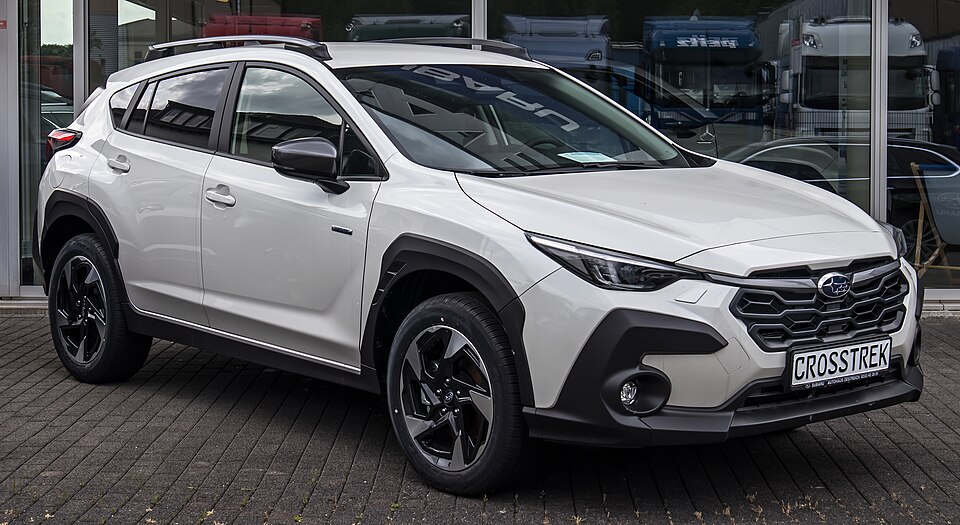
- Class
- Small Sport Utility Vehicle 4WD
- Engines
- 2.0L 4-cyl
- Drivetrain
- All-Wheel Drive
- Fuel
- Hybrid, Regular Gasoline
- MPG (best)
- 31 combined · 29 city / 33 hwy
- Length
- –
- Curb weight
- –
- NHTSA rating
- Not rated
- Recalls
- 1 campaign
Pros & cons
What's good
- Excellent fuel economyUp to 31 MPG combined — 35% better than the average 2016 small SUV (23 MPG).
- Hybrid version availableOffered as a hybrid as well as gas.
- Few owner complaints132 complaints filed with NHTSA versus about 389 for similar models.
Watch out for
No weak spots against similar models in the data.
Calculated from EPA, NHTSA and vPIC data against 30 similar 2016 models — not a review. How we calculate this →
Overview
The 2016 Subaru Crosstrek is a small SUV offered with a 2.0L 4-cyl engine, including a hybrid version and all-wheel drive.
EPA rates its most efficient version at 31 MPG combined (29 city / 33 highway), 35% better than the 2016 small SUV average of 23 MPG, for an estimated $2,150 a year in fuel.
NHTSA has not published a 5-Star overall rating for this model year.
It has 1 recall campaign on file and owners have filed 132 complaints with NHTSA since 2015, most often about the electrical system.
What changed for 2016
No changes to engines, powertrains, drivetrains, size, EPA ratings or NHTSA crash rating compared with the 2015 Crosstrek — a carry-over year in the data.
Compared with 2015; trim, feature and price changes aren't covered. See the 2015 Crosstrek →
Engines, MPG & running costs
| Version | Engine | Transmission | Drive | City / Hwy / Comb | vs. class | Fuel / yr | CO₂ g/mi |
|---|---|---|---|---|---|---|---|
| XV Crosstrek Hybrid AWD Hybrid | 2.0L 4-cyl | Automatic (AV-S6) | All-Wheel Drive | 29 / 33 / 31 | +35% | $2,150 | 286 |
| XV Crosstrek AWD | 2.0L 4-cyl | Automatic (AV-S6) | All-Wheel Drive | 26 / 33 / 29 | +26% | $2,300 | 311 |
| XV Crosstrek AWD | 2.0L 4-cyl | Manual 5-spd | All-Wheel Drive | 23 / 30 / 26 | +13% | $2,600 | 348 |
EPA estimates; "vs. class" is combined MPG against the 2016 EPA class average. How we calculate this →
Safety ratings & technology
NHTSA has not published 5-Star ratings for the 2016 Subaru Crosstrek.
Similar 2016 small SUVs
| Model | Best MPG / range | NHTSA overall | Recalls |
|---|---|---|---|
| 2016 Subaru Crosstrek (this car) | 31 MPG | Not rated | 1 |
| 2016 Toyota RAV4 | 32 MPG | Not rated | 3 |
| 2016 Honda CR-V | 29 MPG | Not rated | 3 |
| 2016 Hyundai Tucson | 28 MPG | Not rated | 5 |
| 2016 Subaru Forester | 27 MPG | Not rated | 3 |
| 2016 Mazda CX-5 | 29 MPG | Not rated | 4 |
| 2016 Honda HR-V | 31 MPG | Not rated | 2 |
Recalls (1)
Exterior Lighting › Brake Lights › Switch · Feb 28, 2019
NHTSA campaign 19V149000 · 1,303,530 vehicles
- Problem
- Subaru of America, Inc. (Subaru) is recalling certain 2014-2016 Forester, 2008-2016 Impreza sedans, 2012-2016 Impreza station wagons, 2008-2014 WRX sedans (including STI), and 2013-2017 Crosstrek vehicles. Exposure to certain contaminants may cause the brake light switch to malfunction, preventing the brake lights from illuminating and also preventing keyless ignition vehicles from starting and CVT/automatic transmissions from being able to be shifted out of Park.
- Risk
- Brake lights that do not illuminate properly will not alert other drivers that the vehicle is slowing or stopping, increasing the risk of crash.
- Fix
- Subaru will notify owners, and dealers will replace the brake light switch, free of charge. The recall began April 15, 2019. Owners may contact Subaru customer service at 1-844-373-6614. Subaru's number for this recall is WUE-90.
Not every 2016 Subaru Crosstrek is affected — only a VIN check confirms your car.
Owner-reported problems
Unverified owner reports; best-sellers collect more.
Used 2016 Subaru Crosstrek buyer's checklist
- Run the VIN at nhtsa.gov/recalls. 1 recall this year — ask for proof of repairs.
- Electrical System — 36 owner reports. Test every window, lock, light, screen and USB port; check the battery age.
- Power Train — 18 owner reports. Test-drive through all gears, including reverse; note slipping, harsh or delayed shifts.
- Engine — 14 owner reports. Cold-start the engine, listen for knocking, and watch for warning lights or hesitation on acceleration.
- Mileage to watch. Owners typically reported problems around 38,000 miles; ask what was repaired near that point.
- Hybrid system. Check for hybrid-system warning lights and ask whether the high-voltage battery has been replaced or is still under warranty.
- Before you pay: service records, a history report and an independent inspection.
Generated by DecodedCars from NHTSA recalls and owner complaints for the 2016 Subaru Crosstrek. Not a substitute for a professional inspection.
Other Crosstrek years
Compare all years →| Year | MPG (best) | Length | Overall | Recalls | Complaints |
|---|---|---|---|---|---|
| 2027 Crosstrek | 29 | – | Not rated | 0 | 0 |
| 2026 Crosstrek | 36 | 176.4 in | Not rated | 3 | 10 |
| 2025 Crosstrek | 29 | 176.4 in | ★★★★★ | 0 | 46 |
| 2024 Crosstrek | 29 | 176.4 in | ★★★★★ | 2 | 120 |
| 2023 Crosstrek | 35 | 176 in | ★★★★★ | 0 | 35 |
| 2022 Crosstrek | 30 | 176 in | ★★★★★ | 1 | 31 |
| 2021 Crosstrek | 35 | 176 in | ★★★★★ | 2 | 116 |
| 2020 Crosstrek | 35 | 176 in | ★★★★★ | 1 | 69 |
| 2019 Crosstrek | 35 | 176 in | ★★★★★ | 8 | 285 |
| 2018 Crosstrek | 29 | 176 in | ★★★★★ | 5 | 195 |
| 2017 Crosstrek | 29 | – | Not rated | 1 | 94 |
| 2015 Crosstrek | 31 | – | Not rated | 1 | 17 |
Sources: EPA, NHTSA, Transport Canada, Wikimedia Commons. Not affiliated with NHTSA, the EPA or Subaru. How we calculate this →