 DecodedCars
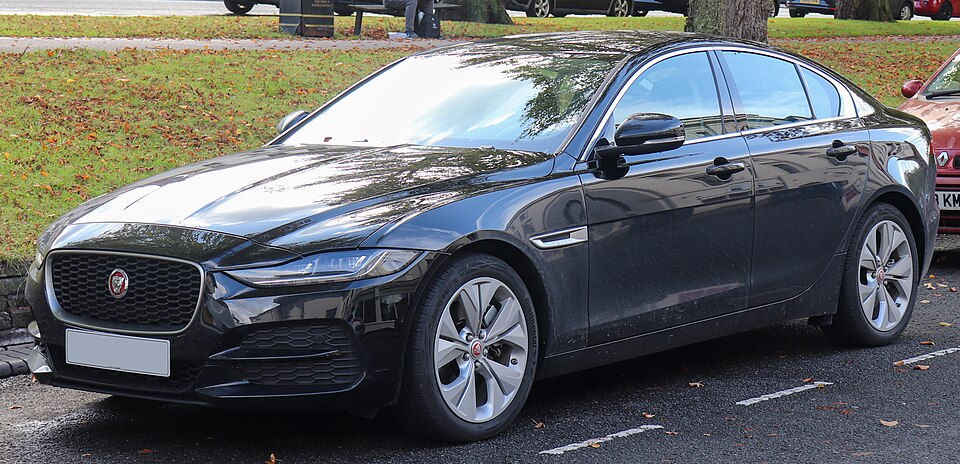
Jaguar XE
5 model years from 2017 to 2021, compared on size, efficiency, safety and reliability.
- Model years
- 2017–2021
- Class
- Compact Cars
- Latest engines
- 2.0L 4-cyl turbo
- Best MPG
- 28–36 combined, by year
- Latest rating
- Not rated
- Recalls
- 6 campaigns, all years
- Most complaints
- 2017 (20)
- Fewest problems
- 2021
- Interest
- 6,916 Wikipedia views / 30 days
The 2021 XE in brief
The 2021 Jaguar XE is a compact car offered with a 2.0L 4-cyl turbo engine and rear-wheel drive and all-wheel drive.
It measures about 184 inches long and 73 inches wide on a 111-inch wheelbase, with a curb weight of roughly 3,503 lb.
EPA rates its most efficient version at 28 MPG combined (25 city / 34 highway), 2% better than the 2021 compact car average of 27.5 MPG, for an estimated $2,950 a year in fuel.
NHTSA has not published a 5-Star overall rating for this model year.
There are no recalls or owner complaints on file with NHTSA for this model year.
The Jaguar XE has 5 model years in our data, from 2017 to 2021.
Its most efficient year was 2019 at 36 MPG combined; across all years the best version ranged from 28 to 36 MPG.
Owners most often report problems with the engine (11), electrical system (10), air bags (6).
Buying used? 2021 has the fewest problems in our data, and 2017 is the year to avoid.
2018 has the most recalls (3); all years together count 6 campaigns and 39 owner complaints.
How the 2017 XE compares
The 2017 Jaguar XE is a compact car offered with 2 engines (2.0L 4-cyl turbo and 3.0L 6-cyl) and rear-wheel drive and all-wheel drive.
It measures about 184 inches long and 73 inches wide on a 111-inch wheelbase, with a curb weight of roughly 3,561 lb (2.0l Diesel 4dr Sedan).
About the Jaguar XE
The Jaguar XE (X760) is a compact executive car manufactured by Jaguar Land Rover and marketed under their Jaguar marque from April 2015 until mid-2024 across a single generation. It is a four-door saloon car with a front-mounted engine and either rear-wheel drive or all-wheel drive.
From the Wikipedia article "Jaguar XE", licensed under CC BY-SA 4.0.
2021 XE pros & cons
Full 2021 details →What's good
- AWD / 4WD available
- No recalls so far
Watch out for
- Premium fuel requiredEvery gasoline version is rated for premium, which raises running costs.
Best and worst years to buy used
2021 XE
0 owner complaints · 0 recalls
Year to avoid2017 XE
20 owner complaints · 2 recalls · 2 fire reports · 4 crash reports
Most reported: Engine
NHTSA recalls and complaints for 5 model years since 2015; use it alongside a pre-purchase inspection. How we calculate this →
XE changes by model year
- 2020
- No diesel version any more
- Engines dropped: 3.0L 6-cyl and 5.0L 8-cyl
- Best combined MPG down from 36 to 28
- 2019
- Engine added: 5.0L 8-cyl
Years without a measurable change are left out.
Show all 5 model years side by side
| Year | Latest engines | Best MPG / range | Length | Weight | Overall | Recalls | Complaints |
|---|---|---|---|---|---|---|---|
| 2021 | 2.0L 4-cyl turbo | 28 MPG | 183.9 in | 3,503 lb | Not rated | 0 | 0 |
| 2020 | 2.0L 4-cyl turbo | 28 MPG | 183.9 in | 3,503 lb | Not rated | 2 | 3 |
| 2019 | 2.0L 4-cyl turbo, 3.0L 6-cyl, 5.0L 8-cyl | 36 MPG | 183.9 in | 3,503 lb | Not rated | 2 | 8 |
| 2018 | 2.0L 4-cyl turbo, 3.0L 6-cyl | 36 MPG | 183.9 in | 3,514 lb | Not rated | 3 | 8 |
| 2017 | 2.0L 4-cyl turbo, 3.0L 6-cyl | 36 MPG | 183.9 in | 3,561 lb | Not rated | 2 | 20 |
Alternatives to the 2021 XE
| Model | Best MPG / range | NHTSA overall | Recalls |
|---|---|---|---|
| 2021 BMW 3 Series | 30 MPG | ★★★★★ | 0 |
| 2021 Lexus IS | 25 MPG | Not rated | 0 |
| 2021 Audi A4 | 28 MPG | Not rated | 4 |
| 2021 Tesla Model 3 | 353 mi | ★★★★★ | 22 |
| 2021 Audi A5 | 28 MPG | Not rated | 5 |
| 2021 Mercedes-Benz A-Class | 29 MPG | Not rated | 0 |
Most common owner-reported problems
Sources: EPA, NHTSA, Transport Canada, Wikipedia, Wikimedia Commons. Not affiliated with NHTSA, the EPA or Jaguar. How we calculate this →