 DecodedCars
2018 Hyundai Kona
Trims, performance, features, fuel economy, safety and known problems — with the pros and cons against similar 2018 models.
- Class
- Small Sport Utility Vehicle 2WD
- Body styles
- 1.6t AWD 4dr SUV, 2.0 AWD 4dr SUV, 2.0 FWD 4dr SUV
- Engines
- 1.6L 4-cyl turbo, 2.0L 4-cyl
- Horsepower
- 147–175 hp
- Transmission
- 7-speed automatic, 6-speed automatic
- Drivetrain
- Front-Wheel Drive, All-Wheel Drive
- Seats
- 5
- Fuel
- Regular Gasoline
- MPG (best)
- 30 combined · 28 city / 33 hwy
- Length
- 164.2 in
- Curb weight
- 2,890–3,256 lb
- NHTSA rating
- Not rated
- Recalls
- 0 campaigns
Pros & cons
What's good
- Excellent fuel economyUp to 30 MPG combined — 20% better than the average 2018 small SUV (24.9 MPG).
- AWD / 4WD available
- No recalls so far
Watch out for
No weak spots against similar models in the data.
Calculated from EPA, NHTSA and vPIC data against 8 similar 2018 models — not a review. How we calculate this →
Overview
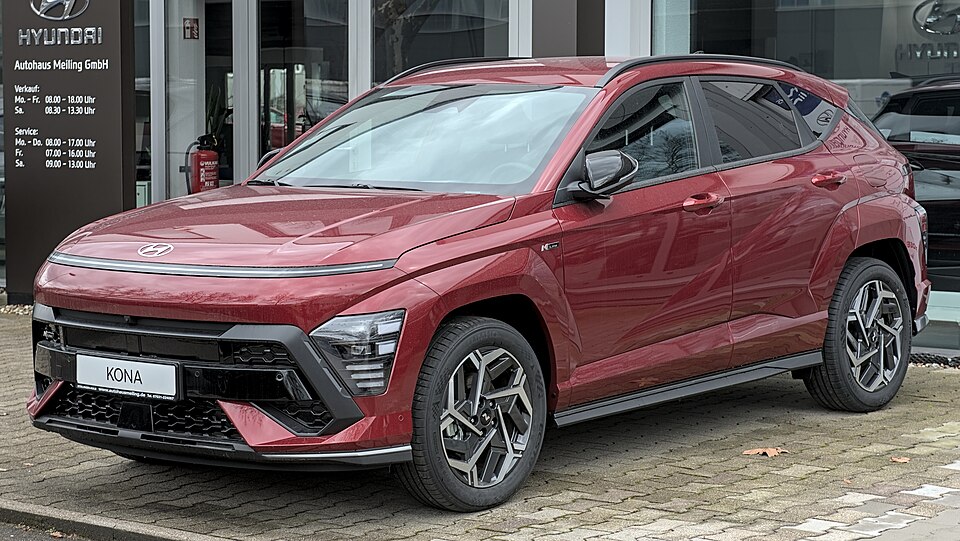
The 2018 Hyundai Kona is a small SUV offered with 2 engines (1.6L 4-cyl turbo and 2.0L 4-cyl) and front-wheel drive and all-wheel drive.
It measures about 164 inches long and 71 inches wide on a 102-inch wheelbase, with a curb weight of roughly 3,256 lb (1.6t AWD 4dr SUV).
EPA rates its most efficient version at 30 MPG combined (28 city / 33 highway), 20% better than the 2018 small SUV average of 24.9 MPG, for an estimated $2,250 a year in fuel.
NHTSA has not published a 5-Star overall rating for this model year.
It has 0 recall campaigns on file and owners have filed 75 complaints with NHTSA since 2015, most often about the engine.
Trims, performance & features
Trims
Safety & driver-assist features
Built in: Ulsan, South Korea
NHTSA vPIC, as reported by the manufacturer for 5 2018 Kona configurations; may not list every trim. How we calculate this →
Dimensions & weight
| Body | Length | Width | Height | Wheelbase | Track F / R | Curb weight | Weight F/R |
|---|---|---|---|---|---|---|---|
| 1.6t AWD 4dr SUV | 164.2 in | 70.9 in | 59.1 in | 102.4 in | 61.4 / 61.4 in | 3,256 lb | 56/44 |
| 2.0 AWD 4dr SUV | 164.2 in | 70.9 in | 59.1 in | 102.4 in | 61.4 / 61.4 in | 3,084 lb | 56/44 |
| 2.0 FWD 4dr SUV | 164.2 in | 70.9 in | 59.1 in | 102.4 in | 61.4 / 61.4 in | 2,890 lb | 56/44 |
Transport Canada CVS (Open Government Licence – Canada), Canadian-market figures.
Will it fit your garage? Check with your measurements →Engines, MPG & running costs
| Version | Engine | Transmission | Drive | City / Hwy / Comb | vs. class | Fuel / yr | CO₂ g/mi |
|---|---|---|---|---|---|---|---|
| Kona FWD | 1.6L 4-cyl turbo | Automatic (AM7) | Front-Wheel Drive | 28 / 32 / 30 | +20% | $2,250 | 303 |
| Kona FWD | 2.0L 4-cyl | Automatic (S6) | Front-Wheel Drive | 27 / 33 / 30 | +20% | $2,250 | 300 |
| Kona AWD | 1.6L 4-cyl turbo | Automatic (AM7) | All-Wheel Drive | 26 / 29 / 27 | +16% | $2,500 | 324 |
| Kona AWD | 2.0L 4-cyl | Automatic (S6) | All-Wheel Drive | 25 / 30 / 27 | +16% | $2,500 | 326 |
EPA estimates; "vs. class" is combined MPG against the 2018 EPA class average. How we calculate this →
Safety ratings & technology
NHTSA has not published 5-Star ratings for the 2018 Hyundai Kona.
Similar 2018 small SUVs
| Model | Best MPG / range | NHTSA overall | Recalls |
|---|---|---|---|
| 2018 Hyundai Kona (this car) | 30 MPG | Not rated | 0 |
| 2018 Jeep Compass | 26 MPG | ★★★★★ | 6 |
| 2018 Chevrolet Trax | 28 MPG | ★★★★★ | 2 |
| 2018 Jeep Renegade | 26 MPG | ★★★★★ | 2 |
| 2018 Ford EcoSport | 28 MPG | ★★★★★ | 2 |
| 2018 Buick Encore | 30 MPG | ★★★★★ | 0 |
| 2018 Mitsubishi Eclipse Cross | 27 MPG | Not rated | 2 |
Recalls (0)
No vehicle recalls on file with NHTSA for the 2018 Hyundai Kona.
Check your VIN for open recalls at NHTSA ↗Not every 2018 Hyundai Kona is affected — only a VIN check confirms your car.
Owner-reported problems
Unverified owner reports; best-sellers collect more.
Used 2018 Hyundai Kona buyer's checklist
- Run the VIN at nhtsa.gov/recalls. No recalls on file, but check anyway.
- Engine — 42 owner reports. Cold-start the engine, listen for knocking, and watch for warning lights or hesitation on acceleration.
- Power Train — 11 owner reports. Test-drive through all gears, including reverse; note slipping, harsh or delayed shifts.
- Electrical System — 8 owner reports. Test every window, lock, light, screen and USB port; check the battery age.
- Mileage to watch. Owners typically reported problems around 17,000 miles; ask what was repaired near that point.
- Before you pay: service records, a history report and an independent inspection.
Generated by DecodedCars from NHTSA recalls and owner complaints for the 2018 Hyundai Kona. Not a substitute for a professional inspection.
Other Kona years
Compare all years →| Year | MPG (best) | Length | Overall | Recalls | Complaints |
|---|---|---|---|---|---|
| 2027 Kona | 31 | – | Not rated | 0 | 0 |
| 2026 Kona | 31 | 171.3 in | Not rated | 3 | 10 |
| 2025 Kona | 31 | 171.3 in | Not rated | 1 | 29 |
| 2024 Kona | 31 | 171.3 in | Not rated | 4 | 68 |
| 2023 Kona | 32 | 165.4 in | Not rated | 2 | 75 |
| 2022 Kona | 32 | 165.4 in | Not rated | 2 | 130 |
| 2021 Kona | 30 | 164.2 in | ★★★★★ | 3 | 147 |
| 2020 Kona | 30 | 164.2 in | ★★★★★ | 5 | 189 |
| 2019 Kona | 30 | 164.2 in | ★★★★★ | 4 | 252 |
Sources: EPA, NHTSA, Transport Canada, Wikimedia Commons. Not affiliated with NHTSA, the EPA or Hyundai. How we calculate this →