 DecodedCars
2018 Chevrolet Volt
Trims, performance, features, fuel economy, safety and known problems — with the pros and cons against similar 2018 models.
- Class
- Compact Cars
- Body styles
- 4dr Hatchback
- Engines
- 1.5L 4-cyl
- Drivetrain
- Front-Wheel Drive
- Fuel
- Plug-in Hybrid
- MPG (best)
- 42 combined · 43 city / 42 hwy
- Length
- 180.3 in
- Curb weight
- 3,543 lb
- NHTSA rating
- ★★★★★
- Recalls
- 2 campaigns
Pros & cons
What's good
- Excellent fuel economyUp to 42 MPG combined — 56% better than the average 2018 compact car (27 MPG).
- Plug-in hybrid version availableOffered as a plug-in hybrid as well as gas.
- 5-star NHTSA safety ratingTop overall score in federal crash tests.
Watch out for
- Many owner complaints226 complaints filed with NHTSA versus about 71 for similar models — most often about the electrical system.
Calculated from EPA, NHTSA and vPIC data against 24 similar 2018 models — not a review. How we calculate this →
Overview
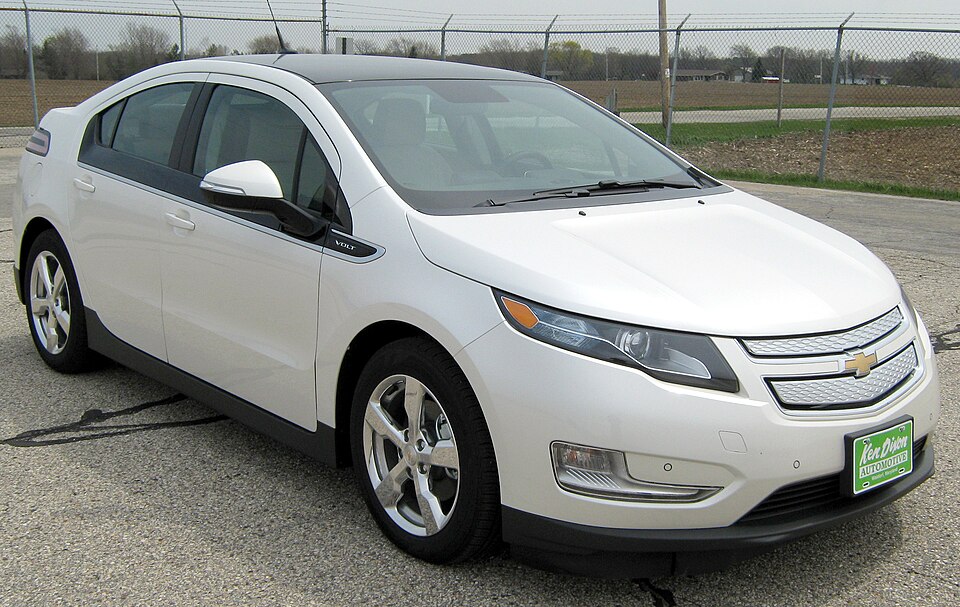
The 2018 Chevrolet Volt is a compact car offered with a 1.5L 4-cyl engine, including a hybrid version and front-wheel drive.
It measures about 180 inches long and 71 inches wide on a 106-inch wheelbase, with a curb weight of roughly 3,543 lb.
EPA rates its most efficient version at 42 MPG combined (43 city / 42 highway), 56% better than the 2018 compact car average of 27 MPG, for an estimated $1,600 a year in fuel.
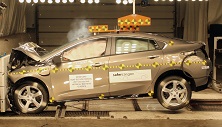
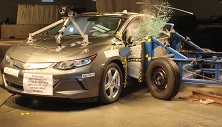
In NHTSA crash testing it earned the top 5-star overall rating.
It has 2 recall campaigns on file and owners have filed 226 complaints with NHTSA since 2015, most often about the electrical system.
What changed for 2018
- Now crash-tested by NHTSA: 5 stars overall
Compared with 2017; trim, feature and price changes aren't covered. See the 2017 Volt →
Dimensions & weight
| Body | Length | Width | Height | Wheelbase | Track F / R | Curb weight | Weight F/R |
|---|---|---|---|---|---|---|---|
| 4dr Hatchback | 180.3 in | 71.3 in | 56.3 in | 105.9 in | 60.6 / 61.8 in | 3,543 lb | 60/40 |
Transport Canada CVS (Open Government Licence – Canada), Canadian-market figures.
Will it fit your garage? Check with your measurements →Engines, MPG & running costs
| Version | Engine | Transmission | Drive | City / Hwy / Comb | vs. class | Fuel / yr | CO₂ g/mi |
|---|---|---|---|---|---|---|---|
| Volt Plug-in Hybrid | 1.5L 4-cyl | Automatic (variable gear ratios) | Front-Wheel Drive | 43 / 42 / 42 | +56% | $1,600 | 51 |
EPA estimates; "vs. class" is combined MPG against the 2018 EPA class average. How we calculate this →
Safety ratings & technology
| Version | Overall | Frontal | Driver / passenger | Side | Side pole | Rollover | Rollover risk |
|---|---|---|---|---|---|---|---|
| 2018 Chevrolet Volt 5 HB FWD | ★★★★★ | ★★★★★ | 5★ / 4★ | ★★★★★ | ★★★★★ | ★★★★★ | 9.3% |
Similar 2018 compact cars
| Model | Best MPG / range | NHTSA overall | Recalls |
|---|---|---|---|
| 2018 Chevrolet Volt (this car) | 42 MPG | ★★★★★ | 2 |
| 2018 Toyota Corolla | 34 MPG | ★★★★★ | 3 |
| 2018 Honda Civic | 36 MPG | ★★★★★ | 6 |
| 2018 Honda Accord | 47 MPG | Not rated | 6 |
| 2018 Nissan GT-R | 18 MPG | Not rated | 0 |
| 2018 Toyota Prius | 56 MPG | ★★★★★ | 1 |
| 2018 Volkswagen Golf/GTI | 29 MPG | ★★★★★ | 6 |
Recalls (2)
Seat Belts › Rear/Other · Sep 26, 2018
NHTSA campaign 18V673000 · 15,800 vehicles
- Problem
- General Motors LLC (GM) is recalling certain 2018-2019 Cadillac CT6, Escalade ESV, Chevrolet Suburban, Volt, and GMC Yukon XL vehicles. Certain second-row or third-row rear seatbelts retractor assemblies may not automatically lock when the seatbelt is fully pulled out of the retractor, possibly preventing a child seat from being properly secured. As such, these vehicles fail to comply with the requirements of Federal Motor Vehicle Safety Standard (FMVSS) number 208, "Occupant Crash Protection."
- Risk
- If the child seat is not properly secured in the event of a crash, it can increase the risk of injury.
- Fix
- GM will notify owners, and dealers will inspect the rear seatbelt retractors and replace them if necessary, free of charge. The recall began November 7, 2018. Owners may contact Cadillac customer service at 1-800-458-8006, Chevrolet customer service at 1-800-222-1020 or GMC customer service at 1-800-462-8782. GM's number for this recall is 18315.
Service Brakes, Hydraulic › Foundation Components › Disc › Caliper · Aug 30, 2018
NHTSA campaign 18V576000 · 210,628 vehicles
- Problem
- General Motors LLC (GM) is recalling certain 2018-2019 Chevrolet Equinox, Impala, Cruze, Volt and Bolt EV vehicles, GMC Terrain vehicles, Buick Lacrosse and Regal vehicles, Cadillac XTS and XTS Professional vehicles and 2018 Chevrolet Malibu vehicles. The rear brake caliper pistons may have an insufficient coating causing gas pockets to form, potentially reducing rear brake performance.
- Risk
- A reduction of braking performance can increase the risk of a crash.
- Fix
- GM will notify owners, and dealers will bleed the vehicle's brake system, free of charge. The recall began October 11, 2018. Owners may contact Buick customer service at 1-800-521-7300, Cadillac customer service at 1-800-458-8006, Chevrolet customer service at 1-800-222-1020, or GMC customer service at 1-800-462-8782. GM's number for this recall is 18279.
Not every 2018 Chevrolet Volt is affected — only a VIN check confirms your car.
Owner-reported problems
Unverified owner reports; best-sellers collect more.
Used 2018 Chevrolet Volt buyer's checklist
- Run the VIN at nhtsa.gov/recalls. 2 recalls this year — ask for proof of repairs.
- Electrical System — 86 owner reports. Test every window, lock, light, screen and USB port; check the battery age.
- Power Train — 78 owner reports. Test-drive through all gears, including reverse; note slipping, harsh or delayed shifts.
- Fuel/Propulsion System — 74 owner reports. Smell for fuel around the car and in the cabin, check that it starts easily when warm, and look at the oil dipstick for a fuel smell or rising level.
- Mileage to watch. Owners typically reported problems around 25,000 miles; ask what was repaired near that point.
- Hybrid system. Check for hybrid-system warning lights and ask whether the high-voltage battery has been replaced or is still under warranty.
- Before you pay: service records, a history report and an independent inspection.
Generated by DecodedCars from NHTSA recalls and owner complaints for the 2018 Chevrolet Volt. Not a substitute for a professional inspection.
Other Volt years
Compare all years →Sources: EPA, NHTSA, Transport Canada, Wikimedia Commons. Not affiliated with NHTSA, the EPA or Chevrolet. How we calculate this →