 DecodedCars
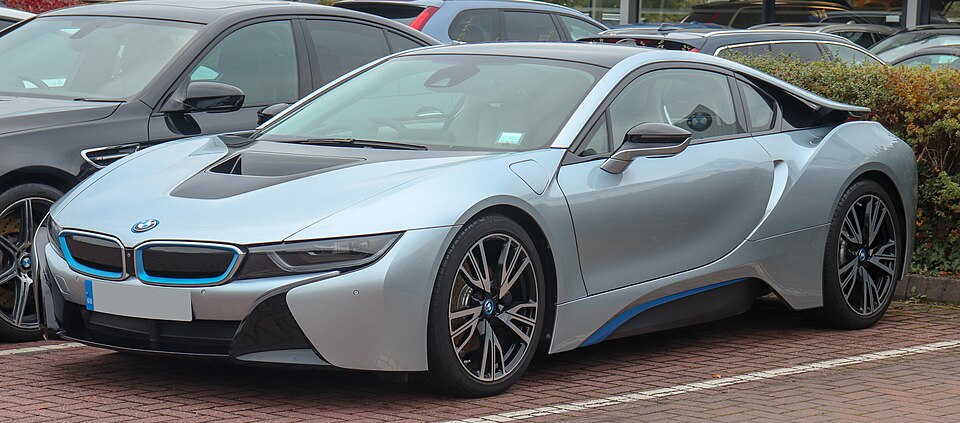
2017 BMW i8
Trims, performance, features, fuel economy, safety and known problems — with the pros and cons against similar 2017 models.
- Class
- Subcompact Cars
- Engines
- 1.5L 3-cyl turbo
- Drivetrain
- All-Wheel Drive
- Fuel
- Plug-in Hybrid
- MPG (best)
- 28 combined · 28 city / 29 hwy
- Length
- –
- Curb weight
- –
- NHTSA rating
- Not rated
- Recalls
- 1 campaign
Pros & cons
What's good
- Excellent fuel economyUp to 28 MPG combined — 22% better than the average 2017 subcompact car (23 MPG).
- Plug-in hybrid version availableOffered as a plug-in hybrid as well as gas.
Watch out for
- Premium fuel requiredEvery gasoline version is rated for premium, which raises running costs.
Calculated from EPA, NHTSA and vPIC data against 11 similar 2017 models — not a review. How we calculate this →
Overview
The 2017 BMW i8 is a subcompact car offered with a 1.5L 3-cyl turbo engine, including a hybrid version and all-wheel drive.
EPA rates its most efficient version at 28 MPG combined (28 city / 29 highway), 22% better than the 2017 subcompact car average of 23 MPG, for an estimated $2,950 a year in fuel.
NHTSA has not published a 5-Star overall rating for this model year.
It has 1 recall campaign on file.
What changed for 2017
No changes to engines, powertrains, drivetrains, size, EPA ratings or NHTSA crash rating compared with the 2016 i8 — a carry-over year in the data.
Compared with 2016; trim, feature and price changes aren't covered. See the 2016 i8 →
Engines, MPG & running costs
| Version | Engine | Transmission | Drive | City / Hwy / Comb | vs. class | Fuel / yr | CO₂ g/mi |
|---|---|---|---|---|---|---|---|
| i8 Plug-in Hybrid | 1.5L 3-cyl turbo | Automatic 6-spd | All-Wheel Drive | 28 / 29 / 28 | +22% | $2,950 | 199 |
EPA estimates; "vs. class" is combined MPG against the 2017 EPA class average. How we calculate this →
Safety ratings & technology
NHTSA has not published 5-Star ratings for the 2017 BMW i8.
Similar 2017 subcompact cars
| Model | Best MPG / range | NHTSA overall | Recalls |
|---|---|---|---|
| 2017 BMW i8 (this car) | 28 MPG | Not rated | 1 |
| 2017 Audi A5 | 26 MPG | Not rated | 3 |
| 2017 BMW i3 | 35 MPG | Not rated | 3 |
| 2017 BMW 2 Series | 28 MPG | Not rated | 0 |
| 2017 BMW 4 Series | 27 MPG | Not rated | 0 |
| 2017 Lexus RC | 26 MPG | Not rated | 3 |
| 2017 Audi S5 | 21 MPG | Not rated | 1 |
Recalls (1)
Air Bags · Dec 20, 2016
NHTSA campaign 16V914000 · 3,506 vehicles
- Problem
- BMW of North America, LLC (BMW) is recalling certain model year 2017 BMW 640i, 640i xDrive, 650i, 650i xDrive, M6, 535i, 535i xDrive, 430i, 430i xDrive, 440i, 440i xDrive, M4, X1 sDrive28i, X1 xDrive28i, i3, i8, Rolls-Royce Dawn, Mini Clubman Cooper, Clubman Cooper S, Cooper All4, Cooper S All4, Mini 4-Door Cooper, Cooper S, Mini 2-Door Cooper, Cooper S, John Cooper Works and 2016 BMW 528i, 528i xDrive, 535i, 535i xDrive, 550i, 550i xDrive, M5 and 535d vehicles. The affected vehicles have seat- mounted side air bag inflator initiators that may fail to ignite during a crash.
- Risk
- If the air bag inflator initiator fails to ignite, the seat-mounted air bag will not deploy, increasing the risk of injury.
- Fix
- BMW will notify owners, and dealers will replace the air bag modules, free of charge. The recall began February 6, 2017. Owners may contact BMW customer service at 1-800-525-7417.
Not every 2017 BMW i8 is affected — only a VIN check confirms your car.
Owner-reported problems
No owner complaints for the 2017 BMW i8 in NHTSA's database since 2015.
Used 2017 BMW i8 buyer's checklist
- Run the VIN at nhtsa.gov/recalls. 1 recall this year — ask for proof of repairs.
- Hybrid system. Check for hybrid-system warning lights and ask whether the high-voltage battery has been replaced or is still under warranty.
- Before you pay: service records, a history report and an independent inspection.
Generated by DecodedCars from NHTSA recalls and owner complaints for the 2017 BMW i8. Not a substitute for a professional inspection.
Other i8 years
Compare all years →Sources: EPA, NHTSA, Transport Canada, Wikimedia Commons. Not affiliated with NHTSA, the EPA or BMW. How we calculate this →